Showing posts with label what happened on this date in British royal history. Show all posts

Saturday, October 5, 2013

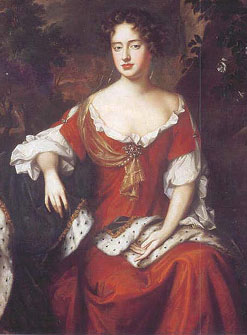
Mary of Modena, second wife of James II of England was born - 1658


Mary of Modena was born on October 5, 1658 in Modena, Italy. She was the second wife of James II of England. Born a princess of the Italian Duchy of Modena, Mary is primarily remembered for the controversial birth of James Francis Edward, her only surviving son. His birth was a contributing factor to the Glorious Revolution. The revolution deposed James II and replaced him with his daughter from his first marriage Mary and her husband, William of Orange. Exiled to France, Mary was popular among Louis XIV's courtiers; however, James was considered a bore. In widowhood, Mary spent much time with the nuns at the Convent of Chaillot, where she and her daughter spent their summers. In 1701, when James II died, James Francis Edward became king in the eyes of the Jacobites. Being too young to assume the nominal reins of government, Mary acted as regent until he reached the age of 16. When James Francis Edward was asked to leave France as part of the Treaty of Utrecht, Mary stayed, despite having no family there. Mary died from breast cancer on May 7, 1718 in Paris.


Michael Thomas Barry is the author of Great Britain’s Royal Tombs. The book can be purchased from Amazon through the following links:

Amazon - http://www.amazon.com/Great-Britains-Royal-Tombs-Monarchs/dp/0764341294/ref=sr_1_1?ie=UTF8&qid=1381007216&sr=8-1&keywords=michael+thomas+barry

Amazon UK - http://www.amazon.co.uk/Great-Britains-Royal-Tombs-Monarchs/dp/0764341294/ref=sr_1_1?ie=UTF8&qid=1381007349&sr=8-1&keywords=michael+thomas+barry

Tuesday, October 1, 2013

Henry III of England was born - 1207


Henry III of England was born on October 1, 1207 at Winchester, England. He ruled England from 1216 to 1272. He succeeded his father King John at age nine, but his royal powers were controlled by regency until he reached maturity in 1234. His financial commitments to the papacy and his foreign favorites antagonized the barons who issued the Provisions of Oxford in 1258, limiting the king's power. Henry's refusal to accept the provisions led to the second Barons' War in 1264, a revolt of nobles led by his brother-in-law Simon de Montfort. Henry was defeated at Lewes, Sussex, and imprisoned, but restored to the throne after the royalist victory at Evesham in 1265. On his release Henry was weak and senile and his eldest son, the future Edward I, took charge of the government. Henry III died on November 16, 1272 and was buried at Westminster Abbey.
 
Michael Thomas Barry is the author of Great Britain’s Royal Tombs. The book can be purchased from Amazon through the following links:

Saturday, September 28, 2013

William of Normandy invades England in pursuit of the throne - 1066


On September 28, 1066, William of Normandy lands at Pevensey Bay, Sussex England in pursuit of his claim to the throne of England. Upon landing William is alleged to have slipped, and realising this could be taken as a bad omen took a handful of sand and stated “Look I have already grasped my Kingdom.”
William was the first Norman King of England, reigning from 1066 until his death in 1087. He was the son of Robert I, Duke of Normandy, and his mistress Herleva. His illegitimate status and his youth caused some difficulties for him after he succeeded his father, as did the anarchy that plagued the first years of his rule. William’s marriage in the 1050s to Matilda of Flanders provided him with a powerful ally.
In the 1050s and early 1060s William became a contender for the throne of England, then held by his childless cousin Edward the Confessor. There were other potential claimants, including the powerful English earl Harold Godwinson, who was named the next king by Edward on the latter's deathbed in January 1066. William argued that Edward had previously promised the throne to him, and that Harold had sworn to support William's claim. William built a large fleet and invaded England on September 28, 1066, decisively defeating and killing Harold at the Battle of Hastings on October 14, 1066. After further military efforts William was crowned king on Christmas Day 1066, in London. He made arrangements for the governance of England in early 1067 before returning to Normandy. Several unsuccessful rebellions followed, but by 1075 William's hold on England was mostly secure, allowing him to spend the majority of the rest of his reign in Normandy.
William's final years were marked by difficulties in his continental domains, troubles with his eldest son, and threatened invasions of England by the Danes. In 1086 William ordered the compilation of the Domesday Book, a survey listing all the landholders in England along with their holdings. William died on September 9, 1087 while leading a campaign in northern France, and was buried in Caen. William's lands were divided after his death: Normandy went to his eldest son, Robert, and his second surviving son, William Rufus, received England.
 
Michael Thomas Barry is the author of Great Britain’s Royal Tombs. The book can be purchased from Amazon through the following links:

Friday, September 20, 2013

Arthur Tudor, Prince of Wales was born - 1486


Arthur Tudor, Prince of Wales was born on September 20, 1486, his parents, Henry VII and Elizabeth of York were married in January of 1486, uniting the houses of Lancaster and York, the rivals of the Wars of the Roses. When their first child was born, he became the physical manifestation of the union of the two houses. The prince was born at St. Swithun’s Priory in Winchester, the ancient capital of England and baptized on September 24 in Winchester Cathedral. In 1488-9, Henry VII negotiated the preliminary treaty of Medina del Campo with Spain which included the proposal that Arthur would be married to Catherine of Aragon, the young daughter of Ferdinand and Isabella. In 1496, further negotiations were conducted and it was agreed that Catherine would come to England in 1500, when Arthur was 14. Catherine did eventually arrive in October 1501. After 16 years of negotiation and earlier proxy betrothals and marriages, the Spanish marriage for Arthur finally took place November 14, 1501 in old St. Paul's Cathedral in London. In March of 1502 Arthur fell ill, possibly of tuberculosis, the plague or the sweating sickness and died on April 2nd. Arthur was buried in Worcester Cathedral. The question of whether or not Arthur and his bride ever consummated their marriage became crucial factor when Catherine’s second husband, Henry VIII, sought to have their union annulled.
 
Michael Thomas Barry is the author of Great Britain’s Royal Tombs. The book can be purchased from Amazon through the following links:

Wednesday, September 4, 2013

Matthew Stewart, Earl of Lennox and Regent of Scotland was assassinated - 1571


On September 4, 1571, Matthew Stewart, 4th Earl of Lennox and Regent of Scotland was assassinated. Stewart was the leader of the Catholic nobility in Scotland and was the grandson of James VI of Scotland. He spent most of his youth in exile in England, but returned to Scotland to assert his claims to the line of succession when James V died in 1542. At the time of the king's death in 1542, Lennox possessed a strong claim to the throne of Scotland should Mary, Queen of Scots, an infant, pass away childless. Although Lennox had come to Scotland lured by the prospect of marriage to Mary of Guise, he was soon offered the chance to marry Margaret Douglas, the daughter of Margaret Tudor and half-sister of the deceased James V. In 1544, he married Lady Margaret Douglas, who had a claim to the English throne. Their son was Henry Stewart, Lord Darnley, born 1545, who eventually married Mary, Queen of Scots. After the murder of his son, Lord Darnley in 1567, Lennox was the most ardent pursuant of justice against the lords who had conspired in the murder. He also became the main witness against Mary, though her involvement in the murder is controversial. In 1570, Lennox became Regent for his grandson, James VI, but the queen's party declared war against him. He was assassinated on September 4, 1571, when the queen's party attacked Stirling Castle.

 
Michael Thomas Barry is the author of Great Britain’s Royal Tombs. The book can be purchased from Amazon through the following links:

Tuesday, August 27, 2013

Lord Louis Mountbatten was assassinated - 1979


On August 27, 1979, Lord Louis Mountbatten is killed when Irish Republican Army terrorists who detonate a bomb hidden on his fishing vessel Shadow V. Mountbatten, a war hero, elder statesman, and second cousin of Queen Elizabeth II, was spending the day with his family in Donegal Bay off Ireland's northwest coast when the bomb exploded. Three others were killed in the attack, including Mountbatten's 14-year-old grandson, Nicholas. Later that day, an IRA bombing attack on land killed 18 British paratroopers in County Down, Northern Ireland. The assassination of Mountbatten was the first blow struck against the British royal family by the IRA during its long terrorist campaign to drive the British out of Northern Ireland and unite it with the Republic of Ireland to the south. The attack convinced Margaret Thatcher's government to take a hard-line stance against the terrorist organization.
Louis Mountbatten, the son of Prince Louis of Battenberg and a great-grandson of Queen Victoria, entered the Royal Navy in 1913, when he was in his early teens. He saw service during World War I and World War II. In 1947, he was appointed the last viceroy of India, and he conducted the negotiations that led to independence for India and Pakistan later that year. He held various high naval posts in the 1950s and served as chief of the United Kingdom Defense Staff and chairman of the Chiefs of Staff Committee. Meanwhile, he was made Viscount Mountbatten of Burma and a first earl. He was the uncle of Philip Mountbatten and introduced Philip to the future Queen Elizabeth. He later encouraged the marriage of the two distant cousins and became godfather and mentor to their first born, Charles, Prince of Wales.
Made governor and then lord lieutenant of the Isle of Wight in his retirement, Lord Mountbatten was a respected and beloved member of the royal family. His assassination was perhaps the most shocking of all horrors inflicted by the IRA against the United Kingdom. The IRA immediately claimed responsibility for the attack, saying it detonated the bomb by remote control from the coast. IRA member Thomas McMahon was later arrested and convicted of preparing and planting the bomb that destroyed Mountbatten's boat. He was a leader of the IRA's notorious South Armagh Brigade, which killed more than 100 British soldiers. He was one of the first IRA members to be sent to Libya to train with detonators and timing devices and was an expert in explosives. Authorities believe the Mountbatten assassination was the work of many people, but McMahon was the only individual convicted. Sentenced to life in prison, he was released in 1998 along with other IRA and Unionist terrorists under a controversial provision of the Good Friday Agreement, Northern Ireland's peace deal.

 
Michael Thomas Barry is a columnist for CrimeMagazine.com and pens the daily column “On this date in crime history. He is also the author of Murder & Mayhem 52 Crimes that Shocked Early California (2012) and Great Britain’s Royal Tombs (2012). These books can be purchased from Amazon through the following links:

Wednesday, February 6, 2013

Birth of Queen Anne 1665, Death of King Charles II 1685 & Death of King George VI 1952


On February 6th – 

1665 Queen Anne was born. She was the last Stuart ruler and second daughter of James II. She bore Prince George of Denmark 17 children, but 16 died in infancy and the remaining child died when aged 12. Her desire for national unity led to the union of the English and Scottish parliaments in 1707. 

1685 Charles II, King of Great Britain and Ireland, died after several days of revelry with his concubines and his favorite mistresses. Charles acknowledged at least 12 illegitimate children by various mistresses, but as illegitimate children were excluded from the succession, he was succeeded by his brother James. On his deathbed Charles asked his brother to look after his mistresses and told his courtiers: 'I am sorry, gentlemen, for being such a time a-dying.' 

1952 King George VI died. The stress of World War II had taken its toll on the King's health, which was exacerbated by his heavy smoking and subsequent development of lung cancer among other ailments. On September 23, 1951, the King’s left lung was removed following the discovery of a malignant tumor. On January 31, 1952, despite advice from those close to him, he went to London Airport to see off Princess Elizabeth, who was going on her tour of Australia via Kenya. On the morning of February 6th, George VI was discovered dead in bed at Sandringham House in Norfolk. He had died from a coronary thrombosis in his sleep at the age of 56. His daughter Elizabeth flew back to Britain from Kenya, as Queen Elizabeth II. His funeral took place at St. George’s Chapel, Windsor Castle and he was interred initially in the Royal Vault until transferred to the King George VI Memorial Chapel inside St. George's. In 2002, the remains of his widow, Queen Elizabeth The Queen Mother, and the ashes of his younger daughter Princess Margaret, who both died that year, were interred in the chapel alongside him. 
Michael Thomas Barry is the author of Great Britain’s Royal Tombs. The book can be purchased from Amazon through the following links:


Wednesday, January 23, 2013

James Stewart, 1st Earl of Moray and Scottish Regent is Assassinated - 1570


On January 23, 1570 James Stewart, 1st Earl of Moray, and regent for the infant King James VI of Scotland (future James I of England), was fatally shot by James Hamilton, a supporter of Mary Queen of Scots. It was the first recorded assassination by a firearm. Moray was born in about 1531, the most notable of the many illegitimate children of King James V of Scotland. His mother was the King's favorite mistress, Lady Margaret Erskine, and wife of Sir Robert Douglas of Lochleven. James became a supporter of the Scottish Reformation. But despite their religious differences, Moray became the chief advisor to his sister, Mary, Queen of Scots, after her return from France in 1561. She was the only surviving child of his father's marriage to Mary of Guise. When Mary abdicated the throne on July 24, 1567 in favor of her infant son, Moray was appointed regent. He was assassinated in Linlithgow on January 23, 1570 by James Hamilton of Bothwellhaugh, a supporter of Mary. As Moray was passing in a cavalcade in the main street below the castle, Hamilton fatally wounded him with a carbine shot from a window of his Uncle Archbishop Hamilton’s house. The Regent's body was buried in St. Anthony's aisle at St. Giles Church in Edinburgh.  

Michael Thomas Barry is the author of Great Britain’s Royal Tombs. The book can be purchased from Amazon and the following links.  


Tuesday, January 22, 2013

Death of Queen Victoria - 1901


On this date in 1901 Queen Victoria died at Osborne House on the Isle of Wight, aged 81. Victoria was monarch from 1837 until her death. She was the daughter of Prince Edward, Duke of Kent, the fourth son of King George III. Both the Duke of Kent and King George III died in 1820, and Victoria was raised under close supervision by her German-born mother Princess Victoria of Saxe-Coburg-Saalfeld. She inherited the throne at the age of 18, after her father's three elder brothers had all died leaving no legitimate, surviving children. The United Kingdom was already an established a constitutional monarchy, in which the Sovereign held relatively little direct political power. Privately, Victoria attempted to influence government policy and ministerial appointments. Publicly, she became a national icon, and was identified with strict standards of personal morality. 

Victoria married her first cousin, Prince Albert of Saxe-Coburg and Gotha, in 1840. Their nine children married into royal and noble families across the continent, tying them together and earning her the nickname "the grandmother of Europe". After Albert's death in 1861, Victoria plunged into deep mourning and avoided public appearances. As a result of her seclusion, republicanism temporarily gained strength, but in the latter half of her reign, her popularity recovered. Her Golden and Diamond Jubilees were times of public celebration. Her reign of 63 years and seven months is longer than that of any other British monarch and the longest of any female monarch in history.  

She died on Tuesday January 22, 1901 at half past six in the evening, at the age of 81 at Osborne House on the Isle of Wight. Her son and successor King Edward VII, and her eldest grandson, Emperor Wilhelm II of Germany, were at her deathbed.  In 1897, Victoria had written instructions for her funeral, which was to be military as befitting a soldier's daughter and the head of the army, and white instead of black. An array of mementos commemorating her extended family, friends and servants were laid in the coffin with her, at her request. Her funeral was held at St. George’s Chapel, Windsor Castle, and after two days of lying-in-state, she was interred beside Prince Albert in Frogmore Mausoleum at Windsor Great Park. As she was laid to rest at the mausoleum, it began to snow.  

Michael Thomas Barry is the author of Great Britain’s Royal Tombs. It can be purchased from Amazon at the following links: 


Sunday, January 20, 2013

Death of King George V - 1936


On January 20, 1936 King George V died and was succeeded by Edward VIII who abdicated 325 days later because of his insistence in marrying American divorcee Wallis Simpson. He reigned from 1910 until his death in 1936. He was the grandson of Queen Victoria and the first cousin of Czar Nicholas II of Russia and Kaiser Wilhelm II of Germany. On the death of Victoria in 1901, George's father became King Edward VII, and George was made Prince of Wales. On his father's death in 1910, he succeeded as King of the British Empire. As a result of the First World War, other empires in Europe fell while his expanded to its greatest extent. In 1917, he became the first monarch of the House of Windsor, which he renamed from the House of Saxe-Coburg and Gotha as a result of anti-German public sentiment. His reign saw the rise of socialism, communism, fascism, Irish republicanism, and the Indian independence movement, all of which radically changed the political landscape. He was plagued by illness throughout much of his later reign and at his death was succeeded by his eldest son, Edward VIII. His remains were interred within St. George’s Chapel at Windsor Castle.  

Michael Thomas Barry is the author of Great Britain’s Royal Tombs. The book can be purchased from Amazon through the following links: 


Saturday, January 19, 2013

Trial of King Charles I Began - 1649


On January 19, 1649 the Puritan parliament began the trial of King Charles I of England for treason. Charles refused to plead, saying that he did not recognize the legality of the High Court. Charles I was King of England from 1625 until his execution in 1649. He engaged in a struggle for power with the Parliament of England, attempting to obtain royal revenue whilst Parliament sought to curb his Royal prerogative which Charles believed was divinely ordained. Many of his English subjects opposed his actions, in particular his interference in the English and Scottish churches and the levying of taxes without parliamentary consent, because they saw them as those of a tyrannical absolute monarchy. Charles's reign was also characterized by religious conflicts. His failure to successfully aid Protestant forces during the Thirty Years’ War, coupled with the fact that he married a Roman Catholic princess, generated deep mistrust. Charles's last years were marked by the English Civil War, in which he fought the forces of the English and Scottish parliaments, which challenged his attempts to overrule and negate parliamentary authority, whilst simultaneously using his position as head of the English Church to pursue religious policies which generated the antipathy of reformed groups such as the Puritans. Charles was defeated in the First Civil War (1642–45), after which Parliament expected him to accept its demands for a constitutional monarchy. He instead remained defiant by attempting to forge an alliance with Scotland and escaping to the Isle of Wight. This provoked the Second Civil War (1648–49) and a second defeat for Charles, who was subsequently captured, tried, convicted, and executed for high treason. The monarchy was then abolished and a republic called the Commonwealth of England was declared. Charles's son, Charles II, who dated his accession from the death of his father, did not take up the reins of government until the restoration of the monarchy in 1660.  

Michael Thomas Barry is the author of Great Britain’s Royal Tombs. It can be purchased from Amazon at the following links: 


Friday, January 18, 2013

Henry VII and Elizabeth of York are Married - 1486


On January 18, 1486 the Royal Houses of Lancaster and York were united by the marriage of Henry VII to Elizabeth of York, the eldest daughter of Edward IV. Henry seized the crown on August 22, 1485 and reigned until his death on April 21, 1509, as he was the first monarch of the House of Tudor. Henry won the throne when he defeated Richard III at the Battle of Bosworth Field. He was the last king of England to win his throne on the field of battle. He was successful in restoring the power and stability of the English monarchy after the political upheavals of the Wars of the Roses. He founded a long-lasting dynasty and, after a reign of nearly 24 years, was peacefully succeeded by his son, Henry VIII. 

His claim to the throne was that he was the last reasonably legitimate male descendant of Edward III. He honored his pledge of December 1483 to marry Elizabeth of York. They were third cousins, as both were great-great-grandchildren of John of Gaunt. The marriage took place on January 18, 1486 at Westminster. The marriage unified the warring houses and gave his children a strong claim to the throne. The unification of the houses of York and Lancaster by this marriage is symbolized by the heraldic emblem of the Tudor Rose, a combination of the white rose of York and the red rose of Lancaster. It also ended future discussion as to whether the descendants of the fourth son of Edward III, Edmund Duke of York, through marriage to Philippa, heiress of the second son, Lionel, Duke of Clarence, had a superior or inferior claim to those of the third son John of Gaunt, who had held the throne for three generations. In addition, Henry had Parliament repeal, the statute that declared Edward IV's marriage invalid and his children illegitimate, thus legitimizing his wife.  

Michael Thomas Barry is the author of Great Britain’s Royal Tombs. The book can be purchased from Amazon at the following links: 


Thursday, January 17, 2013

Bonnie Prince Charlie wins Battle of Falkirk - 1746


On January 17, 1746 ‘Bonnie Prince Charlie’ and his Highlanders won the battle of Falkirk. It was to be their last victory in the 'forty-five' Jacobite uprising, as three months later they were defeated at Culloden. Charles Edward Stuart was born on December 31, 1720 and was the second Jacobite pretender to the throne of England. This claim was as the eldest son of James Francis Edward Stuart, himself the son of King James II. Charles is perhaps best known as the instigator of the unsuccessful Jacobite uprising of 1745, in which he led an insurrection to restore an absolute monarchy. The uprising ended in defeat at the Battle of Culloden. Charles's flight from Scotland after the uprising has rendered him a romantic figure of heroic failure in later representations.  

Michael Thomas Barry is the author of Great Britain’s Royal Tombs. It can be purchased from Amazon at the following links: 


Tuesday, January 15, 2013

Elizabeth I is crowned Queen of England - 1559


Elizabeth I is crowned Queen of England on January 15, 1559 at Westminster Abbey, She was the fifth and last monarch of the Tudor dynasty. The daughter of Henry VIII, she was born a princess, but her mother, Anne Boleyn, was executed two and a half years after her birth, and Elizabeth was declared illegitimate. Her half-brother, Edward VI, bequeathed the crown to Lady Jane Grey, cutting his two half-sisters, Elizabeth and the Catholic Mary, out of the succession. His will was set aside, Mary became queen, and Lady Jane Grey was executed. In 1558, Elizabeth succeeded her half-sister, during whose reign she had been imprisoned for nearly a year on suspicion of supporting Protestant rebels. 

Elizabeth set out to rule by good counsel, and she depended heavily on a group of trusted advisers.  One of her first moves as queen was the establishment of an English Protestant church. In government, Elizabeth was more moderate than her father and half-siblings had been. One of her mottoes was "video et taceo" ("I see, and say nothing"). In religion she was relatively tolerant, avoiding systematic persecution. After 1570, when the pope declared her illegitimate and released her subjects from obedience to her, several conspiracies threatened her life. All plots were defeated, however, with the help of her ministers' secret service. Elizabeth was cautious in foreign affairs, moving between the major powers of France and Spain. She only half-heartedly supported a number of ineffective, poorly resourced military campaigns in the Netherlands, France, and Ireland. In the mid-1580s, war with Spain could no longer be avoided, and when Spain finally decided to attempt to conquer England in 1588, the failure of the Spanish Armada associated her with one of the greatest victories in English history. 

Elizabeth's reign is known as the Elizabethan era, famous above all for the flourishing of English drama, led by playwrights such as William Shakespeare and Christopher Marlowe, and for the seafaring prowess of English adventurers such as Sir Francis Drake. Towards the end of her reign, a series of economic and military problems weakened her popularity. After the short reigns of Elizabeth's half-siblings, her 44 years on the throne provided welcome stability for the kingdom and helped forge a sense of national identity. She died on March 24, 1603 at Richmond Palace and was buried at Westminster Abbey alongside her half sister Mary I.  She was suceeded to the throne of England by her Scottish cousin James I, the first monarch of the Stuart dynasty.

Michael Thomas Barry is the author of Great Britain’s Royal Tombs: A Guide to the Lives and Burial Places of British Monarchs. It can be purchased from Amazon through the following links: 


Friday, January 11, 2013

Duchess of Kent converts to Catholicism - 1994


On January 11, 1994, Katharine, Duchess of Kent, converts to Catholicism. She is the wife of Prince Edward, Duke of Kent a grandson of the King George V and first cousin of Queen Elizabeth II. Katharine is the first member of the Royal Family to become a Roman Catholic since James II in the 17th century. The Duchess of Kent is strongly associated with the world of music, and has performed as a member of several choirs. She is also well known as the presenter of trophies at the annual Wimbledon Tennis championships – a role she inherited from her mother-in-law, Princess Marina, and role she has since relinquished.  

Michael Thomas Barry is the author of Great Britain’s Royal Tombs: A Guide to the Lives and Burial Places of British Monarchs. The book can be purchased at Amazon through the following links: 


Monday, January 7, 2013

Death of Catherine of Aragon - 1536

 
On January 7, 1536, Catherine of Aragon, first wife of King Henry VIII of England died at Kimbolton Castle. She was the daughter of Ferdinand and Isabella of Spain. At the age of three, Catherine was betrothed to Prince Arthur, heir to the English throne, and they married in 1501, but Arthur died five months later. Catherine subsequently married Arthur's younger brother, the recently-succeeded Henry VIII, in 1509. By 1525 Henry was infatuated with his mistress Anne Boleyn and dissatisfied that his marriage to Catherine had produced no surviving sons, leaving their daughter, the future MaryI, as heiress presumptive at a time when there was no established precedent for a woman on the throne. He sought to have their marriage annulled, setting in motion a chain of events that led to England's break with the Roman Catholic Church. When Pope Clement VII refused to annul the marriage, Henry defied him by assuming supremacy over religious matters. In 1533 their marriage was declared invalid and Henry married Anne on the judgment of clergy in England, without reference to the Pope. Catherine refused to accept Henry as Supreme Head of the Church of England and considered herself the King's rightful wife and Queen, attracting much popular sympathy. Despite this, she was acknowledged only as Dowager Princess of Wales by Henry. After being banished from court, she lived out the remainder of her life at Kimbolton Castle, and died there on January 7, 1536. Catherine's English subjects held her in high esteem, thus her death set off tremendous mourning among the English people. She was interred at Petersborough Cathedral.

Michael Thomas Barry is the author of Great Britain’s Royal Tombs: A Guide to the Lives and Burial Places of British Monarchs. The book can be purchased from Amazon at the following links:


Sunday, January 6, 2013

Henry VIII Marries Anne of Cleves - 1540


On January 6, 1540, King Henry VIII of England marries Anne of Cleves at the royal palace of Placentia in Greenich, London. Anne was the fourth wife of King Henry VIII; it was a very brief marriage, to the astonishment of all observers but the relief of both spouses. Henry infamously referred to his bride as a 'Flanders mare' and told courtiers and ambassadors that he could not perform his husbandly duties because of Anne's appearance. Anne's reaction to Henry's physical charms was not recorded, but she agreed to an annulment very quickly and remained in England for the rest of her life. Henry was grateful for her cooperation and granted her a generous income and several homes, including Hever Castle. Anne enjoyed an independent lifestyle denied most women, often visiting Henry's court as an honored guest. Her fondness for English ale and gambling were her only vices. Along with her successor as Henry's wife, Catherine Howard, Anne remains a mysterious figure about who too little is known. Had she and Henry remained married and had children, the course of English history might have changed dramatically. But the mysteries of physical attraction denied Anne her place on the throne, ended the brilliant career of Thomas Cromwell, and thrust the king into the arms of his ill-fated fifth queen, Catherine Howard. Anne died at Chelsea Old Manor on July 16, 1557, eight weeks before her forty-second birthday. The cause of her death was most likely to have been cancer. She was buried in Westminster Abbey on August 3rd, in what has been described as a "somewhat hard to find tomb" on the opposite side of Edward the Confessor’s shrine and slightly above eye level for a person of average height. She is the only wife of Henry VIII to be buried in the Abbey. She also has the distinction of being the last of Henry VIII's wives to die (she outlived Henry's last wife, Catherine Parr, by 9 years).  

Michael Thomas Barry is the author of Great Britain’s Royal Tombs: A Guide to the Lives and Burial Places of British Monarchs. The book can be purchased from Amazon through the following links: 


Saturday, January 5, 2013

King Edward the Confessor dies - 1066


On January 5, 1066, Edward the Confessor dies in London and is buried at Westminster Abbey. Edward was the son of Aethelred the Unready and Emma of Normandy, was one of the last Anglo-Saxon kings of England and is usually regarded as the last king of the House of Wessex, ruling from 1042 to 1066. He has traditionally been seen as unworldly and pious, and his reign as notable for the disintegration of royal power in England and the advance in power of the Godwin family. He had succeeded Cnut the Great’s son Harthacnut, restoring the rule of the House of Wessex after the period of Danish rule since Cnut had conquered England in 1016. When Edward died in 1066 he was succeeded by Harold Godwinson, who was defeated and killed in the same year by the Normans under William the Conqueror at the Battle of Hastings. Edward was canonized in 1161 by Pope Alexander III, and is commemorated on October 13th by the Catholic Church and the Church of England. He was regarded as one of the national saints of England until King Edward III adopted Saint George as patron saint in about 1350.  


Michael Thomas Barry is the author of Great Britain’s Royal Tombs: A Guide to the Lives and Burial Places of British Monarchs. The book can be purchased from Amazon through the following links: 


Friday, January 4, 2013

Soldiers Enter Parliament on Order of Charles I - 1642


On January 4, 1642, under the orders of King Charles I, armed soldiers entered Parliament and the English Civil War started shortly afterwards. Charles I was king of England from 1625 until his execution in 1649. He engaged in a struggle for power with the Parliament of England. Many of his English subjects opposed his actions, in particular his interference in the English and Scottish churches and the levying of taxes without parliamentary consent, because they saw them as those of a tyrannical absolute monarchy. Charles's last years were marked by the English Civil War, in which he fought the forces of the English and Scottish parliaments, which challenged his attempts to overrule and negate parliamentary authority, while simultaneously using his position as head of the English Church to pursue religious policies which generated the antipathy of reformed groups such as the Puritans. Charles was defeated in the First Civil War (1642–45), after which Parliament expected him to accept its demands for a constitutional monarchy. He instead remained defiant by attempting to forge an alliance with Scotland and escaped. This provoked the Second Civil War (1648–49) and a second defeat for Charles, who was subsequently captured, tried, convicted. He was beheaded at Whitehall Palace on January 30, 1649 for high treason and buried at St. George’s Chapel, Windsor Castle in the same vault as Henry VIII. The monarchy was then abolished and a republic called the Commonwealth was declared. Charles's son, Charles II, who dated his accession to the throne from the death of his father, did not take up the reins of government until 1660.
Michael Thomas Barry is the author of Great Britain’s Royal Tombs: A Guide to the Lives and Burial Places of British Monarchs. The book can be purchased from Amazon or Barnes and Noble through the following links:

Tuesday, January 1, 2013

Charles II is Crowned King of Scotland - 1651


Charles II is crowned king of Scotland on January 1, 1651 at Scone. Charles II's father, King Charles I, was executed at Whitehall on January 30, 1649, at the climax of the English Civil War. Although the Parliament of Scotland proclaimed Charles II King of Great Britain and Ireland in Edinburgh on February 6, 1649, the English Parliament instead passed a statute that made any such proclamation unlawful. England entered the period known as the English Commonwealth, and the country was a de facto republic, led by Oliver Cromwell. Cromwell defeated Charles at the Battle of Worcester on September 3, 1651, and Charles fled to mainland Europe. Cromwell became virtual dictator of England, Scotland and Ireland. Charles spent the next nine years in exile in France. 

A political crisis that followed the death of Cromwell in 1658 resulted in the restoration of the monarchy, and Charles was invited to return to Britain. On May 29, 1660, his 30th birthday, he was received in London to public acclaim. After 1660, all legal documents were dated as if Charles had succeeded his father as king in 1649. Charles was popularly known as the Merrie Monarch, in reference to both the liveliness and hedonism of his court and the general relief at the return to normality after over a decade of rule by Oliver Cromwell and the Puritans. Charles's wife, Catherine of Braganza, bore no children, but Charles acknowledged at least twelve illegitimate children by various mistresses.  

Charles II died on February 6, 1685 at Whitehall Palace. The suddenness of his illness and death led to suspicion of poison in the minds of many, including one of the royal doctors; however, more modern medical analysis has held that the symptoms of his final illness are similar to those of kidney failure. On the last evening of his life he was received into the Catholic Church, though the extent to which he was fully conscious or committed, and with whom the idea originated, is unclear. He was buried in Westminster Abbey. As illegitimate children were excluded from the succession, he was succeeded to the throne by his brother James. 

Michael Thomas Barry is the author of Great Britain’s Royal Tombs: A Guide to the Lives and Burial Places of British Monarchs. The book can be purchased from Amazon or Barnes and Noble through the following links: