Showing posts with label what happened on this date in criminal history. Show all posts

Friday, October 18, 2013

John Lennon & Yoko Ono were arrested on drug charges - 1968


On October 18, 1968, John Lennon and Yoko Ono are arrested for drug possession at their home near Montagu Square in London, England. The arrests came at a tempestuous time for the couple. Only days earlier, an announcement was made that Ono was pregnant, creating a scandal because both Lennon and Ono were still married to other people. Her pregnancy ended in a miscarriage a few days after the arrest.
Detective Sergeant Norman Pilcher, the instigator behind the raid on Lennon and Ono, was an anti-drug zealot who would later arrest George Harrison and his wife on similar charges. While Lennon was frantically trying to get rid of the evidence, the police read a warrant through a bedroom window and then broke down the front door. Drug-sniffing dogs found 200 grams of hashish, a cigarette rolling machine with traces of marijuana, and half a gram of morphine. However, the couple denied that the drugs belonged to them. When the matter finally approached trial, Lennon pleaded guilty because he was worried that Ono would be deported. He was received a small fine and warned that another offense would bring a year in jail.
 
Michael Thomas Barry is a columnist for CrimeMagazine.com and is the author of Murder and Mayhem 52 Crimes that Shocked Early California 1849-1949. The book can be purchased from Amazon through the following link:

Thursday, October 17, 2013

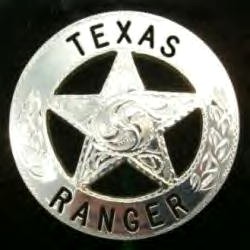
Texas Rangers were established - 1835


On October 17, 1835, Texans approve a resolution to create the Texas Rangers, a corps of armed and mounted lawmen designed to guard the frontier between the Brazos and Trinity Rivers. In the midst of their revolt against Mexico, Texan leaders felt they needed a semi-official force of armed men who would defend the isolated frontier settlers of the Lone Star Republic against both Santa Ana's soldiers and hostile Indians; the Texas Rangers filled this role. After gaining independence from Mexico the following year, Texans decided to keep the Rangers, both to defend against Indian and Mexican raiders and to serve as the principal law enforcement authority along the sparsely populated Texan frontier. Although created and sanctioned by the Texas government, the Rangers were an irregular body made up of civilians who furnished their own horses and weapons. Given the vast expanse of territory they patrolled and the difficulty of communicating with the central government, the government gave the men of the Rangers considerable independence to act as they saw fit. Sometimes the Rangers served as a military force, taking on the role of fighting the Indians that in the U.S. was largely the responsibility of the Army. At other times the Rangers mainly served as the principal law enforcement power in many frontier regions of Texas, earning lasting fame for their ability to track down and eliminate outlaws, cattle thieves, train robbers, and murderers, including such notorious bandits as John Wesley Hardin and King Fisher. Even as late as the first two decades of the 20th century, the state of Texas continued to rely on the Rangers to enforce order in the wilder regions of the state, like the oil boomtowns along the Rio Grande. Increasingly, though, some Texans began to criticize the Rangers, arguing that they used excessive violence and often failed to observe the finer points of the law when apprehending suspects. As a result, in the 1930s, the state won control over the Rangers, transforming it into a modern and professional law enforcement organization.
 
Michael Thomas Barry is a columnist for CrimeMagazine.com and is the author of Murder and Mayhem 52 Crimes that Shocked Early California 1849-1949. The book can be purchased from Amazon through the following link:

Tuesday, October 15, 2013

Mata Hari was executed - 1917


On October 15, 1917, exotic dancer Mata Hari was executed by a French firing squad for the crime of espionage. She was born Margueretha Gertruida Zelle in a small town in northern Holland and formerly married to a captain in the Dutch army; Mata Hari had performed in Paris as a dancer since 1903. She adopted an elaborate stage persona, claiming she was born in a sacred Indian temple and taught ancient Indian dances by a priestess who gave her the name Mata Hari, which meant "eye of the dawn." Her exotic dances soon earned her fans all over Europe, where she packed dance halls, largely because of her willingness to dance almost entirely naked in public.
A courtesan as well as a dancer, Mata Hari amassed an impressive catalog of lovers, including high-ranking military officers and political figures from both France and Germany. With the outbreak of World War I, these relationships immediately made her suspicious to French intelligence, which reportedly put her under surveillance. The circumstances of her alleged spying activities during the war were and remain unclear: It was said that, while in the Netherlands in 1916, she was offered cash by a German consul to report back information obtained on her next visit to France. When British intelligence discovered details of this arrangement, they passed them on to their counterparts in France; Mata Hari was arrested in Paris in February 1917.
Under interrogation by French military intelligence, Mata Hari herself admitted that she had passed outdated information to a German intelligence officer, yet she claimed that she had also been paid to act as a French spy in Belgium (then occupied by the Germans) though she had not informed the French of her prior dealings with the German consul. She was apparently acting as a double agent, though the Germans had apparently written her off as being ineffective. She was tried in a military court and sentenced to death. The trial was riddled with bias and circumstantial evidence, and many believed that the French authorities, as well as the press, trumped her up as "the greatest woman spy of the century" to distract the public from the huge losses the French army was suffering on the Western Front. After her last-minute plea to the French president for clemency was denied, French officers carried out the death sentence on October 15, 1917. Unbound and refusing a blindfold, Mata Hari was shot by a firing squad at the Caserne de Vincennes, an old fort outside Paris. Viewed by many as the victim of a hysterical French press contemptuous of her career as a dancer and courtesan and seeking a scapegoat, Mata Hari remains one of the most glamorous figures to come out of the shadowy world of espionage, and the archetype of the female spy.
 
Michael Thomas Barry is a columnist for CrimeMagazine.com and is the author of Murder and Mayhem 52 Crimes that Shocked Early California, 1849-1949. The book can be purchased from Amazon through the following link:

Monday, October 14, 2013

Amityville murder trial began - 1975


On October 14, 1975, the murder trial of Ronald DeFeo Jr. began. Defoe was accused of killings his parents and four siblings in their Amityville, New York home. The family’s house was later said to be haunted and served as the inspiration for the Amityville Horror book and movies. On the evening of November 13, 1974, Ronald “Butch” DeFeo Jr. entered an Amityville bar and told people his parents had been shot inside their home. Several bar patrons accompanied DeFeo back to his family’s home, at 112 Ocean Avenue, where a man named Joe Yeswit called Suffolk Country police to report the crime. When officers arrived, they found the bodies of Ronald DeFeo Sr., his wife Louise, and their four children. The victims had been shot in their beds. Ronald DeFeo Jr., initially claimed the murders were a mob hit; however, by the next day he had confessed that he committed the crimes.
Police investigators were at first puzzled by the fact that all six victims appeared to have died in their sleep, without struggle, and neighbors didn’t hear any gunshots, despite the fact that the rifle DeFeo used didn’t have a silencer. When DeFeo’s trial began, his attorney argued for an insanity defense; however, the jury did not believe this and he was found guilty of six counts of second-degree murder and later sentenced to six consecutive sentences of 25 years to life in prison. DeFeo, who gave conflicting accounts of these events, later claimed his sister Dawn and two other accomplices were involved in the murders. In December 1975, the DeFeo house was sold to George Lutz, who moved in with his wife and three children. The new owners resided in the house for 28 days, before they fled, claiming it was haunted. Skeptics accused Lutz of concocting the story to make money, but he maintained he was telling the truth. In 1977, Jay Anson published a novel titled The Amityville Horror. The book became a best-seller and inspired a 1979 movie of the same name, as well as a 2005 remake.
 
Michael Thomas Barry is a columnist for CrimeMagazine.com and is the author of Murder and Mayhem 52 Crimes that Shocked Early California, 1849-1949. The book can be purchased from Amazon through the following link:

Wednesday, October 9, 2013

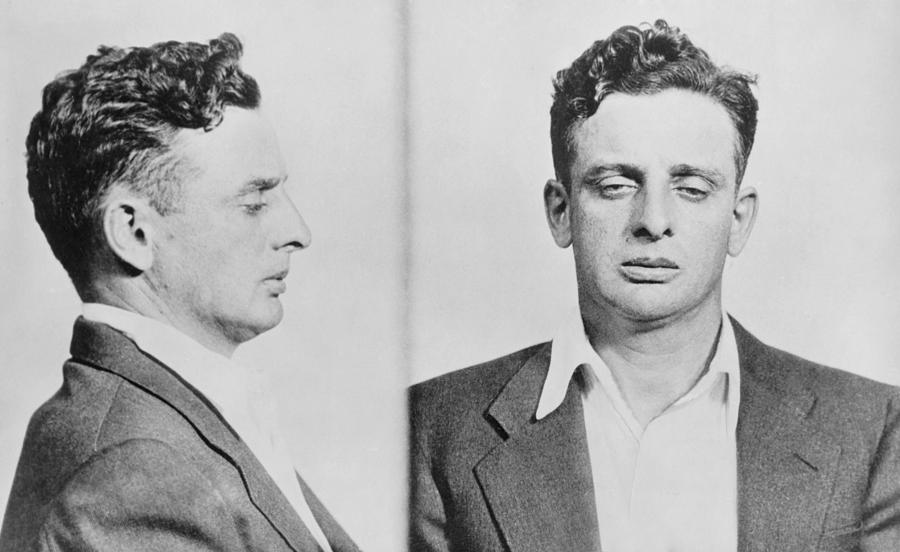
Chicago area bootlegger Roger Touhy escapes from prison - 1942


On October 9, 1942, notorious Chicago area bootlegger Roger "The Terrible" Touhy escapes from Statesville Prison by climbing the guard's tower. Touhy, who had been framed for kidnapping by his bootlegging rivals, was serving a 99-year sentence for a crime he did not commit. The son of a police officer, Touhy had served in the Navy during World War I and later set up a trucking business in the Chicago suburbs. When business slowed during Prohibition, Touhy realized he could earn a better living through bootlegging. Along with his partner, Matt Kolb, Touhy began brewing his own beer and shipping it to speakeasies all over the state. His beer was widely considered the finest available at the time. When mob boss Al Capone heard about Touhy's operation, he wanted to get in on the action, but since Capone was not really familiar with the environment outside of the city, Touhy had an advantage. After a meeting with Touhy, Capone's henchmen reported back that he wasn’t someone to mess with. Undeterred, Capone had Matt Kolb kidnapped and then forced Touhy to pay $50,000 in ransom for his release. When Kolb was murdered in 1931, the feud escalated. Capone was instrumental in orchestrating the fake kidnapping plot of Jake Factor, which was pinned on Touhy. He was convicted of the crime and sent to prison. Shortly after his escape in 1942, Touhy was returned to prison but his conviction was eventually overturned upon appeal in 1959. Three weeks after his release from prison, Touhy was gunned down at his sister’s home. Before he died, he was reported to have said, "I've been expecting it. The bastards never forget." No arrests were made in Touhy’s murder.
 
Michael Thomas Barry is a columnist for CrimeMagazine.com and is the author of Murder & Mayhem 52 Crimes that Shocked Early California 1849-1949. The book can be purchased from Amazon through the following link:
 

Friday, October 4, 2013

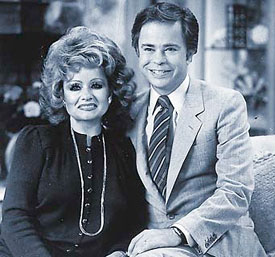
Jim Bakker was indicted on federal charges - 1988


On October 4, 1988, televangelist Jim Bakker was indicted on federal charges of mail and wire fraud and of conspiring to defraud the public. The case against the founder of Praise the Lord (PTL) Ministries and three of his aides exploded in the media when it was revealed that Bakker had sex with former church secretary Jessica Hahn.
On December 6, 1980, Bakker and Hahn had a sexual encounter in a Florida hotel room. Although they each told different stories of what had happened, Bakker eventually paid Hahn over $350,000 to remain silent. When the arrangement became public, the scandal helped to bring down the entire PTL ministry. Hahn, who claimed that she didn't want to be in the spotlight, became an overnight celebrity. Bakker and his wife, Tammy Faye, were enormously successful at raising money for their televised religious programs, and after its 1974 debut, their cable show became the highest rated religious show in the country. The Bakkers then added talk-show elements to standard preaching, often featuring celebrities, music, and comedy. With all of the money they made from their programming, they built a 2,200-acre resort, Heritage USA. When the sex scandal was leaked, other televangelists were outraged. Jimmy Swaggart, in particular, went out of his way to condemn Bakker. Tammy Faye responded to their critics by singing "The Ballad of Jim and Tammy Faye" to the tune of "Harper Valley PTA" on their show. Still, Tammy Faye could not defend the ministry against federal charges that the funding for Heritage USA had been acquired by defrauding their viewers and donors. Although the evidence was not particularly strong, Jim Bakker was convicted in 1989 and sentenced to 45 years in prison. The sentence was later reduced to eight years, and he was released in 1994. Tammy Faye divorced Jim while he was in prison; she died in 2007.
 
Michael Thomas Barry is a columnist for CrimeMagazine.com and is the author of Murder & Mayhem 52 Crimes that Shocked Early California 1849-1949. The book can be purchased from Amazon through the following link:

Thursday, October 3, 2013

Amanda Knox's murder conviction is overturned - 2011


On October 3, 2011, an Italian appeals court overturns the murder conviction of Amanda Knox, an American exchange student who two years earlier was found guilty in the 2007 murder of her British roommate, Meredith Kercher. At the time of her 2009 conviction, Knox received a 26-year prison sentence, while her ex-boyfriend, Italian college student Raffaelle Sollecito, who also was convicted in the slaying, was sentenced to 25 years behind bars. The sensational, high-profile case raised questions in the United States about the Italian justice system and whether Knox, who always maintained her innocence, was unfairly convicted.
On November 2, 2007, the 21-year-old Kercher of Coulsdon, England, was found fatally stabbed in the bedroom of the home she shared with Knox and two other women in Perugia, the capital city of the Umbria region in central Italy. Investigators said the British exchange student had been slain the previous night. After questioning by police, Knox, a Seattle native and University of Washington student doing her junior year abroad in Italy, was arrested. She denied any wrongdoing, saying she was at another student’s house the night of the murder. Police claimed Knox later gave them conflicting statements about her whereabouts at the time of the crime. She said that police had coerced her into making incriminating statements.
During the nearly yearlong trial that followed, prosecutors charged that Knox, along with Sollecito and another man, Rudy Guede, had viciously attacked Kercher in a sex game gone wrong. (Guede was convicted for his role in Kercher’s death in a separate, fast-track trial in 2008. He was sentenced to 30 years in prison, which was reduced to 16 years on appeal.) The prosecution’s main evidence against Knox included tiny traces of her DNA and that of Kercher’s on a knife discovered at Sollecito’s home. Traces of Knox’s DNA were also found on a bra clasp belonging to Kercher. Knox’s attorneys argued the bra clasp was found over a month after the murder at a contaminated crime scene, and that the knife blade couldn’t have made the wounds on the victim.

Knox and Sollecito appealed their convictions, and at their subsequent trial court-appointed experts testified the original DNA evidence was unreliable and did not definitively link the young American and her former boyfriend to the crime. On October 3, 2011, an appellate court jury of two judges and six civilians in Perugia acquitted the two defendants of murder. (The court upheld Knox’s conviction on a charge of defamation for accusing her former boss of murdering Kercher. Knox was given time served along with a fine.) The 24-year-old Knox, who had been jailed in Italy since her 2007, flew home to the United States the following day. In March 2013, in a new twist in the case, Italy's highest court overturned the acquittals of Knox and Sollecito and ordered that they be retried. The retrial is expected to take place sometime in 2014.
 
Michael Thomas Barry is a columnist for CrimeMagazine.com and is the author of Murder and Mayhem 52 Crimes that Shocked Early California 1849-1949. The book can be purchased from Amazon through the following link:

Monday, September 30, 2013

Jack the Ripper murders Elizabeth Stride and Catherine Eddowes in same night - 1888


On the early morning hours of September 30, 1888, serial killer Jack the Ripper claimed two victims in one night, Elizabeth Stride and Catherine Eddowes. Jack the Ripper is the name given to an unidentified serial killer who was active in the Whitechapel district of London in 1888.
The name originated in a letter, written by someone claiming to be the murderer that was disseminated in the media. The letter is widely believed to have been a hoax, and may have been written by a journalist in a deliberate attempt to heighten interest in the story. Attacks ascribed to the Ripper typically involved female prostitutes who lived and worked in the slums of London and whose throats were cut prior to abdominal mutilations. Extensive newspaper coverage bestowed widespread and enduring international notoriety on the Ripper.
Stride's body was discovered at about 1 a.m., in Dutfield's Yard, off Berner Street in Whitechapel. The cause of death was one clear-cut incision which severed the main artery on the left side of the neck. Witnesses who thought they saw Stride with a man earlier that night gave differing descriptions. Eddowes' body was found in Mitre Square, in the City of London, three-quarters of an hour after Stride's. The throat was severed, and the abdomen was ripped open by a long, deep, jagged wound. The left kidney and the major part of the uterus had been removed. These murders were later called the "double event.” Part of Eddowes' bloodied apron was found at the entrance to a tenement in Goulston Street, Whitechapel. Some writing on the wall above the apron piece, seemed to implicate a Jew or Jews, but it was unclear whether the graffiti was written by the murderer as he dropped the apron piece, or merely incidental. Police Commissioner Charles Warren feared the graffiti might spark anti-Semitic riots, and ordered it washed away before dawn.
 
Michael Thomas Barry is a columnist for CrimeMagazine.com and is the author of Murder and Mayhem 52 Crimes that Shocked Early California 1849-1949. The book can be purchased from Amazon through the following link:

Friday, September 27, 2013

Wild Bill Hickok shoots and kills man during brawl in 1869


On the early morning hours of September 27, 1869, then lawman Wild Bill Hickok (and future gunslinger) responded to a report of men brawling at a saloon in Hays, Kansas. A local ruffian named Samuel Strawhun and several friends were tearing up John Bitter's Beer Saloon when Hickok arrived and ordered the men to stop, Strawhun turned to attack him, and Hickok shot him killing him instantly.
Famous for his skill with a pistol and steely-calm under fire, James Butler Hickok initially seemed to be the ideal man for the sheriff of Ellis County, Kansas. The good citizens of Hays City, the county seat, were tired of the wild brawls and destructiveness of the hard-drinking buffalo hunters and soldiers who took over their town every night. They hoped the famous "Wild Bill" could restore peace and order, and in the late summer of 1869, elected him as interim county sheriff. Hickok had a reputation as a deadly shot and this keep many potential lawbreakers on the straight and narrow. But when Hickok applied more aggressive methods of enforcing the peace, some Hays City citizens began to wonder about their decision. Shortly after becoming sheriff, Hickok shot a belligerent soldier who resisted arrest, and the man died the next day. A few weeks later Hickok killed Strawhun. While his brutal ways were indisputably effective, many Hays City citizens were less than impressed that after only five weeks in office he had already found it necessary to kill two men in the name of preserving peace. During the regular November election later that year, the people expressed their displeasure by not reelecting Hickok. Though Wild Bill Hickok would later go on to hold other law enforcement positions in the West, his first attempt at being a sheriff had lasted only three months.
 
Michael Thomas Barry is a columnist for CrimeMagazine.com and the author of Murder & Mayhem 52 Crimes that Shocked Early California 1849-1949. The book can be purchased from Amazon through the following link:

Wednesday, September 25, 2013

Mobster Anthony Carfano and his former beauty queen girlfriend are wacked - 1959


On September 25, 1959, mobster Anthony Carfano, known as Little Augie Pisano is shot to death in Queens, New York City on the orders of Meyer Lansky. Carfano was a Captain the Luciano Organized Crime Family. His was murdered because he refused to meet with Vito Genovese after Genovese took control of the Family in 1957. He was shot to death in his car on a street in Queens, New York, along with Janice Drake, a former Miss New Jersey and wife of comedian Alan Drake. During dinner at Marino’s restaurant in New York City, Carfano allegedly received a phone call. After hanging up, he told his group that he and Drake had to leave; he had been called away "on urgent business". Carfano and Drake left and drove away in his Cadillac. Police later theorized that this phone call was from Frank Costello warning Carfano about a possible hit. When Carfano and Drake left the restaurant, they were allegedly heading to La Guardia Airport to board a flight to Miami. However, according to this theory, assassins had anticipated such a move and had hidden in the back seat of Cafano’s Cadillac. Once on the road, the gunmen forced Carfano to drive to a quiet location near the airport. At 10:30 that evening, 45 minutes after Carfano and Drake left Marino's, their bodies were found in Carfano's car near the airport. Both had been shot in the head.
Michael Thomas Barry is a columnist for CrimeMagazine.com and is the author of Murder and Mayhem 52 Crimes that Shocked Early California, 1849-1949. The book can be purchased from Amazon through the following link:

Monday, September 23, 2013

Chicago Eight trial began - 1969


On September 23, 1969, the Chicago Eight trial begins. Eight antiwar activists had been arrested and charged with instigating the violent demonstrations at the August 1968 Democratic National Convention in Chicago. The defendants included David Dellinger of the National Mobilization Committee (NMC); Rennie Davis and Thomas Hayden of the Students for a Democratic Society (SDS); Abbie Hoffman and Jerry Rubin, founders of the Youth International Party ("Yippies"); Bobby Seale of the Black Panthers; and two lesser known activists, Lee Weiner and John Froines. The group was charged with conspiracy to cross state lines with intent to incite a riot. All but Seale were represented by attorneys William Kunstler and Leonard Weinglass. The trial, presided over by Judge Julius Hoffman, turned into a circus as the defendants and their attorneys used the court as a platform to attack Nixon, the war, racism, and oppression. Their tactics were so disruptive that at one point, Judge Hoffman ordered Seale gagged and strapped to his chair. When the trial ended in February 1970, Hoffman found the defendants and their attorneys guilty of 175 counts of contempt of court and sentenced them to terms between two to four years. Although declaring the defendants not guilty of conspiracy, the jury found all but Froines and Weiner guilty of intent to riot. The others were each sentenced to five years and fined $5,000. None of the defendants served time because in 1972, a Court of Appeal overturned the criminal convictions and eventually most of the contempt charges were dropped as well.
Michael Thomas Barry is a columnist for CrimeMagazine.com and is the author of Murder & Mayhem 52 Crimes that Shocked Early California1849-1949. The book can be purchased from Amazon through the following link:

Thursday, September 19, 2013

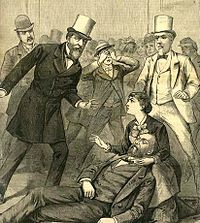
President James A. Garfield succumbs to wounds - 1881


On September 19, 1881, President James A. Garfield succumbs to wounds inflicted by an assassin 80 days earlier. Garfield's assassin was an attorney and political office-seeker named Charles Guiteau. Guiteau was a relative stranger to the president and his administration in an era when federal positions were doled out on a "who you know" basis. When his requests for an appointment were ignored, a furious Guiteau stalked the president, vowing revenge.
On the morning of July 2, 1881, Garfield headed for the Baltimore and Potomac Railroad station on his way to a short vacation. As he walked through the station toward the waiting train, Guiteau stepped behind the president and fired two shots. The first bullet grazed Garfield's arm; the second lodged below his pancreas. Doctors made several unsuccessful attempts to remove the bullet while Garfield lay in his White House bedroom, awake and in pain. Alexander Graham Bell, who was one of Garfield's physicians, tried to use an early version of a metal detector to find the second bullet, but failed. Historical accounts vary as to the exact cause of Garfield's death. Some believe that experimental medical treatments may have hastened his demise. Others insist Garfield died from an already advanced case of heart disease. By early September, Garfield, who was recuperating at a seaside retreat in New Jersey, appeared to be recovering. He died on September 19th. Autopsy reports at the time said that pressure from his internal wound had created an aneurism, which was the likely cause of death. Guiteau was deemed sane by a jury, convicted of murder and hanged on June 30, 1882.
Michael Thomas Barry is a columnist for crimemagazine.com and the author of Murder & Mayhem 52 Crimes that Shocked Early California1849-1949. The book can be purchased from Amazon through the following link:

Monday, September 16, 2013

Mormon leader Brigham Young ordered murder of alleged spy - 1845


On September 16, 1845, Phineas Wilcox is stabbed to death by fellow Mormons in Nauvoo, Illinois, because he is believed to be a spy. The murder of Wilcox reflected the serious and often violent conflict between the Church of Jesus Christ of Latter-day Saints and the surrounding communities. Joseph Smith, who founded the Mormon Church in 1830, had been living with his followers in Missouri, where they had various conflicts with locals, including an armed skirmish with the state militia. In 1838, Governor Lilburn Boggs signed a military order directing that the Mormons be expelled or exterminated: "The Mormons must be treated as enemies and must be exterminated or driven from the state, if necessary, for the public good." Smith and the Mormons fled across the Mississippi to Nauvoo, Illinois, which quickly became the second most populous town in the state, but there were conflicts and tensions in Nauvoo as well. When a local newspaper printed editorials claiming that the religious leader was a fraud, Smith sent a group of followers to destroy the newspaper office. He was then arrested and sent to jail, where a lynch mob tracked him down and killed him. Brigham Young, who quickly took over the church, tried to stifle dissent and banished rivals. The killing of Phineas Wilcox was part of his consolidation of power. Tensions with other communities continued to escalate, and, a year later, over 2,000 armed anti-Mormons marched on Nauvoo. Young decided that it no longer was wise to stay in the area. He led his flock west and settled in the Salt Lake Valley, where he and his followers would become instrumental in founding the state of Utah.
 
Michael Thomas Barry is a columnist at www.crimemagazine.com and the author of Murder & Mayhem 52 Crimes that Shocked Early California 1849-1949. The book can be purchased from Amazon through the following link:

Saturday, September 14, 2013

President William McKinley died - 1901


On September 14, 1901, President William McKinley succumbs to gunshot wounds inflicted by an assassin on September 6th. According to witnesses, McKinley's last words were those of the hymn "Nearer My God to Thee." McKinley was shaking hands in reception line at the Pan-American Exhibition in Buffalo, New York, when a 28-year-old anarchist named Leon Czolgosz approached him with a gun concealed in a handkerchief in his right hand.
McKinley assumed the handkerchief was an attempt by Czolgosz to hide a physical defect and kindly reached for the man's left hand. Czolgosz moved in close to the president and fired two shots into McKinley's chest. The assassin was attempting to fire a third bullet into the stricken president when aides wrestled him to the ground. McKinley suffered one superficial wound to the sternum and another bullet dangerously entered his abdomen. He was rushed into surgery and seemed to be on the mend by September 12th, but later that day, his condition worsened. On September 14th, McKinley died from gangrene that had remained undetected in the internal wound. Vice President Theodore Roosevelt was sworn in as president immediately following McKinley's death. Czolgosz confessed to his crime, but remained unrepentant. At his execution on October 29, 1901, his last words were "I killed the president because he was the enemy of the good people, the working people."
 
Michael Thomas Barry is a columnist for CrimeMagazine.com and author of Murder & Mayhem 52 Crimes that Shocked Early California 1849-1949. The book can be purchased from Amazon through the following link:

Friday, September 13, 2013

Rapper Tupac Shakur died from wounds sustained in drive-by shooting - 1996


On September 13, 1996, rapper Tupac Shakur died from gunshot wounds suffered in a Las Vegas drive-by shooting. More than a decade after his death Tupac Shakur remains one of the most recognizable faces and voices in music. A steady stream of posthumous album releases has kept his name near the top of sales rankings. But unlike other rappers with whom his story is intertwined, Shakur’s stature has grown with each passing year since his still-unsolved murder.
The story of Shakur's death begins with a failed attempt on his life two years earlier. On November 30, 1994, Tupac Shakur was shot and seriously wounded during a robbery committed by two armed men in the lobby of a midtown Manhattan office building that housed a recording studio where he'd been working on his third album, Me Against the World (1995). For reasons that have been detailed obsessively in works such as Nick Broomfield's 2002 documentary Biggie and Tupac, Shakur blamed the attack on producer Sean "Puff Daddy" Combs and rival rapper Christopher Wallace—a.k.a. "The Notorious B.I.G." Shakur's charges, and his subsequent move to the L.A.-based record label Death Row Records, sparked the so-called "East Coast vs. West Coast" feud that defined the hip-hop scene through the mid-1990s.
In Las Vegas on September 7, 1996, for the Mike Tyson-Bruce Seldon boxing match, Shakur and others in his entourage were captured on tape in the lobby of the MGM Grand hotel engaging in a violent scuffle with a man later identified as a member of the Los Angeles-based Bloods street gang. Hours later, Shakur was riding as a passenger in a car driven by Death Row Records head Marian "Suge" Knight when a white Cadillac pulled up alongside them at a stoplight on Flamingo Road. At least 12 shots were fired, four of which struck Shakur and one of which grazed the head of Suge Knight. Emergency surgery at University Medical Center saved Shakur's life that night, and in the days following, doctors announced that his chances of recovery had improved, but on September 13, 1996, he died of his wounds. Six months later, his rap rival, Christopher Wallace, was murdered in similar circumstances in Los Angeles. No arrest has been made to date in connection with either murder.
 
Michael Thomas Barry is a columnist for CrimeMagazine.com and author of Murder & Mayhem 52 Crimes that Shocked Early California 1849-1949. His book can be purchased from Amazon through the following link:

Tuesday, September 10, 2013

Infamous serial killing duo meet for the first time - 1977


On September 10, 1977, Charlene Williams meets Gerald Gallego at a poker club in Sacramento, California, resulting in one of the most infamous serial killing teams in American history. Before they were finally caught, the Gallegos killed and sexually assaulted at least 10 people over a two-year period. Within a week of their first encounter, Charlene moved in with Gerald. The son of the first man to be executed in Mississippi’s gas chamber, Gerald had amassed seven felony convictions by the age of 32. By the time Charlene met Gerald; she had already gone through two marriages and had acquired a hard-drug habit. Gerald often brought home teenage runaways, so that he could indulge in threesome’s with Charlene. However, he became extremely angry when he found out that Charlene and the girl were engaging in sex without him. The couple soon decided to find victims that could keep Gerald sexually satisfied. After two months of planning, they abducted their first victims in September 1978: two teenage girls, whom they sexually assaulted, beat with a tire iron, and then shot in the head. The couple, now married, waited until the following June before striking again, grabbing two young girls in Reno, Nevada. However, Charlene became angry when Gerald started raping the girls without her, while she was driving the van. When she began firing shots at him, he quickly killed the victims. The pace of the couple's killings quickened in 1980. In April, they kidnapped, sexually assaulted, and murdered two girls from a mall near Sacramento. Two months later, they found another victim during a vacation in Oregon. This time they buried their victim alive. In July, the Gallegos kidnapped and killed a couple as they were leaving a fraternity party. However, partygoers got the license plate of their car, and a manhunt was instituted. The Gallegos managed to elude authorities for a few months but were finally caught in November in Omaha, Nebraska. While awaiting trial, Charlene agreed to testify against Gerald to save her own life. Gerald Gallego was tried in both Nevada and California and received death sentences in both states. Charlene was sentenced to 16 years and 8 months in jail and was released in July 1997.
 
Michael Thomas Barry is the author of Murder & Mayhem 52 Crimes that Shocked Early California 1849-1949. The book can be purchased from Amazon through the following link:
Amazon - http://www.amazon.com/Murder-Mayhem-Shocked-California-1849-1949/dp/0764339680/ref=la_B0035CPN70_1_3?ie=UTF8&qid=1361552464&sr=1-3

Monday, September 9, 2013

Attica Prison Riot - 1971


On September 9, 1971, prisoners riot and seize control of the maximum-security Attica Correctional Facility near Buffalo, New York. Later that day, state police retook most of the prison, but 1,281 convicts occupied an exercise field called D Yard, where they held 39 prison guards and employees hostage for four days. After negotiations stalled, state police and prison officers launched a disastrous raid on September 13th, in which 10 hostages and 29 inmates were killed in an indiscriminate hail of gunfire. Eighty-nine others were seriously injured.
By the summer of 1971, the state prison in Attica, New York, was ready to explode. Inmates were frustrated with chronic overcrowding, censorship of letters, and living conditions that limited them to one shower per week and one roll of toilet paper each month. Some Attica prisoners, adopting the radical spirit of the times, began to perceive themselves as political prisoners rather than convicted criminals. On the morning of September 9,1971 the eruption came when inmates on the way to breakfast overpowered their guards and stormed down a prison gallery in a spontaneous riot. They broke through a faulty gate and into a central area known as Times Square, which gave them access to all the cellblocks. Many of the prison's 2,200 inmates then joined in the rioting, and prisoners rampaged through the facility beating guards, acquiring makeshift weapons, and burning down the prison chapel. One guard, William Quinn, was severely beaten and thrown out a second-story window. Two days later, he died in a hospital from his injuries.
Using tear gas and submachine guns, state police regained control of three of the four cellblocks held by the rioters without loss of life. By 10:30 a.m., the inmates were only in control of D Yard, a large, open exercise field surrounded by 35-foot walls and overlooked by gun towers. Thirty-nine hostages, mostly guards and a few other prison employees were blindfolded and held in a tight circle. Inmates armed with clubs and knives guarded the hostages closely. Riot leaders put together a list of demands, including improved living conditions, more religious freedom, an end to mail censorship, and expanded phone privileges. They also called for specific individuals, such as U.S. Representative Herman Badillo and New York Times columnist Tom Wicker, to serve as negotiators and civilian observers. Meanwhile, hundreds of state troopers arrived at Attica, and New York Governor Nelson A. Rockefeller called in the National Guard.
In tense negotiations, New York Correction Commissioner Russell Oswald agreed to honor the inmates' demands for improved living conditions. However, talks bogged down when the prisoners called for amnesty for everyone in D Yard, along with safe passage to a "non-imperialist country" for anyone who desired it. Observers pleaded with Governor Rockefeller to come to Attica as a show of good faith, but he refused and instead ordered the prison to be retaken by force.
On the rainy Monday morning of September 13th, an ultimatum was read to the inmates, calling on them to surrender. They responded by putting knives against the hostages' throats. At 9:46 a.m., helicopters flew over the yard, dropping tear gas as state police and correction officers stormed in with guns blazing. The police fired 3,000 rounds into the tear gas haze, killing 29 inmates and 10 of the hostages and wounding 89. Most were shot in the initial indiscriminate barrage of gunfire, but other prisoners were shot or killed after they surrendered. An emergency medical technician recalled seeing a wounded prisoner, lying on the ground, shot several times in the head by a state trooper. Another prisoner was shot seven times and then ordered to crawl along the ground. When he didn't move fast enough, an officer kicked him. Many others were savagely beaten.
In the aftermath of the bloody raid, authorities said the inmates had killed the slain hostages by slitting their throats. One hostage was said to have been castrated. However, autopsies showed that these charges were false and that all 10 hostages had been shot to death by police. The attempted cover-up increased public condemnation of the raid and prompted a Congressional investigation. The Attica riot was the worst prison riot in U.S. history. A total of 43 people were killed, including the 39 killed in the raid, guard William Quinn, and three inmates killed by other prisoners early in the riot. In the week after its conclusion, police engaged in brutal reprisals against the prisoners, forcing them to run a gauntlet of nightsticks and crawl naked across broken glass, among other tortures. The many injured inmates received substandard medical treatment, if any.
In 1974, lawyers representing the 1,281 inmates filed a $2.8 billion class-action lawsuit against prison and state officials. It took 18 years before the suit came to trial, and five more years to reach the damages phase, delays that were the fault of a lower-court judge opposed to the case. In January 2000, New York State and the former and current inmates settled for $8 million, which was divided unevenly among about 500 inmates, depending on the severity of their suffering during the raid and the weeks following. Families of the slain correction officers lost their right to sue by accepting the modest death-benefit checks sent to them by the state. The hostages who survived likewise lost their right to sue by cashing their paychecks. Both groups attest that no state officials apprised them of their legal rights, and they were denied compensation that New York should have paid to them.
 
Michael Thomas Barry is the author of Murder & Mayhem 52 Crimes that Shocked Early California 1849-1949. The book can be purchased from Amazon through the following link:

Saturday, August 31, 2013

Serial killer Richard Ramirez "The Night Stalker" is captured - 1985


On August 31, 1985, Richard Ramirez, the notorious "Night Stalker," is captured and nearly killed by a mob in East Los Angeles, California, after being recognized from a photograph shown both on television and in newspapers. Recently identified as the serial killer, Ramirez was saved from the enraged mob by police officers. During the summer of 1985, the city of Los Angeles was panic-stricken by a killer who crept into his victims' homes at night. The Night Stalker, as the press dubbed the murderer, would first turned his attention on the men in the house, usually shooting them with a .22 caliber handgun before raping, stabbing, and mutilating his female victims. By August, the Night Stalker has murdered at least a dozen people, and law enforcement officials were desperate to stop him. One witness, who managed to note the license plate of the car in which Ramirez fled, led police to a single, partial fingerprint left in the vehicle. Apparently, the task force looking for the Night Stalker had already received information that someone named Ramirez was involved, so only criminal records for men with that name were checked against the fingerprint. When Ramirez was identified as the chief suspect, authorities debated whether to release his name and picture to the public, fearing that it might give him the chance to escape. Nonetheless, they decided to take the risk, and Ramirez, who was actually traveling back to Los Angeles at the time, arrived to find his face and name on the front of every newspaper. Ramirez turned his trial into a circus by drawing pentagrams on his palms and making devil's horns with his fingers. When he was convicted, he shouted at the jury, "You make me sick. I will be avenged. Lucifer dwells within all of us." After the judge imposed a death sentence, Ramirez said, "Big deal. Death always went with the territory. See you in Disneyland." Ramirez died in prison on June 7, 2013.
 
Michael Thomas Barry is a columnist for CrimeMagazine.com where he pens the daily column “On this date in crime history.” He is also the author of numerous books that include Murder & Mayhem 52 Crimes that Shocked Early California 1849-1949. This book can be purchased from Amazon through the following link:
Amazon - http://www.amazon.com/Murder-Mayhem-Shocked-California-1849-1949/dp/0764339680/ref=sr_1_2?s=books&ie=UTF8&qid=1377971023&sr=1-2

Tuesday, August 27, 2013

Lord Louis Mountbatten was assassinated - 1979


On August 27, 1979, Lord Louis Mountbatten is killed when Irish Republican Army terrorists who detonate a bomb hidden on his fishing vessel Shadow V. Mountbatten, a war hero, elder statesman, and second cousin of Queen Elizabeth II, was spending the day with his family in Donegal Bay off Ireland's northwest coast when the bomb exploded. Three others were killed in the attack, including Mountbatten's 14-year-old grandson, Nicholas. Later that day, an IRA bombing attack on land killed 18 British paratroopers in County Down, Northern Ireland. The assassination of Mountbatten was the first blow struck against the British royal family by the IRA during its long terrorist campaign to drive the British out of Northern Ireland and unite it with the Republic of Ireland to the south. The attack convinced Margaret Thatcher's government to take a hard-line stance against the terrorist organization.
Louis Mountbatten, the son of Prince Louis of Battenberg and a great-grandson of Queen Victoria, entered the Royal Navy in 1913, when he was in his early teens. He saw service during World War I and World War II. In 1947, he was appointed the last viceroy of India, and he conducted the negotiations that led to independence for India and Pakistan later that year. He held various high naval posts in the 1950s and served as chief of the United Kingdom Defense Staff and chairman of the Chiefs of Staff Committee. Meanwhile, he was made Viscount Mountbatten of Burma and a first earl. He was the uncle of Philip Mountbatten and introduced Philip to the future Queen Elizabeth. He later encouraged the marriage of the two distant cousins and became godfather and mentor to their first born, Charles, Prince of Wales.
Made governor and then lord lieutenant of the Isle of Wight in his retirement, Lord Mountbatten was a respected and beloved member of the royal family. His assassination was perhaps the most shocking of all horrors inflicted by the IRA against the United Kingdom. The IRA immediately claimed responsibility for the attack, saying it detonated the bomb by remote control from the coast. IRA member Thomas McMahon was later arrested and convicted of preparing and planting the bomb that destroyed Mountbatten's boat. He was a leader of the IRA's notorious South Armagh Brigade, which killed more than 100 British soldiers. He was one of the first IRA members to be sent to Libya to train with detonators and timing devices and was an expert in explosives. Authorities believe the Mountbatten assassination was the work of many people, but McMahon was the only individual convicted. Sentenced to life in prison, he was released in 1998 along with other IRA and Unionist terrorists under a controversial provision of the Good Friday Agreement, Northern Ireland's peace deal.

 
Michael Thomas Barry is a columnist for CrimeMagazine.com and pens the daily column “On this date in crime history. He is also the author of Murder & Mayhem 52 Crimes that Shocked Early California (2012) and Great Britain’s Royal Tombs (2012). These books can be purchased from Amazon through the following links:

Monday, August 26, 2013

Mary Ann Nichols "First Victim of Jack the Ripper" was born - 1845


The first murder victim of Jack the Ripper, Mary Ann "Polly" Nichols was born on August 26, 1845 in London. Her death has been attributed to the notorious unidentified serial killer, who is believed to have killed and mutilated five women in the Whitechapel area of London from late August to early November 1888. She was found lying on the ground in front of a gated stable entrance in Buck’s Row, Whitechapel, around 3:40 am on August 31st, about 150 yards from the London Hospital by cart driver named Charles Cross. No one had reported hearing or seeing anything suspicious before the discovery of the body.
Doctor Henry Llewellyn, who arrived on the scene around 4:00 am, determined that she had been dead for about 30 minutes. Her throat had been slit twice from left to right and her abdomen mutilated with one deep jagged wound, several incisions across the abdomen, and three or four similar cuts on the right side caused by the same knife. He expressed surprise at the small amount of blood at the crime scene, "about enough to fill two large wine glasses, or half a pint at the most.” His comment led to the supposition that Nichols was not killed where her body was found, but the blood from her wounds had soaked into her clothes and hair, and there was little doubt that she had been killed at the crime scene by a swift slash to the throat. Death would have been instantaneous, and the abdominal injuries, which would have taken less than five minutes to perform, were made by the murderer after she was dead. Nichols was buried at the City of London Cemetery, in a public grave numbered 210752 (on the edge of the current Memorial Garden). In late 1996, the cemetery authorities decided to mark her grave with a plaque.
 
Michael Thomas Barry is a columnist for CrimeMagazine.com and author of Murder and Mayhem 52 Crimes that Shocked Early California 1849-1949. His book can be purchased from Amazon through the following link: