Showing posts with label George VI. Show all posts

Wednesday, February 6, 2013

Birth of Queen Anne 1665, Death of King Charles II 1685 & Death of King George VI 1952


On February 6th – 

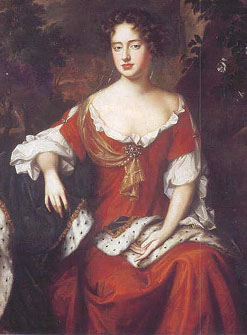
1665 Queen Anne was born. She was the last Stuart ruler and second daughter of James II. She bore Prince George of Denmark 17 children, but 16 died in infancy and the remaining child died when aged 12. Her desire for national unity led to the union of the English and Scottish parliaments in 1707. 

1685 Charles II, King of Great Britain and Ireland, died after several days of revelry with his concubines and his favorite mistresses. Charles acknowledged at least 12 illegitimate children by various mistresses, but as illegitimate children were excluded from the succession, he was succeeded by his brother James. On his deathbed Charles asked his brother to look after his mistresses and told his courtiers: 'I am sorry, gentlemen, for being such a time a-dying.' 

1952 King George VI died. The stress of World War II had taken its toll on the King's health, which was exacerbated by his heavy smoking and subsequent development of lung cancer among other ailments. On September 23, 1951, the King’s left lung was removed following the discovery of a malignant tumor. On January 31, 1952, despite advice from those close to him, he went to London Airport to see off Princess Elizabeth, who was going on her tour of Australia via Kenya. On the morning of February 6th, George VI was discovered dead in bed at Sandringham House in Norfolk. He had died from a coronary thrombosis in his sleep at the age of 56. His daughter Elizabeth flew back to Britain from Kenya, as Queen Elizabeth II. His funeral took place at St. George’s Chapel, Windsor Castle and he was interred initially in the Royal Vault until transferred to the King George VI Memorial Chapel inside St. George's. In 2002, the remains of his widow, Queen Elizabeth The Queen Mother, and the ashes of his younger daughter Princess Margaret, who both died that year, were interred in the chapel alongside him. 
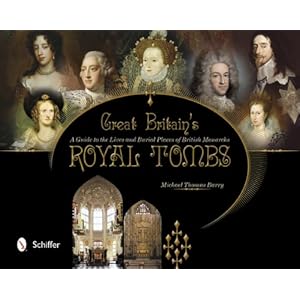
Michael Thomas Barry is the author of Great Britain’s Royal Tombs. The book can be purchased from Amazon through the following links:


Friday, December 14, 2012

Prince Albert Dies (1861) & King George VI is Born (1895)

On this date in 1861, Prince Albert, husband of Queen Victoria dies.


Albert, the younger son of the Duke of Saxe-Coburg-Gotha was born at Schloss Rosenau in 1819. He was educated in Brussels and Bonn and in 1839 visited his cousin, Queen Victoria in London. Victoria immediately fell in love with Albert and although he initially had doubts about the relationship, the couple eventually married in February 1840. During the next eighteen years Queen Victoria gave birth to nine children. Throughout their marriage Prince Albert acted as Victoria's private secretary. After the death of her favorite politician, Lord Melbourne in 1848, Albert's political influence increased. Albert took a keen interest in the arts and sciences and planned and managed the Great Exhibition in 1851. The profits of this successful venture enabled the building of the Royal Albert Hall and the museums in South Kensington. In 1857 Albert was given the title of Prince Consort. He died on December 14, 1861 from typhoid fever and was interred within the royal mausoleum at Frogmore, Windsor. The Albert Memorial in Kensington Gardens, designed by Sir George Scott, was erected in his memory in 1871. 

On this date in 1895, King George VI was born at York Cottage, on the Sandringham Estate in Norfolk.
 
 
He was the second son of King George V and Mary of Teck. He was an unassuming, shy boy who greatly admired his brother Edward, Prince of Wales. From childhood to the age of thirty, George suffered with a bad stammer in his speech, which exacerbated his shyness; Lionel Logue, an Australian speech therapist, was instrumental in helping George overcome the speech defect. George married Lady Elizabeth Bowes-Lyon in 1923, and together they would have two daughters, Elizabeth and Margaret.  

Due to the controversy surrounding the abdication of his brother Edward VIII, popular opinion of the throne was at its lowest point since the latter half of Victoria's reign. The abdication, however, was soon overshadowed by continental developments, as Europe inched closer to yet another World War. After several years of pursuing "appeasement" policies with Germany, Great Britain (and France) declared war on Germany on September 3, 1939. George, following in his father's footsteps, visited troops, munitions factories, supply docks and bomb-damaged areas to support the war effort. As the Nazi's bombed London, the royal family remained at Buckingham Palace; George went so far as to practice firing his revolver, vowing that he would defend Buckingham to the death. The actions of the King and Queen during the war years greatly added to the prestige of the monarchy.
 
George predicted the hardships following the end of the war as early as 1941. From 1945-50, Great Britain underwent marked transitions. The birth pangs of the Welfare State and the change from Empire to multiracial Commonwealth troubled the high-strung king. The political turmoil and economic hardships of the post-war years left the king physically and emotionally drained by the time of his death on February 6, 1952. In the context of royal history, George VI was one of only five monarchs who succeeded the throne in the lifetime of his predecessor; Henry IV, Edward IV, Richard III, and William III were the other four. George VI was interred within St. George’s Chapel at Windsor Castle.  

Michael Thomas Barry is the author of Great Britain’s Royal Tombs: A Guide to the Lives and Burial Places of British Monarchs. It can be purchased from Amazon or Barnes and Noble through the following links: 


Tuesday, December 11, 2012

Edward VIII's Abdication Becomes Official - 1936


On December 11, 1936, Edward VIII’s abdication becomes official. He reigned from January 20- December 11, 1936. Edward became king upon his father, George V’s death in early 1936. He showed impatience with court protocol and politicians were concerned by his apparent disregard for established constitutional conventions. Only months into his reign, he caused a constitutional crisis by proposing marriage to American Wallis Simpson, who had divorced her first husband and was seeking a divorce from her second. The prime minister opposed the marriage, arguing that the people would never accept a divorced woman with two living ex-husbands as queen. Additionally, such a marriage would have conflicted with Edward's status as head of the Church of England, which opposed the remarriage of divorced people if their former spouses were still alive. Edward knew that the government led by British Prime Minister Stanley Baldwin would resign if the marriage went ahead, which could have dragged the king into a general election and would ruin his status as a politically neutral constitutional monarch. Choosing not to end his relationship with Simpson, Edward abdicated.  

On December 10, 1936, Edward executed an Instrument of Abdication which was given legal effect the following day, when he gave Royal Assent to His Majesty's Declaration of Abdication Act, by which Edward VIII and any children he might have were excluded from succession to the throne. In 1937, Edward was created Duke of Windsor and married Wallis Simpson in a ceremony in France. During the Second World War, the Duke of Windsor escaped from Paris, where he was living at the time of the fall of France, to Lisbon in 1940. The Duke of Windsor was then appointed Governor of the Bahamas, a position he held until 1945. He lived abroad until the end of his life, dying in 1972 in Paris (he is buried at Windsor). Edward was never crowned; his reign lasted only 325 days. His brother Albert became King George VI. 

Michael Thomas Barry is the author of Great Britain’s Royal Tombs: A Guide to the Lives and Burial Places of British Monarchs, it can be purchased from Amazon or Barnes and Noble through the following links: