Showing posts with label Al Capone. Show all posts

Wednesday, June 7, 2017

Review of "Al Capone's Beer Wars" by John J. Binder


Publish Date: June 5, 2017
Pages: 400
Publisher: Prometheus Books

Buy the book from Amazon - https://www.amazon.com/Capones-Beer-Wars-Organized-Prohibition/dp/1633882853

“a wide-ranging and comprehensive interpretation of how mobsters like Al Capone and his associates came to control the criminal rackets . . .”

The City of Chicago during Prohibition and the Roaring ’20s was the apex of excesses, extreme contrasts, and extra ordinary violence. The Windy City was a place where men of questionable morals became extremely wealthy from the sale and smuggling of illegal alcohol, as well as other vices such as prostitution and gambling. Chief among these rising mob personalities was Al Capone.

“Chicago’s Prohibition Beer Wars were a complicated series of conflicts over more than ten years in which the Capone mob was the greatest winner. By the end of the 1930s it dominated the battlefield, leading to the creation of the Chicago Outfit, which controlled Cook County’s underworld . . .”

With few exceptions other than perhaps Jack the Ripper, no historical crime figure has garnered more morbid fascination than mobster Alphonse Gabriel Capone. One of the best-known gangsters of the Prohibition era, Al Capone is still a household name in Chicago and around the world. Although “Scarface” has been dead for over 70 years, his legend still endures mainly because of his bigger-than-life persona. He was a flashy, extremely wealthy, and an outspoken quasi-celebrity who had the audacity to shake-up Chicago’s criminal underworld during the Roaring ’20s.

Why do so many people glamorize mobsters and violent crime? No one holds the Son of Sam or Charles Manson in high regard. So why are Capone and his crime minded cronies seen as mythic figures by the general public? Why are members of the mafia treated more like celebrities than unsavory criminals?

Part of the answer is historical: The glamorization of the mob started with Prohibition. In the early years of the 20th century, mobsters were just small-time hoodlums. Then came the Volstead Act, which outlawed alcohol. One of the side effects was to solidify organized crime and create a real, international organization out of what was, in essence, small criminal groups.

Because Prohibition was hugely unpopular, the men who stood up to it were heralded as heroes, not criminals. It was the start of their image as people who thumbed their noses at bad laws and at the establishment. Even when Prohibition was repealed and the services of the bootleggers were no longer required, that initial positive image stuck.

Books and movies such as Mario Puzo’s The Godfather helped glamorize and communicate the notion that mobsters were men who cared about the happiness of their communities and who lived by their own codes of honor and conduct, impervious to the political whims of the establishment.
In Al Capone's Beer Wars: A Complete History of Organized Crime in Chicago During Prohibition, author John J. Binder examines the turbulent and complete history of organized crime in Chicago. The author of two other books on organized crime, Binder pulls from his vast knowledge of the subject matter for this in-depth study.

A major focus of the book is how the Capone gang—one of 12 major bootlegging mobs in Chicago at the start of Prohibition—gained a virtual monopoly over organized crime in northern Illinois and beyond. The author also describes the fight by federal and local authorities, as well as citizen’s groups against organized crime. In the process, Binder refutes numerous myths and misconceptions related to the Capone gang, other criminal groups, the St. Valentine’s Day Massacre, and other gangland killings.

The end result of Al Capone’s Beer Wars is a wide-ranging and comprehensive interpretation of how mobsters like Al Capone and his associates came to control the criminal rackets during the period. Overall, it is well researched and expertly interprets one of our country’s bloodiest and most colorful time periods. This book will most definitely appeal to true-crime enthusiasts and historians of Prohibition-era crime. It is a fascinating and informative read that would make an excellent addition to any library.

Thursday, November 17, 2016

Review of Deirdre Bair's "Al Capone: His Life, Legacy, and Legend"


Review first appeared at the New York Journal of Books on November 16, 2016 http://www.nyjournalofbooks.com/book-review/al-capone


“Al Capone was a son, husband, and father who was looking for the best way to become a good provider for everyone.”

Nearly seven decades after his death, what is it about Al Capone that captures the imagination? Some lives contain multitudes, and his would seem to be one of them. From his heyday to the present, his life has enthralled the public’s collective imagination.

Born on January 17, 1899, in Brooklyn, New York, to Italian immigrant parents, Capone would become one of the most notorious crime figures in American history. During the height of Prohibition, his criminal enterprises, including bootlegging, prostitution, and gambling, dominated the city of Chicago.

His long-running turf war with rival gangs came to a bloody and shocking crescendo on St. Valentine's Day 1929. Through it all, the charismatic Capone remained barely above it all, and Federal income tax evasion was his eventual undoing. In 1931 he was sentenced to eleven years in federal prison but served a little over half his sentence, mostly at Alcatraz. A very ill Capone, suffering from the physical and mental effects of syphilis, was released to live out his final years in Miami.

Deirdre Bair, National Book Award winner and author of numerous biographies, attempts to uncover a more personal side of the infamous crime boss and examines the legend and facts surrounding this intriguing and enigmatic figure in her new biography, Al Capone: His Life, Legacy, and Legend.

“His ascent in mobdom was phenomenal, his time at the top sensational, and his downfall meteoric. Indeed, his reign did last only six short years, but everything that happened in that brief time still commands worldwide attention, interest, and speculation.”

The book follows Capone’s entire life from his humble beginnings in Brooklyn to his rise as crime boss in Chicago though his astonishingly swift downfall and imprisonment and death in 1947.

“This is the story of a ruthless killer, a scofflaw, a keeper of brothels and bordellos, a tax cheat and perpetrator of frauds, convicted felon, and a mindless, blubbering invalid. This is also the story of a loving son, husband, and father who described himself as a businessman whose job was to serve the people what they wanted.”

Written with the cooperation of Capone’s family and descendants, Al Capone does a wonderful job of gathering all of the urban myths surrounding his life and career and lays them out side by side with the facts, exposing and demystifying their falsehoods from the realities. “Attempting to reconstruct their truth is much like trying to solve the most complicated puzzle imaginable.”

Although this book is superbly documented and researched, its end results are mixed. The narrative is somewhat dry and uninspiring in its presentation and ultimately failed to uncover any startling new information. In the end, this book is best suited for readers who already have a basic understanding and familiarity with the subject matter. It is recommended for anyone interested in anything related to organized crime, Al Capone, and the Prohibition era in general.  

Monday, October 13, 2014

Al Capone was Sentenced to Prison for Tax Evasion (October 17, 1931)


This week (October 13-19) in crime history – Palestinian terrorists hijacked a Lufthansa airliner (October 13, 1977); Amityville murder trial began (October 14, 1975); Pierre Laval, the Vichy leader of Nazi-occupied France was executed (October 15, 1945); Exotic dancer turned spy, Mata Hari was executed (October 15, 1917); Mass shooting at Luby’s Cafeteria in Kileen, Texas (October 16, 1991); Ten high ranking Nazi officials were executed at Nuremberg (October 16, 1946); Al Capone was sentenced to prison for tax evasion (October 17, 1931); John Lennon and Yoko Ono were arrested for drug possession (October 18, 1968); John DeLorean was arrested for drug dealing (October 19, 1982).

Highlighted Crime of the Week - 

On October 17, 1931, mob boss Al Capone was sentenced to 11 years in prison for tax evasion and fined $80,000, signaling the downfall of one of the most notorious criminals of the 20th century. Alphonse Gabriel Capone was born in Brooklyn, New York, in 1899 to Italian immigrants. He was expelled from school at 14, joined a gang and earned his nickname "Scarface" after being sliced across the cheek during a fight. By 1920, Capone had moved to Chicago, where he was soon helping to run crime boss Johnny Torrio's illegal enterprises, which included alcohol-smuggling, gambling and prostitution. Torrio retired in 1925 after an attempt on his life and Capone, known for his cunning and brutality, was put in charge of the organization. 

Prohibition, which outlawed the brewing and distribution of alcohol and lasted from 1920 to 1933, proved extremely lucrative for bootleggers and gangsters like Capone, who raked in millions from his underworld activities. Capone was at the top of the F.B.I.'s "Most Wanted" list by 1930, but he avoided long stints in jail until 1931 by bribing city officials, intimidating witnesses and maintaining various hideouts. He became Chicago's crime kingpin by wiping out his competitors through a series of gangland battles and slayings, including the infamous St. Valentine's Day Massacre in 1929, when Capone's men gunned down seven rivals. This event helped raise Capone's notoriety to a national level.

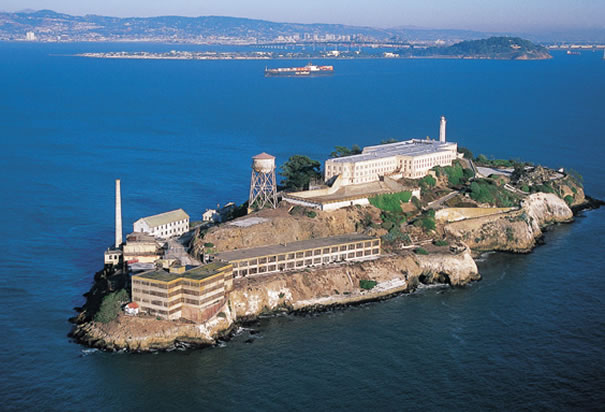
Among Capone's enemies was federal agent Elliot Ness, who led a team of officers known as "The Untouchables" because they couldn't be corrupted. Ness and his men routinely broke up Capone's bootlegging businesses, but it was tax-evasion charges that finally stuck and landed Capone in prison in 1931. Capone began serving his time at the U.S. Penitentiary in Atlanta, but amid accusations that he was manipulating the system and receiving cushy treatment, he was transferred to the maximum-security lockup at Alcatraz Island, in California's San Francisco Bay. He was released in 1939 for good behavior, after spending his final year in prison in a hospital, suffering from syphilis. Plagued by health problems for the rest of his life, Capone died in 1947 at age 48 at his home in Palm Island, Florida.
 

Michael Thomas Barry is a columnist for www.crimemgazine.com and is the author of numerous award winning books that includes Murder and Mayhem 52 Crimes that Shocked Early California, 1849-1949. Visit Michael’s website www.michaelthomasbarry.com for more information. The book can be purchased from Amazon through the following link: 

Tuesday, April 22, 2014

George "Baby Face" Nelson Kills FBI Agent - 1934


On this date in crime history – April 22, 1934, George "Baby Face" Nelson kills Special Agent W. Carter Baum during an FBI raid in northern Wisconsin. Nelson was holed up with notorious bank robber John Dillinger's gang at the Little Bohemia resort but didn't follow the planned escape route. As he was stealing a car to escape, he blasted several agents with two handguns. The notorious gangster was born Lester Gillis but wanted to be known as Big George Nelson. Unfortunately for him, his youthful looks caused everyone to call him "Baby Face." He joined Al Capone’s gang in 1929, where he was known for his particularly brutal strong-arm tactics. In fact, his unpredictable violence got so out of hand that it eventually led to his expulsion from the gang. 

In the early 1930s, Nelson joined up with bootleggers in California. However, after Prohibition ended, Nelson returned to the Midwest to try his hand at bank robberies. Nelson hit a series of banks in 1933 and 1934 and was upset when John Dillinger and Pretty Boy Floyd were given credit for his crimes. Despite this, Nelson teamed up with Dillinger in April 1934: The pair robbed two banks in South Dakota and Iowa. Reportedly, Dillinger was a bit perplexed by Nelson's outbursts during the robberies. After shooting bank employees at both of the banks, Nelson had to be persuaded not to kill them. Not long after the raid on April 23, Dillinger was killed by agents in Chicago, making Nelson the country's newest Public Enemy Number One. On November 27, Nelson was spotted driving in rural Illinois. After a chase involving two FBI agents, Sam Cowley and Herman Hollis, an epic gun battle ensued. Witnesses say that Nelson tired of exchanging shots from behind his cover and decided to attack the agents on the offensive. Although Cowley and Hollis fired many rounds into Nelson, he kept coming at them with a machine gun. Nelson killed both agents and hobbled away to a getaway car, but he did not survive the bold move. The next day, his body, riddled with bullets, was found in a ditch.
 
 
Michael Thomas Barry is a columnist for www.crimemagazine.com and is the author of numerous books that include the award winning, Murder and Mayhem 52 Crimes that Shocked Early California, 1849-1949 (2012, Schiffer Publishing). The WINNER of the 2012 International Book Awards and a FINALIST in the 2012 Indie Excellence Book Awards for True Crime. Visit the author’s website for more information: www.michaelthomasbarry.com    

His book can be purchased at Amazon through the following link:       
Amazon - http://www.amazon.com/Murder-Mayhem-Shocked-California-1849-1949/dp/0764339680/ref=la_B0035CPN70_1_3?ie=UTF8&qid=1361552464&sr=1-3

Friday, March 21, 2014

Alactraz Prison Closed - 1963


On March 21, 1963, Alcatraz Prison was closed. At its peak period of use in 1950s, "The Rock” housed over 200 inmates at the maximum-security facility. Alcatraz remains an icon of American prisons for its harsh conditions and record for being inescapable. The twelve-acre rocky island, one and a half miles from San Francisco, featured the most advanced security of the time. Some of the first metal detectors were used at Alcatraz. Strict rules were enforced against the unfortunate inmates who had to do time at Alcatraz. Nearly complete silence was mandated at all times. Some its infamous inmates included Al Capone, Alvin Karpis, Arthur “Doc” Barker, Mickey Cohen, and Robert Stroud “The Birdman of Alcatraz.” The island was first explored by Juan Manuel de Ayala in 1775, who called it Isla de los Alcatraces (Pelicans) because of all the birds that lived there. It was sold in 1849 to the U.S. government. The first lighthouse in California was on Alcatraz. It became a Civil War fort and then a military prison in 1907. The end of its prison days did not end the Alcatraz saga. In March 1964, a group of Sioux claimed that the island belonged to them due to a 100-year-old treaty. Their claims were ignored until November 1969 when a group of eighty-nine Native Americans representing the American Indian Movement occupied the island. They stayed there until 1971 when they were finally forced off the island by federal authorities. The following year, Alcatraz was added to the Golden Gate National Recreation Area. It is now open for tourism.
 
 
Michael Thomas Barry is a columnist for www.crimemagazine.com and is the author of numerous books that include the award winning, Murder & Mayhem 52 Crimes that Shocked Early California, 1849-1949 (2012, Schiffer Publishing). The WINNER of the 2012 International Book Awards and a FINALIST in the 2012 Indie Excellence Book Awards for True Crime. The book can be purchased at Amazon through the following link: 

Wednesday, March 19, 2014

Mobster Frank "The Enforcer" Nitti Committed Suicide - 1943


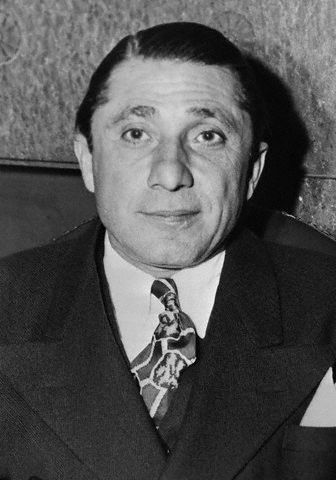
On March 19, 1943, mobster Frank “The Enforcer” Nitti, one of Al Capone’s henchmen and later front man for the Chicago Outfit, committed suicide after being indicted for extorting money from Hollywood producers. Born on January 27, 1886 in Italy, Nitti came to the United States in 1893, at the age of 7. His family settled in Brooklyn, but Frank moved to Chicago by 1920. Using his barbershop as a meeting place for small-time hoods, Nitti started fencing stolen jewelry, attracting the attention of big-time mobster Johnny Torrio and one of his strongmen, Al Capone. Nitti joined Al Capone's criminal empire, called the Chicago Outfit. Rising quickly in the organization, he displayed a talent for business, becoming known for efficiently smuggling Canadian whiskey into Chicago speakeasies, which served as distribution points throughout the city. By the mid-1920s, Nitti was a high ranking member of the Capone mob.

Although his nickname was "The Enforcer," Frank Nitti rarely took part in violent activities, delegating them instead to underlings. In 1931, he and Capone were convicted of tax evasion and sent to prison, but Nitti received an 18-month sentence, while Capone received 11 years. Severely claustrophobic, Nitti served his time in extreme discomfort, an experience that would mark him until the day he died.  When Nitti was released in 1932, the media dubbed him the new boss of Capone's gang, although it has since been revealed that Nitti was the face, and perhaps brains of the Chicago Outfit, while another man, Paul Ricca, was its true leader. Aiming to take down the Outfit's presumed head, in December 1932, Chicago policemen raided Nitti's office, shooting him in the back and neck. Nitti survived, and during the trial it was revealed that one of the officers had been paid $15,000 to kill Nitti. Needing to reinvent the Outfit after the end of Prohibition, Nitti turned the Outfit's attention to the labor unions and, even more, Hollywood. But in 1943, Nitti and many top members of the Chicago Outfit were indicted for extorting money from some of the largest movie studios in Hollywood, including MGM, Paramount, and 20th Century Fox, and they faced stiff sentences if convicted. Because of his claustrophobia, enhanced during his first prison term, Nitti feared the idea of a long confinement. So, faced with life in prison or perhaps murder by fellow Outfit members to keep him quiet, Nitti shot himself in the head on March 19, 1943, in a train yard, near his home in Riverside, Illinois.
 
 
Michael Thomas Barry is the author of numerous books that include the award winning, Murder and Mayhem 52 Crimes that Shocked Early California, 1849-1949 (2012, Schiffer Publishing). The WINNER of the 2012 International Book Awards and a FINALIST in the 2012 Indie Excellence Book Awards for True Crime. The book can be purchased at Amazon through the following link:    


Visit Michael's website for more information: www.michaelthomasbarry.com

Wednesday, October 9, 2013

Chicago area bootlegger Roger Touhy escapes from prison - 1942


On October 9, 1942, notorious Chicago area bootlegger Roger "The Terrible" Touhy escapes from Statesville Prison by climbing the guard's tower. Touhy, who had been framed for kidnapping by his bootlegging rivals, was serving a 99-year sentence for a crime he did not commit. The son of a police officer, Touhy had served in the Navy during World War I and later set up a trucking business in the Chicago suburbs. When business slowed during Prohibition, Touhy realized he could earn a better living through bootlegging. Along with his partner, Matt Kolb, Touhy began brewing his own beer and shipping it to speakeasies all over the state. His beer was widely considered the finest available at the time. When mob boss Al Capone heard about Touhy's operation, he wanted to get in on the action, but since Capone was not really familiar with the environment outside of the city, Touhy had an advantage. After a meeting with Touhy, Capone's henchmen reported back that he wasn’t someone to mess with. Undeterred, Capone had Matt Kolb kidnapped and then forced Touhy to pay $50,000 in ransom for his release. When Kolb was murdered in 1931, the feud escalated. Capone was instrumental in orchestrating the fake kidnapping plot of Jake Factor, which was pinned on Touhy. He was convicted of the crime and sent to prison. Shortly after his escape in 1942, Touhy was returned to prison but his conviction was eventually overturned upon appeal in 1959. Three weeks after his release from prison, Touhy was gunned down at his sister’s home. Before he died, he was reported to have said, "I've been expecting it. The bastards never forget." No arrests were made in Touhy’s murder.
 
Michael Thomas Barry is a columnist for CrimeMagazine.com and is the author of Murder & Mayhem 52 Crimes that Shocked Early California 1849-1949. The book can be purchased from Amazon through the following link:
 

Wednesday, October 17, 2012

Al Capone is Sentenced for Tax Evasion - 1931


Just announced - Murder & Mayhem 52 Crimes that Shocked Early California 1849-1949 was awarded an "honorable mention" in the 2012 Halloween Book Festival in the general non-fiction category. www.halloweenbookfestival.com


On this date in 1931, gangster Al Capone is sentenced to 11 years in prison for tax evasion.

 
Alphonse Gabriel Capone was born in Brooklyn, New York in 1899 to Italian immigrants. He was expelled from school at 14, joined a gang and earned his nickname "Scarface" after being sliced across the cheek during a fight. By 1920, Capone had moved to Chicago, where he was soon helping to run crime boss Johnny Torrio's illegal enterprises, which included alcohol-smuggling, gambling and prostitution. In 1925 Torrio retired and Capone was put in charge of the organization. Prohibition, which outlawed the brewing and distribution of alcohol and lasted from 1920 to 1933, proved extremely lucrative for bootleggers and gangsters like Capone, who raked in millions from his underworld activities. Capone was at the top of the F.B.I.'s "Most Wanted" list by 1930, but he avoided long stints in jail until 1931 by bribing city officials, intimidating witnesses and maintaining various hideouts. He became Chicago's crime kingpin by wiping out his competitors through a series of gangland battles and slayings, including the infamous St. Valentine’s Day Massacre in 1929, when Capone's men gunned down seven rivals. This event helped raise Capone's notoriety to a national level. Among Capone's enemies was federal agent Elliot Ness, who led a team of officers known as "The Untouchables" because they couldn't be corrupted. Ness and his men routinely broke up Capone's bootlegging businesses, but it was tax-evasion charges that finally stuck and landed Capone in prison in 1931. Capone began serving his time at the U.S. Penitentiary in Atlanta, but amid accusations that he was manipulating the system and receiving cushy treatment, he was transferred to the maximum-security lockup at Alcatraz Island in San Francisco Bay. He got out early in 1939 for good behavior, after spending his final year in prison in a hospital, suffering from syphilis. Plagued by health problems for the rest of his life, Capone died in 1947 at age 48 at his home in Palm Island, Florida.

Tuesday, October 9, 2012

Chicago Mobster Roger Touhy Escapes from Prison - 1942

On this date in 1942, Chicago bootlegger Roger "The Terrible" Touhy escapes from prison by climbing the guard's tower.

 
Touhy, who had been framed for kidnapping by his bootlegging rivals with the help of corrupt Chicago officials, was serving a 99-year sentence for a kidnapping he did not commit. He was recaptured a couple of months later. The son of a police officer, Touhy had served in the Navy during World War I and later set up a trucking business in the Chicago suburbs. But when business faltered during Prohibition, Touhy realized he could earn a better living through bootlegging. Along with his partner, Matt Kolb, Touhy began brewing his own beer and shipping it to speakeasies all over the state. His beer was widely considered the finest available at the time. When organized crime leader  Al Capone heard about Touhy's operation, he wanted to get in on the action, but since Capone was not really familiar with the environment outside of the city, Touhy had an advantage. Touhy shouted orders to his fictional gang over the telephone when Capone's henchmen showed up. Capone's men reported back that Touhy was not someone to mess with, but Capone was undeterred. He kidnapped Matt Kolb, forcing Touhy to cough up $50,000 for his release. When he ordered Kolb's murder in 1931 anyway, the feud escalated. Capone helped to orchestrate a fake kidnapping, which he pinned on Touhy. In 1933, with assistance from Daniel "Tubbo" Gilbert, a Chicago police officer known as "the richest cop in the world." Touhy was convicted for abducting con man Jake Factor and sent to prison. Shortly after his escape in 1942, Touhy was returned to prison. But his attorneys successfully persuaded an appeals court that the Factor kidnapping was a hoax, and Touhy was finally released in 1959. Three weeks later, as he was entering his sister's home, Touhy was hit by several shotgun blasts. Before he died, he was reported to have said, "I've been expecting it. The bastards never forget." No arrests were ever made.

Friday, July 6, 2012

Mobster Bugs Moran is Arrested - 1946

On this date in 1946, FBI agents arrest George "Bugs" Moran, along with fellow crooks Virgil Summers and Albert Fouts, in Kentucky.


Moran once one of the biggest organized crime figures in America, he had been reduced to small bank robberies by this time. He died in prison 11 years later. Bugs Moran's criminal career took an abrupt downturn after the infamous St. Valentine’s Day Massacre in 1929, in which his top gunmen were slaughtered by rival Al Capone’s henchmen (a lasting feud had been established after Capone's men killed Moran's friend and mentor, Dean O'Banion, in 1924). Moran, who just missed the massacre by a couple of minutes, was visibly shaken when reporters talked to him days later. He shouted at them, "Only Capone kills like that!" Al "Scarface" Capone established his alibi by vacationing in Florida at the time of the Valentine’s Day murders. Sitting poolside, he mocked Moran, chuckling as he told reporters, "The only man who kills like that is Bugs Moran." Later, while Capone was serving time for tax evasion, Moran may have earned a measure of revenge by killing Jack McGurn, one of the men who had carried out the massacre. A bank robbery charge conviction eventually landed Moran in Leavenworth federal prison. He was released in 1956, but was then re-arrested for an earlier bank robbery. He died in prison of lung cancer on February 2, 1957.