Showing posts with label what happened on this date in crime history. Show all posts

Wednesday, April 30, 2014

Old West Lawman Burton Mossman was Born - 1867


On this date in crime history – April 30, 1867, western lawman Burton C. Mossman was born in Aurora, Illinois. Little is known about Mossman's childhood in Illinois, though he apparently learned to be self-reliant and resourceful at a young age. When he was 21, he left home and moved to Mexico, where he quickly began proving himself one of the most canny and successful ranchers in the territory. By age 30, he not only had his own spread in New Mexico, but was also the superintendent of a two-million-acre ranch in northern Arizona. As the size of the southwestern cattle industry increased, cattle rustlers began to take advantage of the lack of surveillance on the isolated ranges to steal stock. In 1901, the territory of Arizona responded by organizing a ranger force to rid the region of rustlers and other outlaws. The governor of Arizona convinced Mossman to sign on as the first captain of the Arizona Rangers.  

Mossman was suited to the task. Courageous and skilled with a pistol, he had a knack for surprising rustlers while they were still in possession of stolen cattle. Though he could use violence to good effect when needed, Mossman preferred to trick his quarry into giving up peacefully when possible. After a long and adventurous career with the Arizona Rangers, Mossman eventually returned to the more peaceful life of a rancher. By the time he retired from ranching in 1944, he had business interests in cattle operations from Mexico to Montana, and more than a million cattle wore his brand. He lived out the remainder of his life at his comfortable ranch in Roswell, New Mexico, and died in 1956 at the age of 89.
 
 
Michael Thomas Barry is a columnist for www.crimemagazine.com and is the author of numerous books that include the award winning, Murder and Mayhem 52 Crimes that Shocked Early California, 1849-1949 (2012, Schiffer Publishing). The WINNER of the 2012 International Book Awards and a FINALIST in the 2012 Indie Excellence Book Awards for True Crime. Visit the author’s website for more information: www.michaelthomasbarry.com      

His book can be purchased at Amazon through the following link:       

Monday, April 28, 2014

Mutiny on the HMS Bounty - 1789


On this date in crime history – April 28, 1789, the HMS Bounty was seized in a mutiny led by Fletcher Christian, the master's mate. Captain William Bligh and 18 of his loyal supporters were set adrift in a small, open boat, and the Bounty set course for Tubuai south of Tahiti. In December 1787, the Bounty left England for Tahiti in the South Pacific, where it was to collect a cargo of breadfruit saplings to transport to the West Indies. There, the breadfruit would serve as food for slaves. After a 10-month journey, the Bounty arrived in Tahiti in October 1788 and remained there for more than five months. On Tahiti, the crew enjoyed an idyllic life, reveling in the comfortable climate, lush surroundings, and the famous hospitality of the Tahitians. Fletcher Christian fell in love with a Tahitian woman named Mauatua.
 
On April 4, 1789, the Bounty departed Tahiti with its store of breadfruit saplings. On April 28, near the island of Tonga, Christian and 25 petty officers and seamen seized the ship. Bligh, who eventually would fall prey to a total of three mutinies in his career, was an oppressive commander and insulted those under him. By setting him adrift in an overcrowded 23-foot-long boat in the middle of the Pacific, Christian and his conspirators had apparently handed him a death sentence. By remarkable seamanship, however, Bligh and his men reached Timor in the East Indies on June 14, 1789, after a voyage of about 3,600 miles. Bligh returned to England and soon sailed again to Tahiti, from where he successfully transported breadfruit trees to the West Indies. 

Meanwhile, Christian and his men attempted to establish themselves on the island of Tubuai. Unsuccessful in their colonizing effort, the Bounty sailed north to Tahiti, and 16 crewmen decided to stay there, despite the risk of capture by British authorities. Christian and eight others, together with six Tahitian men, a dozen Tahitian women, and a child, decided to search the South Pacific for a safe haven. In January 1790, the Bounty settled on Pitcairn Island, an isolated and uninhabited volcanic island more than 1,000 miles east of Tahiti. The mutineers who remained on Tahiti were captured and taken back to England where three were hanged. A British ship searched for Christian and the others but did not find them. 

In 1808, an American whaling vessel was drawn to Pitcairn by smoke from a cooking fire. The Americans discovered a community of children and women led by John Adams, the sole survivor of the original nine mutineers. According to Adams, after settling on Pitcairn the colonists had stripped and burned the Bounty, and internal strife and sickness had led to the death of Fletcher and all the men but him. In 1825, a British ship arrived and formally granted Adams amnesty, and he served as patriarch of the Pitcairn community until his death in 1829. 

In 1831, the Pitcairn islanders were resettled on Tahiti, but unsatisfied with life there they soon returned to their native island. In 1838, the Pitcairn Islands, which includes three nearby uninhabited islands, was incorporated into the British Empire. By 1855, Pitcairn's population had grown to nearly 200, and the two-square-mile island could not sustain its residents. In 1856, the islanders were removed to Norfolk Island, a former penal colony nearly 4,000 miles to the west. However, less than two years later, 17 of the islanders returned to Pitcairn, followed by more families in 1864. Today, around 40 people live on Pitcairn Island, and all but a handful are descendants of the Bounty mutineers. About a thousand residents of Norfolk Island (half its population) trace their lineage from Fletcher Christian and the eight other Englishmen.
 
 
Michael Thomas Barry is a columnist for www.crimemagazine.com and is the author of numerous books that include the award winning, Murder and Mayhem 52 Crimes that Shocked Early California, 1849-1949 (2012, Schiffer Publishing). The WINNER of the 2012 International Book Awards and a FINALIST in the 2012 Indie Excellence Book Awards for True Crime. Visit the author’s website for more information: www.michaelthomasbarry.com      

His book can be purchased at Amazon through the following link:       
Amazon - http://www.amazon.com/Murder-Mayhem-Shocked-California-1849-1949/dp/0764339680/ref=la_B0035CPN70_1_3?ie=UTF8&qid=1361552464&sr=1-3

Saturday, April 26, 2014

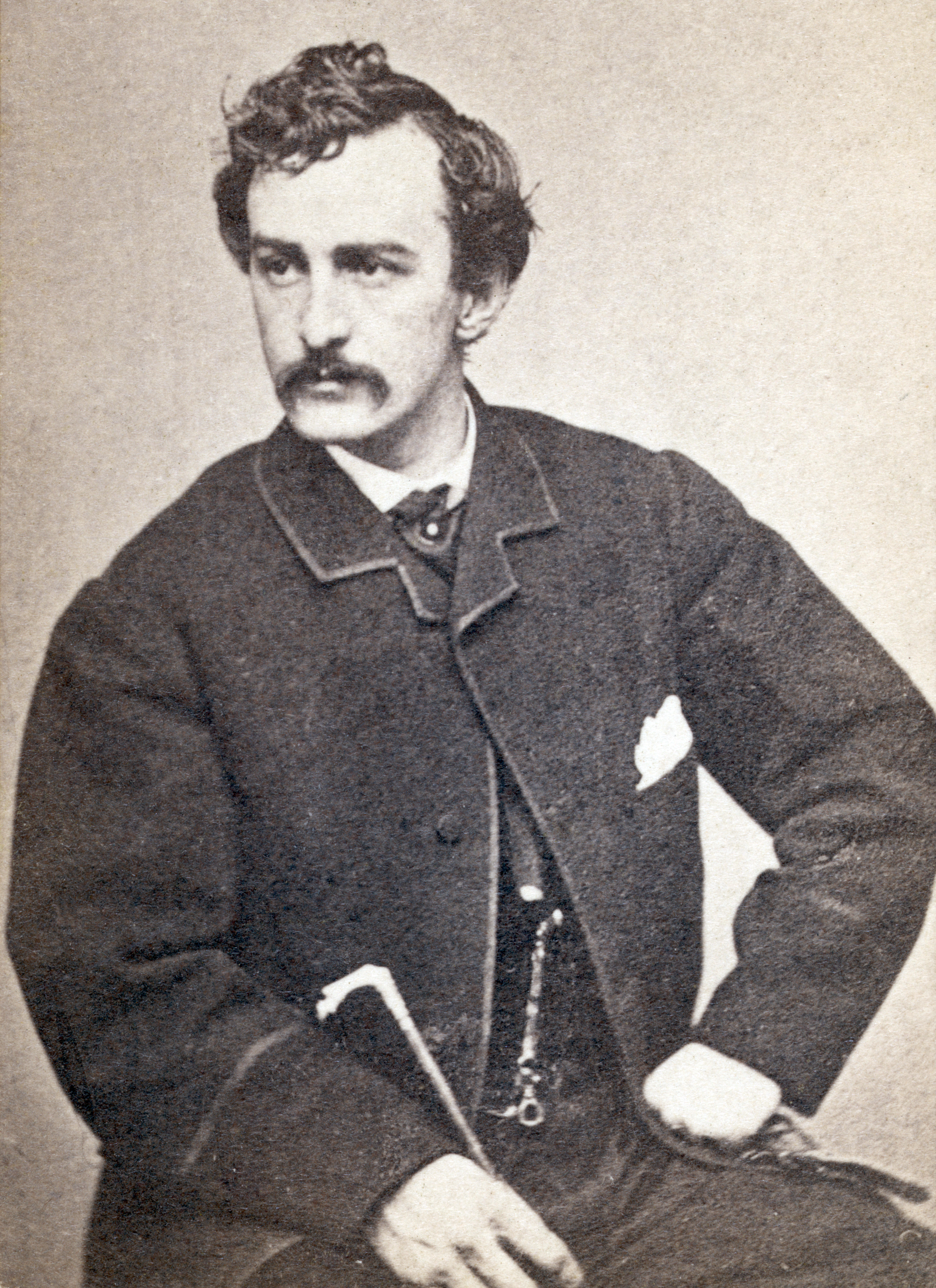
Lincoln Assassin John Wilkes Booth was Killed - 1865


On this date in crime history – April 26, 1865, John Wilkes Booth was killed when Union soldiers track him down to a Virginia farm 12 days after the assassination of Abraham Lincoln. Twenty-six-year-old Booth was one of the most famous actors in the country when he shot Lincoln during a performance at Ford's Theater in Washington D.C., on the night of April 14. Booth was a strong supporter of the Confederacy. As the war entered its final stages, Booth hatched a conspiracy to kidnap the president. He enlisted the aid of several associates, but the opportunity never presented itself. After the surrender of Robert E. Lee at Appomattox Court House on April 9, Booth changed the plan to a simultaneous assassination of Lincoln, Vice President Andrew Johnson, and Secretary of State William Seward. Only Lincoln was actually killed, however. Seward was stabbed by Lewis Paine but survived, while the man assigned to kill Johnson did not carry out his assignment. 

After shooting Lincoln, Booth jumped to the stage below Lincoln's box seat. He landed hard, breaking his leg, before escaping to a waiting horse behind the theater. Booth and his accomplice, David Herold, made their way across the Anacostia River and headed toward southern Maryland. The pair stopped at Dr. Samuel Mudd's home, and Mudd treated Booth's leg. This earned Mudd a life sentence in prison when he was implicated as part of the conspiracy, but the sentence was later commuted. Booth found refuge for several days at the home of Thomas A. Jones, a Confederate agent, before securing a boat to row across the Potomac to Virginia. 

After receiving aid from several Confederate sympathizers, Booth's luck finally ran out. The countryside was swarming with military units looking for Booth, although few shared information since there was a $20,000 reward. While staying at the farm of Richard Garrett, Federal troops arrived on their search but soon rode on. The unsuspecting Garrett allowed his suspicious guests to sleep in his barn, but he instructed his son to lock the barn from the outside to prevent the strangers from stealing his horses. A tip led the Union soldiers back to the Garrett farm, where they discovered Booth and Herold in the barn. Herold came out, but Booth refused. The building was set on fire to flush Booth out, but he was shot while still inside. He lived for three hours before gazing at his hands, muttering "Useless, useless," as he died.
 
 
Michael Thomas Barry is a columnist for www.crimemagazine.com and is the author of numerous books that include the award winning, Murder and Mayhem 52 Crimes that Shocked Early California, 1849-1949 (2012, Schiffer Publishing). The WINNER of the 2012 International Book Awards and a FINALIST in the 2012 Indie Excellence Book Awards for True Crime. Visit the author’s website for more information: www.michaelthomasbarry.com

His book can be purchased at Amazon through the following link:       
Amazon – http://www.amazon.com/Murder-Mayhem-Shocked-California-1849-1949/dp/0764339680/ref=la_B0035CPN70_1_2?s=books&ie=UTF8&qid=1398536395&sr=1-2

Tuesday, April 22, 2014

George "Baby Face" Nelson Kills FBI Agent - 1934


On this date in crime history – April 22, 1934, George "Baby Face" Nelson kills Special Agent W. Carter Baum during an FBI raid in northern Wisconsin. Nelson was holed up with notorious bank robber John Dillinger's gang at the Little Bohemia resort but didn't follow the planned escape route. As he was stealing a car to escape, he blasted several agents with two handguns. The notorious gangster was born Lester Gillis but wanted to be known as Big George Nelson. Unfortunately for him, his youthful looks caused everyone to call him "Baby Face." He joined Al Capone’s gang in 1929, where he was known for his particularly brutal strong-arm tactics. In fact, his unpredictable violence got so out of hand that it eventually led to his expulsion from the gang. 

In the early 1930s, Nelson joined up with bootleggers in California. However, after Prohibition ended, Nelson returned to the Midwest to try his hand at bank robberies. Nelson hit a series of banks in 1933 and 1934 and was upset when John Dillinger and Pretty Boy Floyd were given credit for his crimes. Despite this, Nelson teamed up with Dillinger in April 1934: The pair robbed two banks in South Dakota and Iowa. Reportedly, Dillinger was a bit perplexed by Nelson's outbursts during the robberies. After shooting bank employees at both of the banks, Nelson had to be persuaded not to kill them. Not long after the raid on April 23, Dillinger was killed by agents in Chicago, making Nelson the country's newest Public Enemy Number One. On November 27, Nelson was spotted driving in rural Illinois. After a chase involving two FBI agents, Sam Cowley and Herman Hollis, an epic gun battle ensued. Witnesses say that Nelson tired of exchanging shots from behind his cover and decided to attack the agents on the offensive. Although Cowley and Hollis fired many rounds into Nelson, he kept coming at them with a machine gun. Nelson killed both agents and hobbled away to a getaway car, but he did not survive the bold move. The next day, his body, riddled with bullets, was found in a ditch.
 
 
Michael Thomas Barry is a columnist for www.crimemagazine.com and is the author of numerous books that include the award winning, Murder and Mayhem 52 Crimes that Shocked Early California, 1849-1949 (2012, Schiffer Publishing). The WINNER of the 2012 International Book Awards and a FINALIST in the 2012 Indie Excellence Book Awards for True Crime. Visit the author’s website for more information: www.michaelthomasbarry.com    

His book can be purchased at Amazon through the following link:       
Amazon - http://www.amazon.com/Murder-Mayhem-Shocked-California-1849-1949/dp/0764339680/ref=la_B0035CPN70_1_3?ie=UTF8&qid=1361552464&sr=1-3

Wednesday, April 16, 2014

Bat Masterson Fights His Last Gun Battle - 1881


On this date in crime history – April 16, 1881, western lawman Bat Masterson fights his last gun battle in the streets of Dodge City, Kansas. William Barclay "Bat" Masterson had made a living with his gun from a young age. In his early 20s, he worked as a buffalo hunter, and an army scout during the Indian Wars. He had his first shootout in 1876 in the town of Sweetwater, Texas. When an argument with a soldier over the affections of a dance hall girl named Molly Brennan heated up, Masterson and his opponent resorted to their pistols. When the shooting stopped, both Brennan and the soldier were dead, and Masterson was badly wounded. Found to have been acting in self-defense, Masterson avoided prison. Once he had recovered from his wounds, he apparently decided to abandon his rough ways and become an officer of the law. For the next five years, Masterson alternated between work as Dodge City sheriff and running saloons and gambling houses, gaining a reputation as a tough and reliable lawman. He lost a bid for re-election in 1879. 

For several years, Masterson drifted around the West. Early in 1881, news that his younger brother, Jim, was in trouble back in Dodge City. Jim Masterson’s dispute with a business partner and an employee, A.J. Peacock and Al Updegraff respectively, had led to an exchange of gunfire. Though no one had yet been hurt, Jim feared for his life. Masterson immediately took a train back to Dodge City. When his train pulled into Dodge City on the morning of April 16, 1881, Bat wasted no time. He quickly spotted Peacock and Updegraff and aggressively shouldered his way through the crowded street to confront them. All three men immediately drew their guns. Several other men joined in the gunplay. One bullet meant for Masterson ricocheted and wounded a bystander. Updegraff took a bullet in his right lung. The mayor and sheriff arrived with shotguns to stop the battle when a brief lull settled over the scene. Updegraff and the wounded bystander were taken to the doctor and both eventually recovered. In fact, no one was mortally injured in the melee, and since the shootout had been fought fairly by the Dodge City standards of the day, no serious charges were imposed against Masterson. He paid an $8 fine and took the train out of Dodge City that evening. Masterson never again fought a gun battle in his life, but the story of the Dodge City shootout and his other exploits ensured Masterson's lasting fame as an icon of the Old West. He spent the next four decades of his life working as sheriff, operating saloons, and eventually trying his hand as a newspaperman in New York City. He died from a heart attack in October 25, 1921 at his desk in New York City.
 
 
Michael Thomas Barry is a columnist for www.crimemagazine.com and is the author of numerous books that include the award winning, Murder and Mayhem 52 Crimes that Shocked Early California, 1849-1949 (2012, Schiffer Publishing). The WINNER of the 2012 International Book Awards and a FINALIST in the 2012 Indie Excellence Book Awards for True Crime. Visit the author’s website for more information: www.michaelthomasbarry.com   

His book can be purchased at Amazon through the following link:       
Amazon - http://www.amazon.com/Murder-Mayhem-Shocked-California-1849-1949/dp/0764339680/ref=la_B0035CPN70_1_3?ie=UTF8&qid=1361552464&sr=1-3

Tuesday, April 15, 2014

Sacco & Vanzetti - 1920


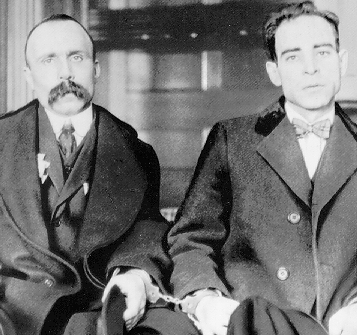
On this date in crime history – April 15, 1920 a paymaster and a security guard are killed during a mid-afternoon armed robbery of a shoe company in South Braintree, Massachusetts. Out of this crime grew one of the most famous trials in American history and a landmark case in forensic crime detection. Both Fred Parmenter and Alessandro Berardelli were shot several times as they attempted to move the payroll boxes of their New England shoe company. The two armed thieves, identified by witnesses as "Italian-looking," fled in a Buick. The car was found abandoned in the woods several days later. Through evidence found in the car, police suspected that a man named Mike Boda was involved. However, Boda was one step ahead of the authorities, and he fled to Italy. Police did manage to catch Boda's colleagues, Nicola Sacco and Bartolomeo Vanzetti, who were each carrying loaded weapons at the time of their arrest. Sacco had a .32 caliber handgun, the same type as was used to kill the security guards and bullets from the same manufacturer as those recovered from the shooting. Vanzetti was identified as a participant in a previous robbery attempt of a different shoe company. 

Sacco and Vanzetti were anarchists, believing that social justice would come only through the destruction of governments. In the early 1920s, mainstream America developed a fear of communism and radical politics that resulted in anti-immigrant hysteria. Sacco and Vanzetti, recognizing the uphill battle ahead, tried to put this fear to their advantage by drumming up support from the left wing with claims that the prosecution was politically motivated. Millions of dollars were raised for their defense by the radical left around the world. The American embassy in Paris was even bombed in response to the Sacco-Vanzetti case; a second bomb intended for the embassy in Lisbon was intercepted. The well-funded defense put up a good fight, bringing forth nearly 100 witnesses to testify on the defendants' behalf. Ultimately, eyewitness identification wasn't the crucial issue; rather, it was the ballistics tests on the murder weapon. Prosecution experts, with rather primitive instruments, testified that Sacco's gun was the murder weapon. Defense experts claimed just the opposite. In the end, on July 14, 1921, Sacco and Vanzetti were found guilty; they were sentenced to death. However, the ballistics issue refused to go away as Sacco and Vanzetti waited on death row. In addition, a jailhouse confession by another criminal fueled the controversy. In 1927, Massachusetts Governor A. T. Fuller ordered another inquiry to advise him on the clemency request of the two anarchists. In the meantime, there had been many scientific advances in the field of forensics. The comparison microscope was now available for new ballistics tests and proved beyond a doubt that Sacco's gun was indeed the murder weapon.

Sacco and Vanzetti were executed in August 1927, but even the new evidence didn't completely suppress the controversy. In October 1961, and again in March 1983, new investigations were conducted into the matter, but both revealed that Sacco's revolver was indeed the one that fired the bullet and killed the security guards. On August 23, 1977, Massachusetts Governor Michael Dukakis issued a proclamation that Sacco and Vanzetti had not received a fair trial.


Michael Thomas Barry is a columnist for www.crimemagazine.com and is the author of numerous books that include the award winning, Murder and Mayhem 52 Crimes that Shocked Early California, 1849-1949 (2012, Schiffer Publishing). The WINNER of the 2012 International Book Awards and a FINALIST in the 2012 Indie Excellence Book Awards for True Crime. Visit the author’s website for more information: www.michaelthomasbarry.com   

His book can be purchased at Amazon through the following link:       
Amazon - http://www.amazon.com/Murder-Mayhem-Shocked-California-1849-1949/dp/0764339680/ref=la_B0035CPN70_1_3?ie=UTF8&qid=1361552464&sr=1-3

Monday, April 14, 2014

Abraham Lincoln was Shot - 1865


On this date in crime history – April 14, 1865, President Abraham Lincoln was shot by actor John Wilkes Booth at Ford’s Theater. After shooting the president Booth shouted, "Sic semper tyrannis! (Ever thus to tyrants!) The South is avenged," as he jumped onto the stage and fled on horseback. Lincoln died the next morning. Booth was a well-known actor who was particularly loved in the South. During the war, he stayed in the North and became increasingly bitter. Along with friends Samuel Arnold, Michael O'Laughlin, and John Surratt, Booth conspired to kidnap Lincoln and deliver him to the South. 

On March 17, along with George Atzerodt, David Herold, and Lewis Paine, the group met in a Washington bar to plot the abduction of the president three days later. However, when the president changed his plans, the scheme was scuttled. Shortly afterward, the South surrendered to the Union and the conspirators altered their plan. They decided to kill Lincoln, Vice President Andrew Johnson, and Secretary of State William Seward. 

On April 14, Atzerodt backed out of his part to kill Johnson. Upset, Booth went to drink at a saloon near Ford's Theater. At about 10 p.m. he walked into the theater and up to the president's box. Lincoln's guard, John Parker, was not there because he had gotten bored with the play, Our American Cousin, and left his post to get a drink. Booth easily slipped in and shot the president in the back of the head. The president's friend, Major Rathbone, attempted to grab Booth but was slashed by Booth's knife. Booth injured his leg badly when he jumped to the stage to escape, but he managed to hobble outside to his horse. Meanwhile, Lewis Paine forced his way into William Seward's house and stabbed the secretary of state several times before fleeing. Booth rode to Virginia with David Herold and stopped at the home of Dr. Samuel Mudd, who placed splints on Booth's legs. They hid in a barn on Richard Garrett's farm as thousands of Union troops combed the area looking for them. The other conspirators were captured, except for John Surratt, who fled to Canada. 

When federal troops finally caught up with Booth and Herold on April 26, they gave them the option of surrendering before the barn was burned down. Herold decided to surrender, but Booth remained in the barn as it went up in flames. Booth was then shot and killed in the burning barn by Corporal Boston Corbett. On July 7, George Atzerodt, Lewis Paine, David Herold, and John Surratt's mother, Mary, were hanged in Washington. The execution of Mary Surratt is believed by some to have been a miscarriage of justice. Although there was proof of Surratt’s involvement in the original abduction conspiracy, it is clear that her deeds were minor compared to those of the others who were executed. Her son John was eventually tracked down in Egypt and brought back to trial, but he managed, with the help of clever lawyers, to win an acquittal.
 
 
Michael Thomas Barry is a columnist for www.crimemagazine.com and is the author of numerous books that include the award winning, Murder and Mayhem 52 Crimes that Shocked Early California, 1849-1949 (2012, Schiffer Publishing). The WINNER of the 2012 International Book Awards and a FINALIST in the 2012 Indie Excellence Book Awards for True Crime. Visit the author’s website for more information: www.michaelthomasbarry.com   

His book can be purchased at Amazon through the following link: 
Amazon - http://www.amazon.com/Murder-Mayhem-Shocked-California-1849-1949/dp/0764339680/ref=la_B0035CPN70_1_3?ie=UTF8&qid=1361552464&sr=1-3
Friday, April 11, 2014

The Black Widow - Louise Peete was Executed - 1947


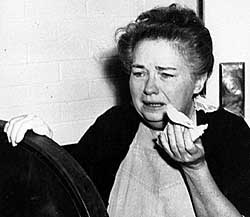
On this date in crime history – April 11, 1947, Louise Peete, the infamous Black Widow was executed at San Quentin Prison. She was born in 1883 in Bienville, Louisiana. Her family was relatively wealthy, and she received an expensive education, but she was expelled from school for inappropriate behavior. In 1903, she married a travelling salesman named Henry Bosley, who committed suicide after discovering his wife in bed with another man in 1906. She then spent time in Boston, apparently working as a prostitute, and stealing from her clients. Peete later returned to Waco, Texas, where she became involved with wealthy oil baron Joe Appel, who was later found murdered, with his diamond jewelry missing. Peete was accused of the crime, but she convinced a grand jury that she had been defending herself from rape. In 1913, she married a hotel clerk, Harry Faurote and he too committed suicide because of Peete's infidelity.  

In 1915, in Denver, she married again, this time to a salesman named Richard Peete. She apparently had a daughter with him, but later abandoned him to move to Los Angeles. There, she lived with Jacob C. Denton, another oil magnate. In 1920, Denton disappeared, with Peete presenting various excuses as to why he would not appear in public. By the time Denton's lawyer had police search his house, Peete had returned to her husband in Denver. Denton's body was found, and Peete was charged with his murder. She was found guilty and sentenced to life imprisonment. During her time in prison, she ceased to respond to her husband's letters and he killed himself. She was paroled in 1942 and returned to Los Angeles, where she found employment as a housekeeper for a woman named Jessie Marcy, who died not long afterwards. An elderly co-worker also died under suspicious circumstances. Police spoke to Peete, but were not aware of her past. She then went to work for Emily Dwight Latham, who had helped to secure Peete's parole. Latham also died. The deaths of both Marcy and Latham were attributed to natural causes. Peete then became a housekeeper in Pacific Palisades for Arthur C. Logan and his wife Margaret, and married a man named Lee Borden Judson. Margaret Logan then disappeared, but suspicion was aroused by poor forgeries of her signature that Peete presented on checks and letters to parole authorities. Peete was arrested, and her husband Lee Judson told police of his suspicions about her. Judson was acquitted of any involvement in the crimes, but later committed suicide. Peete was found guilty of murder, and sentenced to death. She went to the gas chamber on April 11, 1947.
 
 
Michael Thomas Barry is a columnist for www.crimemagazine.com and is the author of numerous books that include the award winning, Murder and Mayhem 52 Crimes that Shocked Early California, 1849-1949 (2012, Schiffer Publishing). The WINNER of the 2012 International Book Awards and a FINALIST in the 2012 Indie Excellence Book Awards for True Crime. Visit the author’s website for more informationwww.michaelthomasbarry.com   

His book can be purchased at Amazon through the following link:       
Amazon - http://www.amazon.com/Murder-Mayhem-Shocked-California-1849-1949/dp/0764339680/ref=la_B0035CPN70_1_3?ie=UTF8&qid=1361552464&sr=1-3

Wednesday, April 9, 2014

Billy the Kid was Found Guilty of Murder - 1881


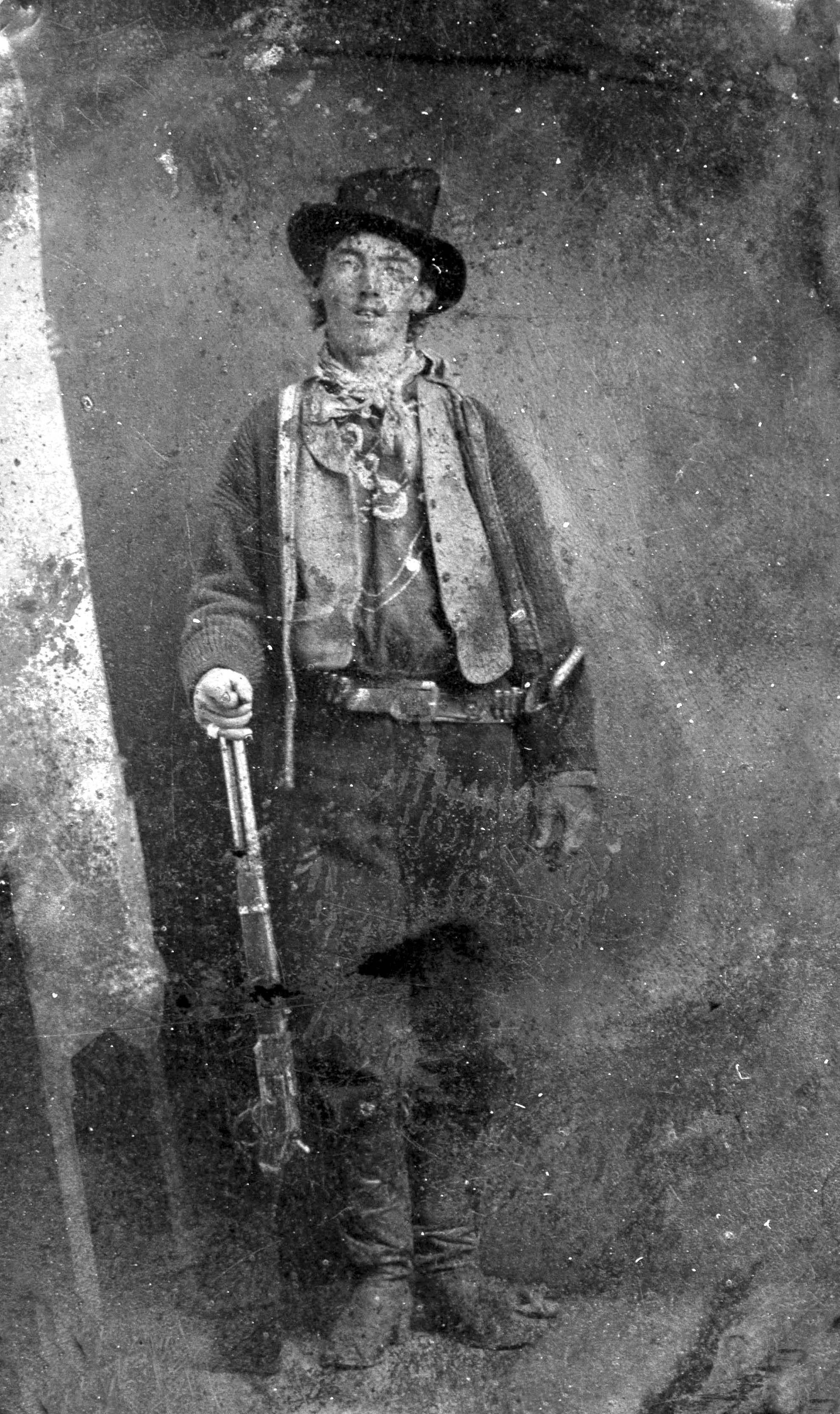
On this date in crime history – April 9, 1881, outlaw Billy the Kid was found guilty of murdering the sheriff of Lincoln County, New Mexico and sentenced to death. There is no doubt that Billy the Kid did indeed shoot the sheriff, though he had done so in the context of the bloody Lincoln County War, a battle between two powerful groups of ranchers fighting for economic control of Lincoln County. When his boss, rancher John Tunstall, was murdered in February 1878, the hotheaded Billy swore vengeance. Unfortunately, the leader of the men who murdered Tunstall was the sheriff of Lincoln County, William Brady. When Billy and his partners murdered the Brady, they became outlaws, regardless of how corrupt the sheriff had been. After three years on the run and several other murders, Pat Garrett finally arrested Billy in early 1881. Garrett, a one-time friend, was the new sheriff of Lincoln County. On this day in 1881, a court took only one day to convict Billy of the murder of Sheriff Brady. On April 28, while Garrett was out of town, Billy managed to escape from jail. While one of the jail's guards was escorting a group of prisoners across the street to dinner, Billy asked the remaining guard to take him to the jail outhouse. As the guard escorted him back to his cell, Billy somehow managed to slip a wrist through his handcuffs. He slugged the guard and shot him with a pistol either that he took from the guard or that a friend had hidden in the outhouse for him. Hearing the shot, the second guard ran back to the jail, and Billy killed him with a blast from a shotgun he found in Garrett's office. Upon his return to Lincoln, Garrett immediately formed a posse and set off to recapture the outlaw. On July 14, 1881, Garrett surprised Billy in a darkened room not far from Lincoln and shot him dead.
 
 
Michael Thomas Barry is a columnist for www.crimemagazine.com and is the author of numerous books that include the award winning, Murder and Mayhem 52 Crimes that Shocked Early California, 1849-1949 (2012, Schiffer Publishing). The WINNER of the 2012 International Book Awards and a FINALIST in the 2012 Indie Excellence Book Awards for True Crime. Visit the author’s website for more information: www.michaelthomasbarry.com   

His book can be purchased at Amazon through the following link:         
Amazon - http://www.amazon.com/Murder-Mayhem-Shocked-California-1849-1949/dp/0764339680/ref=la_B0035CPN70_1_3?ie=UTF8&qid=1361552464&sr=1-3

Wednesday, April 2, 2014

Mob Boss John Gotti was Found Guilty of Murder & Racketeering - 1992


On this date in crime history - April 2, 1992, mob boss John Gotti, nicknamed “The Teflon Don,” was found guilty of 13 counts of murder and racketeering charges. In the wake of the conviction, the assistant director of the FBI’s New York office, James Fox, was quoted as saying, “The don is covered in Velcro, and every charge stuck.” On June 23rd of that year, Gotti was sentenced to life in prison, dealing a significant blow to organized crime.

John Joseph Gotti, Jr., was born in the Bronx, New York, on October 27, 1940. He rose through the ranks of the Gambino crime family and seized power after ordering the December 1985 murder of then-boss Paul Castellano outside a Manhattan steakhouse. Behind closed doors, Gotti was a ruthless, controlling figure. Publicly, he became a tabloid celebrity, famous for his swagger and expensive suits. During the 1980s, Gotti’s lawyer Bruce Cutler won him acquittals three times. A jury member in one of those trials was later convicted of accepting a bribe to acquit the mob boss. In December 1990, Gotti was arrested at the Ravenite Social Club, his headquarters in New York City’s Little Italy neighborhood. The ensuing trial, which started in January 1992, created a media frenzy. Salvatore “Sammy the Bull” Gravano, one of Gotti’s top soldiers, made a deal with the government and testified in court against his boss. Gravano admitted to committing 19 murders, 10 of them sanctioned by Gotti. In addition, prosecutors presented secret taped conversations that incriminated Gotti. After deliberating for 13 hours, the jury, which had been kept anonymous and sequestered during the trial, came back with a verdict on April 2, 1992, finding Gotti guilty on all counts. The mob boss was sent to the U.S. Penitentiary at Marion, Illinois, where he was held in virtual solitary confinement. On June 10, 2002, he died of throat cancer at age 61 at a Springfield, Missouri, federal medical facility.
 
 
Michael Thomas Barry is a columnist for www.crimemagazine.com and is the author of numerous books that include the award winning, Murder and Mayhem 52 Crimes that Shocked Early California, 1849-1949 (2012, Schiffer Publishing). The WINNER of the 2012 International Book Awards and a FINALIST in the 2012 Indie Excellence Book Awards for True Crime. Visit the author’s website for more information: www.michaelthomasbarry.com. His book can be purchased at Amazon through the following link: 

Amazon - http://www.amazon.com/Murder-Mayhem-Shocked-California-1849-1949/dp/0764339680/ref=la_B0035CPN70_1_3?ie=UTF8&qid=1361552464&sr=1-3
Monday, March 31, 2014

Mexican-American Pop Star Selena was Murdered - 1995


On this date in in crime history – March 31, 1995, Mexican-American pop star Selena was shot and killed by her former fan club president. She was born Selena Quintanilla-Perez in Lake Jackson, Texas on April 16. 1971. Selena grew up in Corpus Christi, Texas, where she began her musical career. Her father, Abraham Quintanilla Jr., was a singer with the original Los Dinos from 1957-1972, and nurtured the burgeoning musical talent of his children. When Selena was just 3 years old, she demanded to know why her father was leaving her out of the music. Abraham simply said she was too young. Right then Selena showed him she was not too young, she showed him her own instrument, her voice. Abraham couldn't believe what a beautiful sound she heard. By the time Selena was 6, she was already singing like a pro in English and in Spanish, even though she didn't speak the language, alongside her brother, sister, and father.

When Selena was 9, her father started the group Selena Y Los Dinos (Selena and The Guys). The group's first performances were in Papagallos, the Quintanilla family's restaurant. In 1986, Selena's career really began to take off with the release of her first album, Alpha. At the Tejano Music Awards, she took the award for Female Vocalist of the Year. In 1988, she recorded two more albums, but it wasn’t until the following year that she got her big break. That year, she signed with Capitol/EMI Latin label. By this time, Selena's concerts were drawing thousands of people. In 1990, a fan approached Selena’s father with the idea of starting a fan club. Her name was Yolanda Saldivar. Her wish was granted. She was often referred to as Selena's biggest fan. In 1993, she won a Grammy Award for Best Mexican American Performance.

In February of 1995, trouble started with the Selena Fan Club. People were complaining that they weren't receiving their packets they paid for. The Quintanilla family confronted Yolanda, who by this time was also manager of Selena’s boutiques. Money was reported missing and On March 12, 1995, Yolanda was fired. On March 31, 1995, Selena went to where Yolanda was staying in Corpus Christi, a Days Inn motel, to get some missing paperwork. There Yolanda told her she had been raped in Monterey, Mexico and needed to go to the hospital. Being the kind person that Selena was, she took her. After about an hour, Selena and Yolanda returned to the motel and argued. Selena told her that she just couldn't be trusted anymore. At 11:48 a.m., Yolanda took out a gun, and fired at Selena. The bullet struck her in her right shoulder. With all her strength, Selena ran towards the lobby to get help. She collapsed on the floor as the clerk called 911. Soon an ambulance came to take Selena to the hospital where she was pronounced dead at 1:09 p.m. News of Selena's death spread all over the world. Thousands of fans passed by her coffin. In July of 1995, her dream of crossing over into the pop market was accomplished. The first single released from her English album Dreaming of You, "I Could Fall in Love," became a number one hit. Yolanda Saldivar was found guilty of first degree murder and sentenced to life in prison on October 23, 1995.
 
 
Michael Thomas Barry is a columnist for www.crimemagazine.com and is the author of numerous books that include the award winning, Murder and Mayhem 52 Crimes that Shocked Early California, 1849-1949 (2012, Schiffer Publishing). The WINNER of the 2012 International Book Awards and a FINALIST in the 2012 Indie Excellence Book Awards for True Crime. Visit the author’s website for more information: www.michaelthomasbarry.com

His book can be purchased at Amazon through the following link:   

Saturday, March 29, 2014

Guilty Verdict in the My Lai Massacre Case - 1971


On March 29, 1971, Lt. William L. Calley is found guilty of premeditated murder by a U.S. Army court-martial at Fort Benning, Georgia. Calley, a platoon leader, had led his men in a massacre of 200 Vietnamese civilians at My Lai, including women and children on March 16, 1968. My Lai 4, was a cluster of hamlets in Quang Ngai Province of Vietnam. The unit had been conducting a search-and-destroy mission to locate local Viet Cong forces. The unit entered Son My village but found only women, children, and elderly. Frustrated by recent casualties, the U.S. soldiers took out their anger on the villagers, indiscriminately shooting people as they ran from their huts. The soldiers rounded up the survivors and led them to a nearby ditch where they were shot. During the trial, Chief Army prosecutor Capt. Aubrey Daniel charged that Calley ordered Sgt. Daniel Mitchell to "finish off the rest" of the villagers. The prosecution stressed that all the killings were committed despite the fact that Calley’s platoon had met no resistance and that he and his men had not been fired upon. Initially, the massacre was covered up but came to light one year later. An Army board of inquiry, headed by Lt. Gen. William Peers, investigated the massacre and produced a list of 30 people who knew of the atrocity, but only 14 were charged with crimes. All eventually had their charges dismissed or were acquitted with the exception of Calley, who was found guilty of personally murdering 22, and sentenced to life imprisonment. His sentence was reduced to 20 years by the Court of Military Appeals and further reduced later to 10 years by the Secretary of the Army. Proclaimed by much of the public as a "scapegoat," Calley was paroled in 1974 after having served about a third of his 10-year sentence.
 
 
Michael Thomas Barry is a columnist for www.crimemagazine.com as is the author of numerous books that include the award winning, Murder and Mayhem 52 Crimes that Shocked Early California, 1849-1949 (2012, Schiffer Publishing). The WINNER of the 2012 International Book Awards and a FINALIST in the 2012 Indie Excellence Book Awards for True Crime. Visit the author’s website for more information: www.michaelthomasbarry.com

His book can be purchased at Amazon through the following link:   

Friday, March 28, 2014

Funeral is Held for Namesake of Infamous Execution Machine - 1814


On March 28, 1814, the funeral of Joseph Ignance Guillotin, the namesake but not the inventor of the infamous execution device, takes place outside of Paris, France. Guillotin, a member of the General Assembly had what he felt were the purest motives for proposing the use of the device. The machine was intended to show the intellectual and social progress of the French Revolution; by killing aristocrats and journeymen the same way, equality in death was ensured. The first use of the guillotine was on April 25 1792, when Nicolas Pelletier was put to death for armed robbery and assault in Place de Greve. The newspapers reported that guillotine was not an immediate sensation. The crowds seemed to miss the gallows at first. However, it quickly caught on with the public and many thought it brought dignity back to the executioner. However, the prestige of the guillotine fell precipitously due to its frequent use in the French Terror following the Revolution. It became the focal point of the awful political executions and was so closely identified with the terrible abuses of the time that it was perceived as partially responsible for the excesses itself. The association with the guillotine so embarrassed Dr. Guillotin's family that they petitioned the French government to rename it; when the government refused, they instead changed their own family name. By coincidence, a person named Guillotin was indeed executed by the guillotine, he was J.M.V. Guillotin, a doctor of Lyons. This coincidence may have contributed to erroneous statements that Guillotin was put to death on the machine that bears his name; however, in reality, Guillotin died in Paris on March 26, 1815 of natural causes, and was buried at Pere Lachaise Cemetery. Still, it was used sporadically in France into the 20th century.
 
 
Michael Thomas Barry is a columnist for www.crimemagazine.com and is the author of numerous books that include the award winning, Murder & Mayhem 52 Crimes that Shocked Early California, 1849-1949 (2012, Schiffer Publishing). The WINNER of the 2012 International Book Awards and a FINALIST in the 2012 Indie Excellence Book Awards for True Crime. Visit the author’s website for more information: www.michaelthomasbarry.com

His book can be purchased at Amazon through the following link:     

Thursday, March 27, 2014

Finger Print Technology Solved British Murder Case - 1905


On March 27, 1905, neighbors discover the badly bludgeoned bodies of Thomas and Ann Farrow in their South London shop. Thomas was already dead, but Ann was still breathing, but died four days later without regaining consciousness. The brutal crime was solved using the newly developed fingerprinting technique. Only three years earlier, the first English court had admitted fingerprint evidence in a petty theft case. The Farrow case was the first time that the cutting-edge technology was used in a high-profile murder case in Britain.

Since the cash box in which the Farrow's stored their cash receipts was empty, it was clear to Scotland Yard investigators that robbery was the motive for the crime. One print on the box did not match the victims or any of the criminal prints that Scotland Yard possessed. Fortunately, a local milkman reported seeing two young men in the vicinity of the Farrow house on the day of the murders. They were identified as brothers Alfred and Albert Stratton, and a week later, authorities caught up with them and fingerprinted them. Alfred's right thumb was a perfect match for the print on the Farrow's cash box. The fingerprint evidence became the prosecutions only solid evidence when the eye witness was no able to positively identify the Stratton’s. The defense used expert Dr. John Garson to attack the reliability of the fingerprint evidence, but the prosecution countered with evidence that Garson had written to both the defense and prosecution on the same day offering his services to both. The Stratton brothers, obviously not helped by the discrediting of Garson, were convicted of the murders and hanged on May 23, 1905. Since then, fingerprint evidence has become commonplace in criminal trials and the lack of it, is often used by defense attorneys.
 
 
Michael Thomas Barry is a columnist for www.crimemagazine.com and is the author of numerous books that include the award winning, Murder and Mayhem 52 Crimes that Shocked Early California, 1849-1949 (2012, Schiffer Publishing). The WINNER of the 2012 International Book Awards and a FINALIST in the 2012 Indie Excellence Book Awards for True Crime. Visit the authors website for more information: www.michaelthomasbarry.com
 
His book can be purchased at Amazon through the following link:     
 
Amazon - http://www.amazon.com/Murder-Mayhem-Shocked-California-1849-1949/dp/0764339680/ref=la_B0035CPN70_1_3?ie=UTF8&qid=1361552464&sr=1-3

Wednesday, March 26, 2014

Mass Suicide or Murder? Heaven's Gate Cult 1997


On March 26, 1997, police enter a mansion in Rancho Santa Fe, an exclusive suburb of San Diego, California, and discover 39 victims of a mass suicide. The deceased were all found lying peaceably in matching dark clothes and Nike sneakers and had no noticeable signs of trauma. It was later revealed that the men and women were members of the "Heaven's Gate" religious cult, whose leaders preached that suicide would allow them to leave their bodies and enter an alien spacecraft hidden behind the Hale-Bopp comet.

The cult was led by Marshall Applewhite, a music professor who, after surviving a near-death experience in 1972, was recruited into the cult by one of his nurses, Bonnie Lu Nettles. In 1975, Applewhite and Nettles persuaded a group of 20 people from Oregon to abandon their families and possessions and move to eastern Colorado, where they promised that an extraterrestrial spacecraft would take them to heaven. Nettles, who called herself "Ti," and Applewhite, who took the name of "Do," explained that human bodies were merely containers that could be abandoned in favor of a higher physical existence. As the spacecraft never arrived, membership in Heaven's Gate diminished, and in 1985 Bonnie Lu Nettles, died. During the early 1990s, the cult resurfaced as Applewhite began recruiting new members. Soon after the 1995 discovery of the comet Hale-Bopp, the Heaven's Gate members became convinced that an alien spacecraft was on its way to earth, hidden from human detection behind the comet. In October 1996, Applewhite rented a large home in Rancho Santa Fe, explaining to the owner that his group was made up of Christian-based angels. Applewhite advocated sexual abstinence, and several male cult members followed his example by undergoing castration operations. In 1997, as part of its 4,000-year orbit of the sun, the comet Hale-Bopp passed near Earth in one of the most impressive astronomical events of the 20th century. In late March 1997, as Hale-Bopp reached its closest distance to Earth, Applewhite and 38 of his followers drank a lethal mixture of phenobarbital and vodka and then lay down to die, hoping to leave their bodily containers, enter the alien spacecraft, and pass through Heaven's Gate into a higher existence.


Michael Thomas Barry is a columnist for www.crimemagazine.com and is the author of numerous books that include the award winning, Murder and Mayhem 52 Crimes that Shocked Early California, 1849-1949 (2012, Schiffer Publishing). The WINNER of the 2012 International Book Awards and a FINALIST in the 2012 Indie Excellence Book Awards for True Crime. Visit the author’s website for more information: www.michaelthomasbarry.com

His book can be purchased at Amazon through the following link:     

Tuesday, March 25, 2014

U.S. Supreme Court Hands Down Decision in the Scottsboro Nine Case - 1932


On March 25, 1932, the United States Supreme Court hands down its decision in the case of Powell v. Alabama. The case arose out of the infamous Scottsboro case. Nine young black men were arrested and accused of raping two white women on train in Alabama in March 1931. The boys were fortunate to barely escape a lynch mob sent to kill them, but were railroaded into convictions and death sentences. The Supreme Court overturned the convictions on the basis that they did not have effective representation. Victoria Price and Ruby Bates, the alleged victims, were not the virtuous women that the white establishment in Alabama had tried to portray. In fact, both were prostitutes who had invented the charges out of thin air. Bates eventually recanted her testimony. The accused boys were not given lawyers until the morning of the trial and these attorneys made almost no effort to defend their clients. On the same day that the case began, the defendants were convicted and received death sentences. The blatant unfairness of the case attracted the attention of liberals across the country. The transcript of the trial left the Supreme Court with no other choice but to throw out the convictions. Still, Alabama insisted on retrying the defendants. This time, Samuel Liebowitz, one of the premier defense attorneys of the day, came to represent the Scottsboro nine. It didn't matter. The jury made up of all white men, convicted them all again. In fact, there would be many more trials of the Scottsboro defendants over the years and each time they were convicted, the convictions were over turned on appeal. When the saga finally ended in 1937, four of the defendants were released without any further trials, while the five remaining defendants were convicted again and sentenced to long prison terms. All them were eventually released or pardoned for the original rape offenses, but several were arrested for unrelated crimes and served many more years in jail.

 
Michael Thomas Barry is the author of numerous books that include the award winning, Murder & Mayhem 52 Crimes that Shocked Early California, 1849-1949 (2012, Schiffer Publishing). The WINNER of the 2012 International Book Awards and a FINALIST in the 2012 Indie Excellence Book Awards for True Crime. Visit the author’s website for more information: www.michaelthomasbarry.com

His book can be purchased at Amazon through the following link:     

Friday, March 21, 2014

Alactraz Prison Closed - 1963


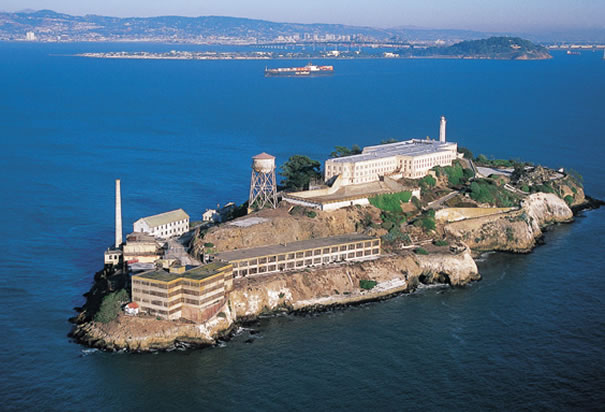
On March 21, 1963, Alcatraz Prison was closed. At its peak period of use in 1950s, "The Rock” housed over 200 inmates at the maximum-security facility. Alcatraz remains an icon of American prisons for its harsh conditions and record for being inescapable. The twelve-acre rocky island, one and a half miles from San Francisco, featured the most advanced security of the time. Some of the first metal detectors were used at Alcatraz. Strict rules were enforced against the unfortunate inmates who had to do time at Alcatraz. Nearly complete silence was mandated at all times. Some its infamous inmates included Al Capone, Alvin Karpis, Arthur “Doc” Barker, Mickey Cohen, and Robert Stroud “The Birdman of Alcatraz.” The island was first explored by Juan Manuel de Ayala in 1775, who called it Isla de los Alcatraces (Pelicans) because of all the birds that lived there. It was sold in 1849 to the U.S. government. The first lighthouse in California was on Alcatraz. It became a Civil War fort and then a military prison in 1907. The end of its prison days did not end the Alcatraz saga. In March 1964, a group of Sioux claimed that the island belonged to them due to a 100-year-old treaty. Their claims were ignored until November 1969 when a group of eighty-nine Native Americans representing the American Indian Movement occupied the island. They stayed there until 1971 when they were finally forced off the island by federal authorities. The following year, Alcatraz was added to the Golden Gate National Recreation Area. It is now open for tourism.
 
 
Michael Thomas Barry is a columnist for www.crimemagazine.com and is the author of numerous books that include the award winning, Murder & Mayhem 52 Crimes that Shocked Early California, 1849-1949 (2012, Schiffer Publishing). The WINNER of the 2012 International Book Awards and a FINALIST in the 2012 Indie Excellence Book Awards for True Crime. The book can be purchased at Amazon through the following link: 

Wednesday, March 19, 2014

Mobster Frank "The Enforcer" Nitti Committed Suicide - 1943


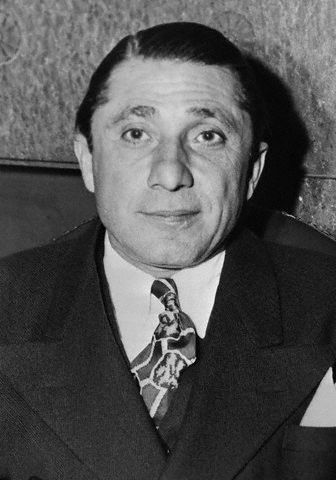
On March 19, 1943, mobster Frank “The Enforcer” Nitti, one of Al Capone’s henchmen and later front man for the Chicago Outfit, committed suicide after being indicted for extorting money from Hollywood producers. Born on January 27, 1886 in Italy, Nitti came to the United States in 1893, at the age of 7. His family settled in Brooklyn, but Frank moved to Chicago by 1920. Using his barbershop as a meeting place for small-time hoods, Nitti started fencing stolen jewelry, attracting the attention of big-time mobster Johnny Torrio and one of his strongmen, Al Capone. Nitti joined Al Capone's criminal empire, called the Chicago Outfit. Rising quickly in the organization, he displayed a talent for business, becoming known for efficiently smuggling Canadian whiskey into Chicago speakeasies, which served as distribution points throughout the city. By the mid-1920s, Nitti was a high ranking member of the Capone mob.

Although his nickname was "The Enforcer," Frank Nitti rarely took part in violent activities, delegating them instead to underlings. In 1931, he and Capone were convicted of tax evasion and sent to prison, but Nitti received an 18-month sentence, while Capone received 11 years. Severely claustrophobic, Nitti served his time in extreme discomfort, an experience that would mark him until the day he died.  When Nitti was released in 1932, the media dubbed him the new boss of Capone's gang, although it has since been revealed that Nitti was the face, and perhaps brains of the Chicago Outfit, while another man, Paul Ricca, was its true leader. Aiming to take down the Outfit's presumed head, in December 1932, Chicago policemen raided Nitti's office, shooting him in the back and neck. Nitti survived, and during the trial it was revealed that one of the officers had been paid $15,000 to kill Nitti. Needing to reinvent the Outfit after the end of Prohibition, Nitti turned the Outfit's attention to the labor unions and, even more, Hollywood. But in 1943, Nitti and many top members of the Chicago Outfit were indicted for extorting money from some of the largest movie studios in Hollywood, including MGM, Paramount, and 20th Century Fox, and they faced stiff sentences if convicted. Because of his claustrophobia, enhanced during his first prison term, Nitti feared the idea of a long confinement. So, faced with life in prison or perhaps murder by fellow Outfit members to keep him quiet, Nitti shot himself in the head on March 19, 1943, in a train yard, near his home in Riverside, Illinois.
 
 
Michael Thomas Barry is the author of numerous books that include the award winning, Murder and Mayhem 52 Crimes that Shocked Early California, 1849-1949 (2012, Schiffer Publishing). The WINNER of the 2012 International Book Awards and a FINALIST in the 2012 Indie Excellence Book Awards for True Crime. The book can be purchased at Amazon through the following link:    


Visit Michael's website for more information: www.michaelthomasbarry.com