Showing posts with label what happened on this date in British literary history. Show all posts

Thursday, May 2, 2013

English writer Jerome K. Jerome is born - 1859


English writer Jerome K. Jerome was born on May 2, 1859 in Walsall, England. He is best known for the comic travelogue Three Men in a Boat (1889). Other works include the essay collections Idle Thoughts of an Idle Fellow, Second Thoughts of an Idle Fellow and Three Men on the Bummel, a sequel to Three Men in a Boat. He wished to go into politics or be a man of letters, but the death of his father when the younger Jerome was age 13 and of his mother when he was age 15 forced him to quit his studies and find work to support himself. He was employed at the London and North Western Railway, initially collecting coal that fell along the railway, and remained there for four years.
 
In 1877, inspired by his older sister’s love for the theatre, Jerome decided to try his hand at acting, under the stage name Harold Crichton and after three years on the road with no evident success, the 21-year-old Jerome decided he had had enough of stage life and sought other occupations. He tried to become a journalist, writing essays, satires and short stories, but most of these were rejected. Over the next few years he was a school teacher, a packer, and a solicitor's clerk. Finally, in 1885, he had some success with writing On the Stage and Off, a comic memoir of his experiences with acting. He then wrote Idle Thoughts of an Idle Fellow and Three Men in a Boat. With the financial security the sales of these books provided, Jerome was able to dedicate all of his time to writing. He wrote a number of plays, essays and novels, but was never able to recapture the success of his earlier works. In June 1927, on a automobile trip from Devon to London, Jerome suffered a stroke. He lay in Northhampton General Hospital for two weeks before dying on June 14, 1927. His remains were cremated at Golders Green and the ashes were interred at St. Mary's Church, in Ewelme, Oxfordshire.
 
Michael Thomas Barry is the author of Great Britain’s Literary Legends. The book can be purchased from Amazon through the following links:
 

Wednesday, May 1, 2013

Poet & Playwright John Dryden died - 1700


English poet and playwright John Dryden died on May 1, 1700 in London, England. He was a dominating literary figure of the Restoration period in England. Dryden was born on August 9, 1631 in the village of Aldwincle, Northhamptonshire. He was the eldest of fourteen children born to Erasmus Dryden and Mary Pickering. His paternal grandfather was Sir Erasmus Dryden, 1st Baronet. He was also a second cousin once removed of Jonathan Swift. In 1644 he was sent to Westminster School as a King’s Scholar. As a humanist public school, Westminster maintained a curriculum which trained pupils in the art of rhetoric and the presentation of arguments for both sides of a given issue. This is a skill which would remain with Dryden and influence his later writing and thinking, as much of it displays these dialectical patterns. The Westminster curriculum also included weekly translation assignments which developed Dryden’s capacity for assimilation. This was also to be exhibited in his later works.
 
In 1650 Dryden attended Trinity College, Cambridge where he would experience a return to the religious and political ethos of his childhood. Though very limited information on Dryden’s undergraduate years, he would most certainly have followed the standard curriculum of classics, rhetoric, and mathematics. In 1654 he obtained his BA, graduating at the top of his class. In June of the same year Dryden’s father died, leaving him some land which generated a little income, but not enough to live on. Returning to London, Dryden obtained work with Cromwell’s Secretary of State, John Thurloe. In 1658, he published his first important poem, Heroique Stanzas, a eulogy on Oliver Cromwell’s death which is cautious and prudent in its emotional display. In 1660 Dryden celebrated the Restoration of the monarchy and the return of Charles II with the poem Astraea Redux.
After the Restoration, Dryden quickly established himself as the leading poet and literary critic of his day and he transferred his allegiances to the new government. Dryden welcomed the new regime with two more panegyrics; To His Sacred Majesty: A Panegyric on his Coronation (1662), and To My Lord Chancellor (1662). These poems suggest that Dryden was looking to court a possible patron, but he was to instead make a living in writing for publishers, not for the aristocracy, and thus ultimately for the reading public. On December 1, 1663 Dryden married Lady Elizabeth Howard but little is known of the intimate side of his marriage. Lady Elizabeth however, was to bear him three sons and outlive him.
 
With the reopening of the theaters after the Puritan ban, Dryden busied himself with the composition of plays. His first play The Wild Gallant appeared in 1663. He led the way in the Restoration comedy with such works as Marriage a la Mode and All for Love. Dryden was never satisfied with his theatrical writings and frequently suggested that his talents were wasted on unworthy audiences. He thus was making a bid for poetic fame off-stage. In 1667, around the same time his dramatic career began, he published Annus Mirabilis, a lengthy historical poem which described the events of 1666. It was a modern epic in pentameter quatrains that established him as the preeminent poet of his generation, and was crucial in his attaining the posts of Poet Laureate (1668) and historiographer royal (1670).
 
When King James II was deposed in 1688, Dryden’s refusal to take the oaths of allegiance to the new government left him out of favor at court. Thomas Shadwell succeeded him as Poet Laureate, and he was forced to give up his public offices and live by the proceeds of his pen. Dryden translated works by Horace, Ovid, and others, a task which he found far more satisfying than writing for the stage. In 1694 he began work on what would be his most ambitious and defining work as translator, The Works of Virgil (1697). Dryden died on May 1, 1700, and was initially buried in St. Anne's Cemetery in London, before being exhumed and reburied in Westminster Abbey.
Michael Thomas Barry is the author of Great Britain’s Literary Legends. The book can be purchased from Amazon through the following links:
 

Tuesday, April 30, 2013

Charles Dickens novel "A Tale of Two Cities" is first published - 1859


On April 30, 1859, Charles Dickens A Tale of Two Cities is first published. The 45-chapter novel was published in 31 weekly installments in Dickens' new literary periodical titled All the Year Round. It ran From April 1859 to November 1859. He also republished the chapters as eight monthly sections in green covers. All but three of Dickens' previous novels had appeared only as monthly installments. The novel is set in London and Paris before and during the French Revolution. With over 200 million copies sold, it ranks among the most famous works in the history of literature. The novel depicts the plight of the French peasantry demoralized by the French aristocracy in the years leading up to the revolution, the corresponding brutality demonstrated by the revolutionaries toward the former aristocrats in the early years of the revolution, and many unflattering social parallels with life in London during the same time period. It follows the lives of several protagonists through these events. The most notable are Charles Darnay and Sydney Carton. Darnay is a French former aristocrat who becomes a victim of the indiscriminate wrath of the revolution despite his virtuous nature, and Carton is a dissipated English barrister who endeavors to redeem his ill-spent life out of his unrequited love for Darnay's wife.


Michael Thomas Barry is the author of Great Britain’s Literary Legends. The book can be purchased from Amazon through the following links:

Amazon - http://www.amazon.com/Great-Britains-Literary-Legends-Writers/dp/0764344382/ref=sr_1_2?ie=UTF8&qid=1367336806&sr=8-2&keywords=michael+thomas+barry

Amazon UK - http://www.amazon.co.uk/Great-Britains-Literary-Legends-Writers/dp/0764344382/ref=sr_1_2?ie=UTF8&qid=1367336841&sr=8-2&keywords=michael+thomas+barry

Monday, April 29, 2013

Henry James publishes the travel essay collection "Transatlantic Sketches - 1875


On April 29, 1875, Henry James' collection of travel pieces, Transatlantic Sketches, is published. The same year, James publishes a collection of stories, A Passionate Pilgrim, and a novel, Roderick Hudson. These three works herald the beginning of James' long and influential writing career. He was born on (1843-04-15)April 15, 1843 in New York City. James is (1916-02-28)regarded as one of the key figures of 19th-century literary realism. He was the brother of philosopher and psychologist William James. He alternated between America and Europe for the first 20 years of his life, after which he settled in England, becoming a British citizen in 1915, one year before his death. He is primarily known for the series of novels in which he portrays the encounter of Americans with Europe and Europeans. His method of writing from the point of view of a character within a tale allows him to explore issues related to consciousness and perception, and his style in later works has been compared to impressionist painting.

James contributed significantly to literary criticism, particularly in his insistence that writers be allowed the greatest possible freedom in presenting their view of the world. James claimed that a text must first and foremost be realistic and contain a representation of life that is recognizable to its readers. Good novels, to James, show life in action and are, most importantly, interesting. The concept of a good or bad novel is judged solely upon whether the author is good or bad. An extraordinarily productive writer, in addition to his voluminous works of fiction he published articles and books of travel, biography, autobiography, and criticism, and wrote plays, some of which were performed during his lifetime with moderate success. His theatrical work is thought to have profoundly influenced his later novels and tales. James died on February 28, 1916 in London, England.


Michael Thomas Barry is the author of Great Britain’s Literary Legends. The book can be purchased from Amazon through the following links:

Amazon - http://www.amazon.com/Great-Britains-Literary-Legends-Writers/dp/0764344382/ref=sr_1_2?ie=UTF8&qid=1367246163&sr=8-2&keywords=michael+thomas+barry

Amazon UK - http://www.amazon.co.uk/Great-Britains-Literary-Legends-Writers/dp/0764344382/ref=sr_1_2?ie=UTF8&qid=1367246210&sr=8-2&keywords=michael+thomas+barry


Saturday, April 27, 2013

Poet John Milton sells rights copyright to "Paradise Lost" for 10 pounds - 1667


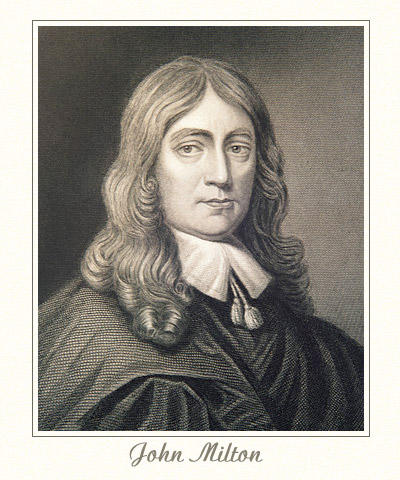
On April 27, 1667, poet John Milton sells the copyright to his masterpiece Paradise Lost (1667) for a mere 10 pounds. Milton was born on December 9, 1608 in London, England. He was raised the indulged son of a prosperous London businessman. He excelled at languages in grammar school and at Christ's College, Cambridge, where he took a bachelor's and a master's, which he completed in 1632. He then decided to continue his own education, spending six years reading every major work of literature in several languages. He published an elegy for a college classmate, Lycidas, in 1637 and went abroad in 1638 to continue his studies. In 1642, Milton married 17-year-old Mary Powell, who left him just weeks later. He then wrote a series of pamphlets arguing for the institution of divorce based on incompatibility. The idea, however mild it seems today, was scandalous at the time, and Milton experienced a vehement backlash for his writing. Milton's wife returned to him in 1645, and the pair had three daughters. However, he continued espousing controversial views. He supported the execution of King Charles I, he railed against the control of the church by bishops, and he upheld the institution of Cromwell's commonwealth, for which he became secretary of foreign languages. In 1651, he lost his sight but fulfilled his government duties with the help of assistants, including poet Andrew Marvell. His wife died the following year. He remarried in 1656, but his second wife died in childbirth. Four years later, the commonwealth was overturned, and Milton was thrown in jail, saved only by the intervention of friends. He married for a third time in 1663. Blind, impoverished, and jobless, he began to dictate his poem Paradise Lost to his family. When the poem was ready for publication, he sold it for 10 pounds. Once printed, Paradise Lost was immediately hailed as a masterpiece of the English language. In 1671, he wrote Paradise Regained, followed by Samson Agonistes. Milton died on November 8, 1674 and was buried at St. Giles-without-Cripplegate Church in London.


Michael Thomas Barry is the author of Great Britain’s Literary Legends. The book can be purchased at Amazon through the following links:


Friday, April 26, 2013

William Shakespeare was baptized - 1564


English playwright and poet William Shakespeare was baptized on April 26, 1564. The actual date of his birth is not known. He is widely regarded as the greatest writer in the English language and the world's preeminent dramatist. He is often called England's national poet and the "Bard of Avon.” His extant works, including some collaboration; they consist of about 38 plays, 154 sonnets, and two long narrative poems. His plays have been translated into every major living language and are performed more often than those of any other playwright. 

Shakespeare was born and raised in Stratford-upon-Avon. At the age of 18, he married Anne Hathaway, with whom he had three children. Between 1585 and 1592, he began a successful career in London as an actor, writer, and theater owner. He appears to have retired to Stratford around 1613 at age 49, where he died on April 23, 1616. 

Few records of Shakespeare's private life survive, and there has been considerable speculation about such matters since his death. Shakespeare produced most of his known work between 1589 and 1613. His early plays were mainly comedies and histories, genres he raised to the peak of sophistication and artistry by the end of the 16th century. He then wrote mainly tragedies until about 1608, including Hamlet, King Lear, Othello, and Macbeth, which are considered some of the finest works in the English language. In his last phase, he wrote tragicomedies, also known as romances, and collaborated with other playwrights.
Many of his plays were published in editions of varying quality and accuracy during his lifetime. In 1623, John Heminges and Henry Condell, two friends and fellow actors of Shakespeare, published the First Folio, a collected edition of his dramatic works that included all but two of the plays now recognized as Shakespeare's. It was prefaced with a poem by Ben Jonson, in which Shakespeare is hailed, presciently, as "not of an age, but for all time." 

Shakespeare was a respected poet and playwright in his own day, but his reputation did not rise to its present heights until the 19th century. The Romantics, in particular, acclaimed Shakespeare's genius, and the Victorians worshiped Shakespeare with a reverence. In the 20th century, his work was repeatedly adopted and rediscovered by new movements in scholarship and performance. His plays remain highly popular today and are constantly studied, performed, and reinterpreted in diverse cultural and political contexts throughout the world.


Michael Thomas Barry is the author of Great Britain’s Literary Legends. The book can be purchased from Amazon through the following links:

Amazon - http://www.amazon.com/Great-Britains-Literary-Legends-Writers/dp/0764344382/ref=sr_1_2?ie=UTF8&qid=1366995131&sr=8-2&keywords=michael+thomas+barry

Amazon UK - http://www.amazon.co.uk/Great-Britains-Literary-Legends-Writers/dp/0764344382/ref=sr_1_7?ie=UTF8&qid=1366995182&sr=8-7&keywords=michael+thomas+barry


Wednesday, April 24, 2013

Novelist Daniel Defoe died - 1731


English novelist Daniel Defoe died on April 24, 1731 in London, England. He was a novelist, journalist, and pamphleteer, and is best known for his novel Robinson Crusoe (1719). Defoe was born on Daniel Foe (his original name) was probably born in the parish of St. Giles Cripplegate, London circa 1659-1661.  He later added the aristocratic-sounding "De" to his name and on occasion claimed descent from the family of De Beau Faux. His parents were Presbyterian dissenters; during this period, the English government was often not tolerant of those who chose to worship outside the Church of England. Defoe is notable for being one of the earliest proponents of the novel, as he helped to popularize the form in Britain, and, along with others such as Samuel Richardson, is among the founders of the English novel. A prolific and versatile writer, he wrote more than 500 books, pamphlets and journals on various topics (including politics, crime, religion, marriage, psychology and the supernatural). He was also a pioneer of economic journalism. Daniel Defoe died on April 24, 1731, probably while in hiding from his creditors. He was interred at the Bunhill Fields Cemetery in London.


Michael Thomas Barry is the author of Great Britain’s Literary Legends. The book can be purchased from Amazon through the following links:


Tuesday, April 23, 2013

Poet William Wordsworth died - 1850


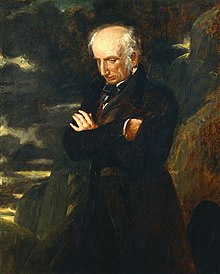
Poet William Wordsworth died on April 23, 1850 in Cumberland, England. He was a major English Romantic poet who, with Samuel Taylor Coleridge, helped to launch the Romantic Age in English literature with the 1798 joint publication Lyrical Ballads. He was born on April 7, 1770, in Cockermouth, Cumberland, to John and Anne (Cookson) Wordsworth, the second of their five children. His father was law agent and rent collector for Lord Lonsdale, and the family was fairly well off. After his mother's death in 1778 he was sent to Hawkshead Grammar School, near Windermere; in 1787 he went St. John’s College, Cambridge. He enjoyed hiking: during the "long" (i.e., summer) vacation of 1788 he tramped around Cumberland county; two years later went on a walking tour of France, Switzerland, and Germany; and in 1791, after graduation, trekked through Wales.

His enthusiasm for the French Revolution took him to France again in 1791, where he had an affair with Annette Vallon, who bore him an illegitimate daughter, Caroline, in 1792. Having run out of money, Wordsworth returned to England the following year, and the Anglo-French war, following the Reign of Terror, prevented his return for nine years. In 1794 he was reunited with his sister Dorothy, who became his companion, close friend, moral support, and housekeeper until her physical and mental decline in the 1830s.

The next year he met Coleridge, and the three of them grew very close, the two men meeting daily in 1797-98 to talk about poetry. The three friends traveled to Germany that fall, a trip that produced intellectual stimulation for Coleridge and homesickness for Wordsworth. After their return, William and Dorothy settled in his beloved Lake District, near Grasmere. The Peace of Amiens in 1802 allowed Wordsworth and his sister to visit France again to see Annette and Caroline. They arrived at a mutually agreeable settlement, and a few months later, after receiving an inheritance owed by Lord Lonsdale since John Wordsworth's death in 1783, William married Mary Hutchinson. By 1810 they had five children, but their happiness was tempered by the loss at sea of William's brother John (1805), the alienation from Coleridge in 1810, and the death of two children in 1812. In 1813 Wordsworth received an appointment as Distributor of Stamps for Westmorland, which him financially secure. The whole family, which included Dorothy, moved to Rydal Mount, between Grasmere and Rydal Water.

Wordsworth's literary career began with Descriptive Sketches (1793) and reached an early climax before the turn of the century, with Lyrical Ballads. His powers peaked with Poems in Two Volumes (1807), and his reputation continued to grow; even his harshest reviewers recognized his popularity and the originality. The important later works were well under way. His success with shorter forms made him the more eager to succeed with longer, specifically with a long, three-part "philosophical poem, containing views of Man, Nature, and Society, having for its principal subject the sensations and opinions of a poet living in retirement." The 17,000 lines which were eventually published made up only a part of this mammoth project. The second section, The Excursion, was completed (pub. 1814), as was the first book of the first part, The Recluse. During his lifetime he refused to print The Prelude, which he had completed by 1805, because he thought it was unprecedented for a poet to talk as much about himself — unless he could put it in its proper setting, which was as an introduction to the complete three-part Recluse. Inspiration gradually failed him for this project, and he spent much of his later life revising The Prelude. Finally fully reconciled to Coleridge, the two of them toured the Rhineland in 1828. Durham University granted him an honorary Doctor of Civil Law degree in 1838, and Oxford conferred the same honor the next year. When Robert Southey died in 1843, Wordsworth was named Poet Laureate. William Wordsworth died on April 23, 1850, and his wife published the much-revised Prelude that summer.


Michael Thomas Barry is the author of Great Britain’s Literary Legends. The book can be purchased from Amazon through the following links: