Showing posts with label British novelists. Show all posts

Wednesday, April 24, 2013

Novelist Daniel Defoe died - 1731


English novelist Daniel Defoe died on April 24, 1731 in London, England. He was a novelist, journalist, and pamphleteer, and is best known for his novel Robinson Crusoe (1719). Defoe was born on Daniel Foe (his original name) was probably born in the parish of St. Giles Cripplegate, London circa 1659-1661.  He later added the aristocratic-sounding "De" to his name and on occasion claimed descent from the family of De Beau Faux. His parents were Presbyterian dissenters; during this period, the English government was often not tolerant of those who chose to worship outside the Church of England. Defoe is notable for being one of the earliest proponents of the novel, as he helped to popularize the form in Britain, and, along with others such as Samuel Richardson, is among the founders of the English novel. A prolific and versatile writer, he wrote more than 500 books, pamphlets and journals on various topics (including politics, crime, religion, marriage, psychology and the supernatural). He was also a pioneer of economic journalism. Daniel Defoe died on April 24, 1731, probably while in hiding from his creditors. He was interred at the Bunhill Fields Cemetery in London.


Michael Thomas Barry is the author of Great Britain’s Literary Legends. The book can be purchased from Amazon through the following links:


Monday, April 22, 2013

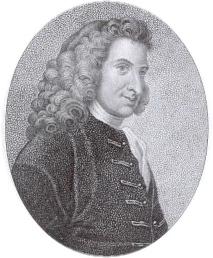
British novelist Henry Fielding was born - 1707


Novelist and playwright Henry Fielding was born on April 22, 1707 in Glastonbury, Somerset, England. He was the son of a army lieutenant and a judge's daughter, and was educated at Eton and the University of Leiden before returning to England where he wrote a series of farces, operas and light comedies. Fielding formed his own company and was running the Little Theatre, Haymarket, when one of his satirical plays upset the government, which resulted in the Theatrical Licensing Act in 1737 effectively ended Fielding's career as a playwright. In 1739 Fielding turned to journalism and became editor of The Champion. He also began writing novels such as The Adventures of Joseph Andrews (1742), Abraham Adams (1842) and Jonathan Wild (1743). Fielding was made a justice of the peace for Westminster and Middlesex in 1748. He campaigned against legal corruption and helped his half-brother, Sir John Fielding, establish the Bow Street Runners. In 1749 Fielding's novel, The History of Tom Jones, a Foundling was published to public acclaim. Literary historians generally agree that it is one of the greatest comic novels in British literature. Fielding followed this success with another well received novel, Amelia (1751). Fielding continued as a journalist and his satirical journal, Covent Garden, and continued to upset those in power. Throughout his life, Fielding suffered from poor health and by 1752 he could not move without the help of crutches. In an attempt to overcome his health problems, he traveled to Portugal and died there on October 8, 1754.


Michael Thomas Barry is the author of Great Britain’s Literary Legends. His book can be purchased from Amazon through the following links: