Showing posts with label Charles Dickens. Show all posts

Friday, December 19, 2014

Charles Dickens' "A Christmas Carol" was published - December 19, 1843


This week (December 19-25) in English literary history – Charles Dickens’ A Christmas Carol was published (December 19, 1843); Emily Bronte died (December 19, 1848); Robert Frost married Elinor White (December 19, 1895); Poor Richards Almanac was published (December 19, 1732); Thomas Paine’s essay “American Crisis” was published (December 19, 1776); John Steinbeck died (December 20, 1868); Ernest Hemingway and Martha Gellhorn divorced (December 21, 1945); F. Scott Fitzgerald died (December 21, 1940); George Eliot (may Anne Evans ) died (December 22, 1880); Beatrix Potter died (December 22, 1943); Samuel Beckett died (December 22, 1989); Stephanie Meyer was born (December 24, 1973).

Highlighted Story of the Week -

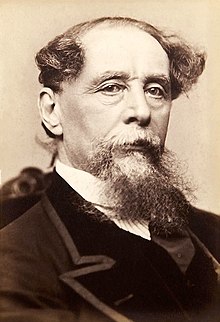
On December 19, 1843, Charles Dickens' A Christmas Carol was published. The story is one of the most beloved works of 19th century literature, and the story's enormous popularity helped make Christmas a major holiday in Victorian Britain. When Dickens wrote the story in late 1843 he had ambitious purposes in mind, yet he could never have imagined the profound impact his story would have. Dickens had already achieved great fame. Yet his most recent novel was not selling well, and Dickens feared his success had peaked. Indeed, he faced some serious financial problems as Christmas 1843 approached. And beyond his own worries, Dickens was keenly attuned to the profound misery of the working poor in England. A visit to the grimy industrial city of Manchester motivated him to tell the story of a greedy businessman, Ebenezer Scrooge, who would be transformed by the Christmas spirit.

Dickens was born in 1812 and attended school in Portsmouth. His father, a clerk in the navy pay office, was thrown into debtors' prison in 1824, and 12-year-old Charles was sent to work in a factory. The miserable treatment of children and the institution of the debtors' jail became topics of several of Dickens' novels. In his late teens, Dickens became a reporter and started publishing humorous short stories when he was 21. In 1836, a collection of his stories, Sketches by Boz, later known as The Posthumous Papers of the Pickwick Club, was published. The same year, he married Catherine Hogarth, with whom he would have nine children. The short sketches in his collection were originally commissioned as captions for humorous drawings by caricature artist Robert Seymour, but Dickens' whimsical stories about the kindly Samuel Pickwick and his fellow club members soon became popular in their own right. When the stories were published in book form in 1837, Dickens quickly became the most popular author of the day.

The successes were soon reproduced with Oliver Twist (1838) and Nicholas Nickleby (1839). In 1841, Dickens published two more novels, then spent five months in the United States, where he was welcomed as a literary hero. Dickens never lost momentum as a writer, churning out major novels every year or two, often in serial form. Among his most important works are David Copperfield (1850), Great Expectations (1861), and A Tale of Two Cities (1859). Beginning in 1850, he published his own weekly circular of fiction, poetry, and essays called “Household Words.” In 1858, Dickens separated from his wife and began a long affair with a young actress. He gave frequent readings, which became immensely popular. He died in 1870 at the age of 58, with his last novel, The Mystery of Edwin Drood, still unfinished. Dickens was interred within Poets’ Corner at Westminster Abbey in London.

Check back every Friday for a new installment of “This Week in English Literary History.”

Michael Thomas Barry is the author of six nonfiction books that includes Literary Legends of the British Isles and America’s Literary Legends. Visit Michael’s website www.michaelthomasbarry.com for more information. His books can be purchased from Amazon through the following links:
 
http://www.amazon.com/Literary-Legends-British-Isles-Writers/dp/0764344382/ref=sr_1_1?ie=UTF8&qid=1419012782&sr=8-1&keywords=michael+thomas+barry&pebp=1419012809885


http://www.amazon.com/Americas-Literary-Legends-Burial-Writers/dp/0764347020/ref=sr_1_2?ie=UTF8&qid=1419012782&sr=8-2&keywords=michael+thomas+barry&pebp=1419012838412

Friday, November 15, 2013

The Final Chapters of Charles Dicken's "A Tale of Two Cities" is serially published - 1859


On November 15, 1859, Charles Dickens' serialized novel, A Tale of Two Cities, comes to a close, as the final chapter is published in Dickens' circular, All the Year Round. Dickens was born in 1812 and attended school in Portsmouth. His father, a clerk in the navy pay office, was thrown in debtors' prison in 1824, and 12-year-old Charles was sent to work in a factory. The miserable treatment of children and the institution of the debtors' jail became topics of several of Dickens' novels. In his late teens, Dickens became a reporter and later started publishing humorous short stories. In 1836, a collection of his stories, Sketches by Boz, was published. The same year, he married Catherine Hogarth, with whom he would have nine children. The success of Dickens first work of fiction, Sketches by Boz, later known as The Pickwick Papers was soon reproduced with Oliver Twist (1838) and Nicholas Nickleby (1839). In 1841, Dickens published two more novels, and then spent five months in the United States, where he was welcomed as a literary hero. Dickens never lost momentum as a writer, churning out major novels every year or two, often in serial form. Among his most important works are David Copperfield (1850), Great Expectations (1861), and A Tale of Two Cities (1859). Beginning in 1850, he published his own weekly circular of fiction, poetry, and essays called Household Words. He folded the circular in 1859 and launched another, All the Year Round, which included the first chapter of A Tale of Two Cities. In 1858, Dickens separated from his wife and began a long association with a young actress. He gave frequent readings, which became immensely popular. He died in 1870 at the age of 58, with his last novel, The Mystery of Edwin Drood, still unfinished.


Michael Thomas Barry is the author of Literary Legends of the British Isles. The book can be purchased from Amazon through the following links: 


Sunday, June 9, 2013

Charles Dickens died - 1870


Novelist Charles Dickens died on June 9, 1870 at his home at Gad’s Hill Place in Kent, England. He created some of the world's most memorable fictional characters and is generally regarded as the greatest novelist of the Victorian era. During his life, his works enjoyed unprecedented fame, and by the twentieth century his literary genius was broadly acknowledged by critics and scholars. His novels and short stories continue to be widely popular. 

He was born on February 7, 1812 in Portsmouth, England. At a young age, Dickens left school to work in a factory after his father was thrown into debtors' prison. Although he had little formal education, his early impoverishment drove him to succeed. Over his career he edited a weekly journal for 20 years, wrote 15 novels, 5 novellas and hundreds of short stories and non-fiction articles, lectured and performed extensively, was an indefatigable letter writer, and campaigned vigorously for children's rights, education, and other social reforms.

Dickens sprang to fame with the 1836 serial publication of The Pickwick Papers. Within a few years he had become an international literary celebrity, famous for his humor, satire, and keen observation of character and society. His novels, most published in monthly or weekly installments, pioneered the serial publication of narrative fiction, which became the dominant Victorian mode for novel publication. The installment format allowed Dickens to evaluate his audience's reaction, and he often modified his plot and character development based on such feedback. Dickens was regarded as the literary colossus of his age and his 1843 novella, A Christmas Carol, is one of the most influential works ever written, and it remains popular and continues to inspire adaptations in every artistic genre. On June 8, 1870, Dickens suffered a stroke at his home after a full day's work on Edwin Drood. He never regained consciousness, and the next day, on June 9th, he died at Gad's Hill Place. Contrary to his wish to be buried at Rochester Cathedral "in an inexpensive, un-ostentatious, and strictly private manner," he was laid to rest in Poets' Corner at Westminster Abbey. 


Michael Thomas Barry is the author of Literary Legends of the British Isles. The book can be purchased from Amazon through the following links:


Tuesday, April 30, 2013

Charles Dickens novel "A Tale of Two Cities" is first published - 1859


On April 30, 1859, Charles Dickens A Tale of Two Cities is first published. The 45-chapter novel was published in 31 weekly installments in Dickens' new literary periodical titled All the Year Round. It ran From April 1859 to November 1859. He also republished the chapters as eight monthly sections in green covers. All but three of Dickens' previous novels had appeared only as monthly installments. The novel is set in London and Paris before and during the French Revolution. With over 200 million copies sold, it ranks among the most famous works in the history of literature. The novel depicts the plight of the French peasantry demoralized by the French aristocracy in the years leading up to the revolution, the corresponding brutality demonstrated by the revolutionaries toward the former aristocrats in the early years of the revolution, and many unflattering social parallels with life in London during the same time period. It follows the lives of several protagonists through these events. The most notable are Charles Darnay and Sydney Carton. Darnay is a French former aristocrat who becomes a victim of the indiscriminate wrath of the revolution despite his virtuous nature, and Carton is a dissipated English barrister who endeavors to redeem his ill-spent life out of his unrequited love for Darnay's wife.


Michael Thomas Barry is the author of Great Britain’s Literary Legends. The book can be purchased from Amazon through the following links:

Amazon - http://www.amazon.com/Great-Britains-Literary-Legends-Writers/dp/0764344382/ref=sr_1_2?ie=UTF8&qid=1367336806&sr=8-2&keywords=michael+thomas+barry

Amazon UK - http://www.amazon.co.uk/Great-Britains-Literary-Legends-Writers/dp/0764344382/ref=sr_1_2?ie=UTF8&qid=1367336841&sr=8-2&keywords=michael+thomas+barry