Showing posts with label Golden Age of Hollywood. Show all posts

Wednesday, May 20, 2015

John Wayne was Born (May 26, 1907)


This week (May 20-26) in Hollywood history – Winning starring Paul Newman was released (May 22, 1969); Joan Collins was born (May 23, 1933); Thelma and Louise was released (May 24, 1991); Sex, Lies and Videotape was well received at the Cannes Film Festival (May 24, 1989); Star Wars was released (May 25, 1977); John Wayne was born (May 26, 1907); Sidney Pollack died (May 26, 2008)

Highlighted Story of the Week -
 
 
On May 26, 2008, Hollywood legend John Wayne was born in Winterset, Iowa. Born Marion Michael Morrison, Wayne’s family moved to Glendale, California, when he was six years old. When he graduated from high school, he hoped to attend the U.S. Naval Academy. However, after the school rejected him, he accepted a full scholarship to play football at the University of Southern California in Los Angeles.

In the summer of 1926, Wayne’s football coach found him a job as an assistant prop man on the set of a movie directed by John Ford. Ford started to use Wayne as an extra, and he eventually began to trust him with some larger roles. In 1930, Ford recommended Wayne for Fox’s epic Western The Big Trail. Wayne won the part, but the movie did poorly, and Fox let his contract lapse. During the next decade, Wayne worked tirelessly in countless low-budget western films, sharpening his talents and developing a distinct persona for his cowboy characters. Finally, his old mentor John Ford gave Wayne his big break, casting him in the epic 1939 western, Stagecoach. Wayne played the role of Ringo Kid, and he imbued the character with the essential traits that would inform nearly all of his subsequent screen roles: a tough and clear-eyed honesty, unquestioning valor, and a laconic, almost plodding manner.

With the success of Stagecoach, Wayne’s movie career took off. Among the dozens of Westerns he appeared in (many of them directed by Ford) were classics such as Tall in the Saddle (1944), Red River (1948), Fort Apache (1948), She Wore a Yellow Ribbon (1949), Rio Bravo (1959), and The Man Who Shot Liberty Valance (1962). In all these films, Wayne embodied the simple, and perhaps simplistic, cowboy values of decency, honesty, and integrity.

Besides Westerns, Wayne also acted in war films. It was a small leap from the valorous cowboy or cavalry soldier to the brave WWII fighters of films like Sands of Iwo Jima (1949) and Flying Leathernecks (1951). Deeply conservative in his politics, Wayne also used his 1968 film, The Green Berets, to express his support of the American government’s war in Vietnam. By the late 1960s, some Americans had tired of Wayne and his simplistically masculine and patriotic characters. Increasingly, western movies were rejecting the simple black-and-white moral codes championed by Wayne and replacing them with a more complex and tragic view of the American West. However, Wayne proved more adaptable than many expected. In his Oscar-winning role in True Grit (1969), he began to escape the narrow confines of his own good-guy image. His final film, The Shootist (1976), won over even his most severe critics. Wayne, who was battling lung cancer, played a dying gunfighter whose moral codes and principles no longer fit in a changing world. He died from stomach cancer at the UCLA Medical Center on June 11, 1979 and he was buried at Pacific View Memorial Park in Newport Beach, California.
 
 
Michael Thomas Barry is the author of six nonfiction books that includes the award winning Fade to Black Graveside Memories of Hollywood Greats, 1927-1950. Visit Michael’s website www.michaelthomasbarry.com for more information. His book can be purchased from Amazon through the following link:

Wednesday, February 25, 2015

Shirley Temple Received New Contract from Studio - February 27, 1936


This week (February 25 – March 3) in Hollywood history – Zeppo Marx was born (February 25, 1901); Jack Haley married Florence McFadden ( February 25, 1921); Mary Astor married Kenneth Hawks (February 26, 1928); Shirley Temple singed contract with 20th Century Fox studios (February 27, 1936);  Clark Gable and Claudette Colbert win Oscars (February 27, 1935); Ruby Keeler died (February 28, 1993); Gene Tierney divorced Oleg Cassini (February 28, 1952); David Niven was born (March 1, 1910); Gloria Swanson divorced Wallace Beery (March 1, 1919); Charlie Chaplin’s body was stolen (March 2, 1978); D.W. Griffith married Evelyn Baldwin (March 2, 1936); Birth of a Nation premiered in New York City (March 3, 1915); Lou Costello died (March 3, 1959)

Highlighted Story of the Week –

On February 27, 1936, Shirley Temple receives a new contract from 20th Century Fox that will pay the seven-year-old actress $50,000 per film. Temple was born on April 23, 1928 in Santa Monica, California, and began appearing in a series of short films spoofing current movies, called Baby Burlesks, at the age of four. At six, she attracted attention with her complex song-and-dance number "Baby Take a Bow," performed with James Dunn, in the 1934 movie Stand Up and Cheer. Based on the film's success, 20th Century Fox signed Temple to a seven-year contract. She would appear in a string of films that year and the next, including Little Miss Marker, Change of Heart, Bright Eyes and Curly Top. By 1938, Temple was the number one box-office draw in America. The public loved her, and she routinely upstaged her adult counterparts on the big screen.

Temple's career began to fade in her teenage years and in 1950, she retired from movies. That same year she married naval officer Charles Black, changing her name to Shirley Temple Black. (She had been previously married to Jack Agar. In 1967, Temple Black launched a political career, running as the Republican candidate for a congressional seat in San Mateo, California but lost the election. The following year, President Richard Nixon appointed her an ambassador to the United Nations; she worked for the State Department for more than two decades. She was the first woman to ever serve as chief of protocol, a post she held for 11 years under President Gerald R. Ford, and President George H.W. Bush named her ambassador to Czechoslovakia in 1989. She became a spokeswoman for breast cancer awareness after she discovered a malignant lump in her breast in 1972 and underwent a mastectomy. In 1999, Temple Black received a medal from the Kennedy Center for lifetime achievement to the United States and the world. On February 10, 2014, Temple died at her Woodside, California. Her remains were cremated and given to the family.

Check back every Wednesday for a new installment of “This Week in Hollywood History.”

Michael Thomas Barry is the author of six nonfiction books that includes the award winning Fade to Black Graveside Memories of Hollywood Greats. Visit Michael’s website www.michaelthomasbarry.com for more information. His book can be purchased from Barnes and Noble through the following link:
 
http://www.barnesandnoble.com/w/fade-to-black-michael-thomas-barry/1115135624?ean=9780764337093

Wednesday, February 18, 2015

Greta Garbo Made her U.S. Film Debut - February 21, 1926


This week (February 18-24) in Hollywood history – Winners of the first Academy Awards were announced (February 18, 1929); Lee Marvin was born (February 19, 1924); Bob Hope married Dolores Reade (February 19, 1934); Elizabeth Taylor married Michael Wilding (February 21, 1952); Ann Sheridan was born (February 21, 1915); Greta Garbo made her U.S. film debut (February 21, 1926); Drew Barrymore was born (February 22, 1975); Madel Normand died (February 23, 1930); Director Victor Fleing was born (February 23, 1889); Variety magazine announced that MGM had purchased the rights to the film version of The Wizard of Oz (February 24, 1938).

Highlighted Story of the Week - 

On February 21, 1926, Swedish actress Greta Garbo made her U.S. screen debut in The Torrent.
Born Greta Louisa Gustaffson in 1905, Garbo grew up in a poor family in Stockholm. At age 13, she started working as a lather girl at a barbershop and later moved to a department store, where she was asked to appear in a publicity film for the store. Later, she appeared in a publicity film for a bakery. Pleased with her success, she applied for and won a scholarship to the Royal Dramatic Theater’s acting school, where she was discovered by director Mauritz Stiller, one of the most powerful directors in Swedish cinema. He cast her as the Countess Elizabeth Dohna in his critically acclaimed 1924 film The Legend of Gosta Berling, which ran some four hours; he also gave her the now-famous stage name of Garbo. 

In 1924, Louis B. Mayer of Hollywood’s powerful Metro-Goldwyn-Mayer studio hired Stiller on contract and brought him to the United States. Stiller only accepted the job on the condition that MGM contract Garbo as well. Mayer agreed, although he reportedly considered Garbo too full-figured to succeed as an actress in America at the time. In The Torrent, a silent film co-starring the Latin heartthrob Ricardo Cortez, Garbo played a Spanish peasant girl who becomes an opera star. Her charisma, beauty and acting talent made an immediate impact on the filmmakers, so much so that they raised her salary even before the movie was released. When it hit theaters, Garbo was an immediate sensation. For his part, Stiller had been prevented by Mayer from directing The Torrent, and clashed with the studio repeatedly during the filming of a follow-up picture, The Temptress. Fired mid-production, he had an unhappy stint at Paramount before being forced to return to Sweden, where he died in 1945; the loss reportedly left Garbo devastated. 

Unlike many of her contemporaries, Garbo successfully made the transition to sound after becoming a star during the silent film era. Her first talking picture was Anna Christie in 1930, which earned her an Academy Award nomination for Best Actress. Romantically linked with numerous fellow celebrities, including her frequent co-star John Gilbert, Garbo never married. Reserved and withdrawn, she recoiled from publicity, cloaking herself in dark glasses and large hats when she traveled. “I want to be alone,” a line from her 1939 film Grand Hotel, has often been used to sum up her aversion to fame. Garbo’s reclusiveness only heightened her mystique. Although she retired from moviemaking in 1941, she was chosen by Variety in 1950 as the best actress of the first half of the 20th century. She became an American citizen in 1951, and was honored with a special Academy Award for her “unforgettable” work in 1954. Greta Garbo died on April 15, 1990 in New York City from pneumonia and her cremated remains were buried at the Woodland Cemetery in Stockholm Sweden. 

Check back every Wednesday for a new installment of “This Week in Hollywood History.” 

Michael Thomas Barry is the author of six nonfiction books and includes the award winning Fade to Black: Graveside Memories of Hollywood Greats, 1927-1950. Visit Michael’s website www.michaelthomasbarry.com for more information. His book can be purchased from Amazon through the following link:

Wednesday, January 28, 2015

Gene Kelly Died - February 2, 1996


This week (January 28-February 3) in Hollywood history – Gloria Swanson married Henri de la Falaise (January 28, 1925); Paul Newman married Joanne Woodward (January 29, 1958); Elizabeth Taylor divorced Conrad Hilton Jr. (January 29, 1951); W.C. Fields was born (January 29, 1880); Victor Mature was born (January 29, 1913); Gene Hackman was born (January 30, 1930); Samuel Goldwyn died (January 31, 1974); Clark Gable was born (February 1, 1901); John Ford was born (February 1, 1895); Gene Kelly died (February 2, 1996); Boris Karloff died (February 2, 1969): Philip Seymour Hoffman died (February 2, 2014).
Highlighted story of the week -
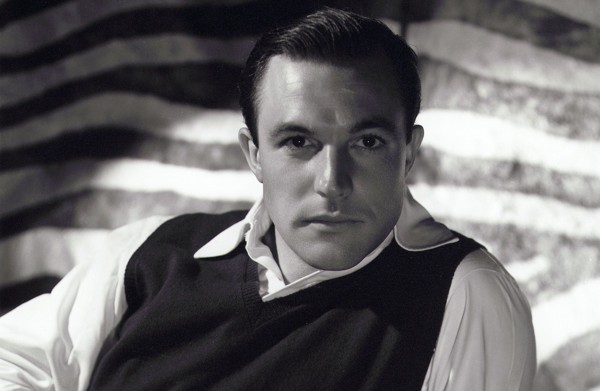
On February 2, 1996, Gene Kelly died at the age of 83 from a stroke, at his home in Beverly Hills, California. Born in Pittsburgh in 1912, Kelly graduated with a degree in economics from the University of Pittsburgh during the Great Depression. With jobs scarce, he worked at a dancing school partly owned by his mother, who had insisted that all of her five children take music and dance lessons throughout their childhood. On the side, he formed a dance act with his brother Fred, appearing in local nightclubs and theater productions. In 1938, Kelly decided to try his luck in New York City. He got his first Broadway job in the chorus of Leave It to Me, starring Mary Martin.
His first starring role on Broadway came in My Pal Joey. He then signed an exclusive contract with the producer David O. Selznick and headed to Hollywood. Selznick promptly lent Kelly to Metro-Goldwyn-Mayer, a studio best known at the time for its large-scale movie musicals. MGM put Kelly in his first film, For Me and My Gal (1942), co-starring Judy Garland, and soon bought his contract from Selznick. Two years later, the studio lent him out to Columbia Pictures to choreograph and co-star in Cover Girl, opposite a then-unknown Rita Hayworth. This film was Kelly’s first major big-screen success and his first collaboration with the director and choreographer Stanley Donen.
Kelly continued his trail-blazing in the world of movie dance in his next big hit, Anchors Aweigh (1945), performing a dance routine with the animated mouse Jerry from the popular Tom and Jerry cartoon series. The eight-minute sequence cost MGM $100,000 and took two months to film, but it was celebrated as a breakthrough moment in cinema for its combination of live action and animated footage. After serving in the U.S. Navy during World War II, Kelly returned to the silver screen with 1948’s The Pirate, again opposite Judy Garland. He also made two more films with Frank Sinatra (his Anchors Aweigh co-star), including the hit On the Town, which Kelly directed and choreographed with Donen.
In 1951, Kelly headlined An American in Paris, which won eight Academy Awards, including Best Picture. Kelly picked up a special Oscar, in honor of his “extreme versatility as an actor, singer, director and dancer, but specifically for his brilliant achievement in the art of choreography.” At the pinnacle of his career, Kelly cemented his iconic status with his work in what was arguably the last great movie musical, Singin’ in the Rain (1952). The movie featured one of the most memorable scenes in film history: Kelly dancing and singing alone on the street during a downpour, with only his umbrella for a prop.
As the popularity of big-budget movie musicals waned, Kelly’s films during the 1950s, Brigadoon (1954), It’s Always Fair Weather (1955) and Les Girls (1957), met with varying degrees of success. Kelly and Donen fell out after working together on their last film, It’s Always Fair Weather, partly for personal reasons: Kelly and Donen’s wife Jeanne Coyne fell in love and were married in 1960 (Kelly was previously married to the actress Betsy Blair). Kelly worked on other projects intended to raise the profile of modern dance, including the dialogue-free Invitation to the Dance in 1956 and an NBC television special, Dancing is a Men’s Game. He also choreographed for the ballet in Paris and San Francisco.
After Jeanne Coyne died of leukemia in 1973, Kelly focused on projects that would keep him close to Los Angeles, where he was raising their two children. Late into his career, he continued to make film appearances and direct the occasional movie, including Hello, Dolly! (1969). Kelly’s last big-screen role was in the kitschy Xanadu (1980), in which he performed a dance routine on roller skates. Kelly died on February 2, 1996 and his remains were cremated. There was no memorial or funeral, and the disposition of his ashes are not known.
Check back every Wednesday for a new installment of “This Week in Hollywood History.”
Michael Thomas Barry is the author of six nonfiction books that includes Fade to Black Graveside Memories of Hollywood Greats, 1927-1950. Visit Michael’s website www.michaelthomasbarry.com for more information. His book can be purchased from Amazon through the following link:
 

Wednesday, January 14, 2015

Carole Lombard Died in Plane Crash - January 16, 1942


This week (January14-20) in Hollywood History – Marilyn Monroe married Joe Dimaggio (January 14, 1954); Hal Roach was born (January 14, 1892); Ray Bolger died (January 15, 1987); Carole Lombard died in plane crash (January 16, 1942); John Wayne married Esperanza Baur (January 17, 1946); Oliver Hardy was born (January 18, 1892); Cary Grant was born (January 18, 1904); Danny Kaye was born (January 18, 1913); Hedy Lamarr died (January 19, 2000); Audrey Hepburn died (January 20, 1993); Sharon Tate married Roman Polanski (January 20, 1968). 

Highlighted Story of the Week – 

On January 16, 1942, actress Carole Lombard and wife of Clark Gable was killed in a plane crash. Gable and Lombard met in 1932 during the filming of No Man of Her Own. He was just starting out on his trajectory as one of Hollywood’s top leading men and she was a talented comedic actress trying to prove herself in more serious roles. Both were married at the time, Gable to a wealthy Texas widow 10 years his senior and Lombard to actor William Powell and neither showed much interest in the other. When they met again, three years later, Lombard had divorced Powell and Gable was separated from his wife, and things proceeded quite differently. Much to the media’s delight, the new couple was open with their affection. In early 1939, Gable’s wife finally granted him a divorce, and he married Lombard that April. 

In January 1942, shortly after America’s entrance into World War II, Howard Dietz, the publicity director of the MGM film studio, recruited Lombard for a tour to sell war bonds in her home state of Indiana. Gable, who had been asked to serve as the head of the actors’ branch of the wartime Hollywood Victory Committee, stayed in Los Angeles, where he was set to begin filming Somewhere I’ll Find You with Lana Turner. Dietz advised Lombard to avoid airplane travel, because he feared for its reliability and safety, and she did most of the trip by train, stopping at various locations on the way to Indianapolis and raising some $2 million for the war effort. 

On the way home, however, Lombard didn’t want to wait for the train, and instead boarded a TWA DC-3 in Las Vegas with her mother, Elizabeth Peters, and a group that included MGM publicity agent Otto Winkler and 15 others. Shortly after takeoff, the plane veered off course. Warning beacons that might have helped guide the pilot had been blacked out because of fears about Japanese bombers, and the plane smashed into a cliff near the top of Potosi Mountain. Search parties were able to retrieve Lombard’s body, and she was interred in the Great Mausoleum at Forest Lawn Memorial Park in Glendale, California. 

Hysterical with grief and adrift in the empty house he had shared with Lombard, Gable drank heavily and struggled to complete his work on Somewhere I’ll Find You. He was comforted by worried friends, including actress Joan Crawford. That August, Gable decided to enlist in the U.S. Army Air Corp. He spent most of the war in the United Kingdom, and flew several combat missions (including one to Germany), earning several decorations for his efforts. He would remarry twice more, but when he died in 1960 Gable was interred at Forest Lawn, next to Lombard. 

Check back every Wednesday for a new installment of “This Week in Hollywood History.” 

Michael Thomas Barry is the author of six nonfiction books that includes Fade to Black Graveside Memories of Hollywood Greats, 1927-1950. Visit Michael’s website www.michaelthomasbarry.com for more information. His book can be purchased from Amazon through the following link:

Wednesday, December 17, 2014

Darryl Zanuck Died - December 22, 1979


This week (December 17-23) in Hollywood history – Jennifer Jones died (December 17, 2009); Dana Andrews died (December 17, 1992); Thomas Mitchell died (December 17, 1962); Betty Grable was born (December 18, 1916); Irene Dunne was born (December 20, 1898); Clark Gable married Ricky Anne Loew-Beer (December 20, 1949); Walt Disney’s Snow White and the Seven Dwarfs premiered (December 21, 1937); Darryl Zanuck died (December 22, 1979); Butterfly McQueen died (December 22, 1995). 

Highlighted Story of the Week -  

On December 22, 1979, Darryl Zanuck, the powerful Hollywood studio chief and producer behind a long list of classic movies, including The Grapes of Wrath, All About Eve and The Longest Day, died at age 77 in Palm Springs, California. Zanuck was a force in the movie business for four decades, during which he greenlit hundreds of projects and promoted the careers of such actors as Henry Fonda and Tyrone Power.

Zanuck was born on September 5, 1902, in Wahoo, Nebraska, and began his career in Hollywood as a writer in the early 1920s. He penned scripts for the canine film star Rin Tin Tin at Warner Brothers and by the early 1930s was head of production for the movie studio. In 1933, Zanuck left Warner to co-found Twentieth Century Pictures, which in 1935 merged with Fox Studios to become Twentieth Century-Fox. At Twentieth Century-Fox, Zanuck signed contracts with actors including Fonda, Power, Gene Tierney and Betty Grable and produced or gave the go-ahead to now-classic films like Rebecca of Sunnybrook Farm (1938), How Green Was My Valley (1941), Gentleman’s Agreement (1947), Twelve O’ Clock High (1949), and All About Eve (1950). Zanuck’s final film was the 1970 box-office disappointment Tora! Tora! Tora!, about the Japanese attack on Pearl Harbor. He was forced out as the head of Twentieth Century-Fox in 1971. Zanuck is buried at Westwood Memorial Park in Los Angeles.  

Check back every Wednesday for another installment of “This Week in Hollywood History.”


Michael Thomas Barry is the author of six nonfiction books that includes the award winning Fade to Black: Graveside Memories of Hollywood Greats, 1927-1950. Visit Michael’s website www.michaelthomasbarry.com for more information. His book can be purchased from Amazon through the following link: 
Wednesday, November 26, 2014

Natalie Wood Drowned - November 29, 1981


This week (November 26-December 2) in Hollywood history – Charlie Chaplin married Lita Grey in Mexico (November 26, 1924); Casablanca premiered in New York (November 26, 1942); Bruce Lee was born (November 27, 1940); Director Kathryn Bigelow was born (November 27, 1951); Actress Gloria Grahame was born (November 28, 1923); Natalie Wood drowned (November 29, 1981); Efren Zimbalist Jr. was born (November 30, 1918); Lucille Ball and Desi Arnaz were married (November 30, 1940); Bette Davis and William Sherry were married (November 30, 1945); Zeppo Marx died (November 30, 1979); Richard Pryor was born (December 1, 1940); Bette Midler was born (December 1, 1945); Good Will Hunting premiered in Los Angeles (December 2, 1997). 

Highlighted story of the week -   

On November 29, 1981, actress Natalie Wood, who starred in such movies as Rebel Without a Cause and West Side Story, drowns in a boating accident near California’s Catalina Island. Born Natalia Nikolaevna Zakharenko on July 20, 1938, in San Francisco, California, Wood began her acting career as a child. She gained acclaim for her role as Susan Walker, the little girl who doubts the existence of Santa Claus in Miracle on 34th Street (1947). As a teenager, Wood went on to play James Dean’s girlfriend in Rebel Without a Cause (1955), for which she received a Best Supporting Actress Oscar nomination. She also earned Best Actress Academy Award nominations for her performances in Splendor in the Grass (1961) with Warren Beatty and Love with the Proper Stranger (1963) with Steve McQueen. Wood’s film credits also include West Side Story (1961), winner of 10 Oscars, in which she played the lead role of Maria; Gypsy (1962), which was based on the hit Broadway musical of the same name and co-starred Rosalind Russell and Karl Malden; The Great Race (1965), with Jack Lemmon and Tony Curtis; Inside Daisy Clover (1966), with Christopher Plummer and Robert Redford; and Bob & Carol & Ted & Alice (1969) with Robert Culp, Elliott Gould and Dyan Cannon. 

Wood was twice married to the actor Robert Wagner (Hart to Hart, Austin Powers: International Man of Mystery), from 1957 to 1962 and from 1974 to the time of her death. On the night of November 29, 1981, the dark-haired beauty was with her husband on their yacht “The Splendor,” which was moored off Santa Catalina, near Los Angeles. Also on the yacht was the actor Christopher Walken, who at the time was making the movie Brainstorm with Wood. Neither Wagner nor Walken saw what happened to Wood that night, but it was believed she somehow slipped overboard while untying a dinghy attached to the boat. Her body was found in the early hours of the following morning. Wood was buried at Westwood Village Memorial Park in Los Angeles, California.  

Check back every Wednesday for a new installment of “This Week in Hollywood History.”


Michael Thomas Barry is the author of six nonfiction books and includes the silver medal winning Fade to Black Graveside Memories of Hollywood Greats, 1927-1950. Visit Michael’s website www.michaelthomasbarry.com for more information. His book can be purchased from Amazon through the following link:


Tuesday, April 15, 2014

Greta Garbo Died - 1990


On this date in Hollywood history – April 15, 1990, Greta Garbo died at the age of 84, in New York City. Born Greta Gustaffson, Garbo grew up in poverty in Stockholm, working in a barber shop and later in a department store to help support her family after her father died. From 1922 to 1924, Garbo studied on scholarship at the Stockholm Royal Dramatic Theater’s acting school. She was discovered by the director Mauritz Stiller, who cast her in his epic film The Legend of Gosta Berling and gave her the stage name Garbo. When Metro-Goldwyn-Mayer offered Stiller a film contract, he took Garbo with him to Hollywood. She made her American film debut in 1926’s The Torrent, and quickly became a sensation. 

By the end of the 1920s, Garbo was playing the leading lady on and off-screen, opposite John Gilbert, the preeminent silent film actor of the day, in Flesh and the Devil and Love, among other films. Garbo made her sound debut in 1930’s Anna Christie; the film’s tagline was “Garbo Talks!” Her husky voice and thick accent only increased her exotic, mysterious appeal, and Garbo would reign supreme among Hollywood’s A-list actresses throughout the 1930s. She stood out in a star-studded cast in Grand Hotel (1932), as well as in a reunion with Gilbert in Queen Christina (1933). Two later performances, in Anna Karenina (1935) and Camille (1936), both won her Best Actress honors from the New York Film Critics.

Garbo’s first comedy, marketed as “Garbo Laughs!”--was the acclaimed Ninotchka (1939), directed by Ernst Lubitsch. The coming of World War II cut off the European market, where Garbo’s films had always been more popular than in the United States, and when MGM refused to meet her salary demands, Garbo announced her retirement. Though she intended to return to work in Hollywood after the war ended, the planned projects never came to fruition. Despite three nominations, Garbo never won an Academy Award for Best Actress. She was given an honorary Oscar in 1955. 

Known as the “Swedish Sphinx” for her indifferent onscreen persona, Garbo did no interviews after the early years of her career and declined to participate in public appearances and other trappings of the movie star life. She was never known to have married, but her love affairs with Gilbert and others, inspired endless speculation. Having become an American citizen in 1951, she spent much of her post-Hollywood life living a reclusive life in New York, though she traveled frequently to Europe.
 
 
Michael Thomas Barry is the author of numerous books that include Fade to Black Graveside Memories of Hollywood Greats, 1929-1950 (2011, Schiffer). The book has been awarded several literary awards that include the 2011 Readers Favorite Best Books SILVER MEDAL and was named WINNER of the 2013 Beverly Hills Book Awards. For more information about the author and his books visit www.michaelthomasbarry.com

His book can be purchased from Amazon through the following link:

Wednesday, September 18, 2013

Actress Greta Garbo was born - 1905


Actress Greta Garbo was born Greta Gustafsson on September 18, 1905 in Stockholm, Sweden. She won a bathing beauty competition at age sixteen, and then appeared in several advertising campaigns. While studying at the Royal Theatre Dramatic School she was discovered by film director, Mauritz Stiller. Changing her name to Greta Garbo, she starred in Stiller's film, The Atonement of Gosta Berling (1924). After appearing in The Joyless Street (1925), she and Stiller immigrated to the United States. In Hollywood she appeared in several silent films including The Temptress (1926), Flesh and the Devil (1927) and The Mysterious Lady (1928). Despite her Swedish accent, Garbo successfully switched to talking pictures with Anna Christie (1930). This was followed by Susan Lennox, Her Fall and Rise (1931), Grand Hotel (1932), Mati Hari (1932), Queen Christina (1933), Anna Karenina (1935), Camille (1937) and Ninotchka (1939).  She nominated for four best actress Academy Awards. In 1955, she was awarded an honorary Oscar for life-time achievement but did not attend the ceremony. Garbo retired from movies after filming Two Faced Woman (1941) and remained a total recluse for the rest of her life. Greta Garbo died in New York City on April 15, 1990.
 
Michael Thomas Barry is the author of Fade to Black. The book can be purchased from Amazon through the following link:

Thursday, August 29, 2013

Actress Ingrid Bergman was born and died on this date in 1915 and 1982


Academy Award winning actress Ingrid Bergman was born on August 29, 1915 in Stockholm, Sweden and died on the same date in 1982. Educated at the Royal Dramatic Theatre School in Stockholm, she made her film debut in Branningar (1935). Bergman established herself as one of Sweden's leading stars during the middle 1930s. American producer, David O. Selznick was so impressed with her talent that he brought her to Hollywood. The Hollywood version of Intermezzo was a great success and Bergman followed this with other popular films such as Adam had Four Sons (1941), Rage in Heaven (1941), Casablanca (1942), For Whom the Bell Tolls (1943), The Bells of St. Mary’s (1945), Spellbound (1945), Notorious (1946) and Joan of Arc (1948). In August, 1949, Bergman became the center of a major scandal when it was revealed by her husband, that she had abandoned their ten year old daughter, to live with Italian film director, Roberto Rossellini. Politicians became involved in the case and one senator, Edwin Johnson of Colorado, denounced her behavior as "an assault upon the institution of marriage" and described her as a "powerful influence of evil.” Bergman was unable to work in Hollywood for seven years but made a triumphant return in Anastasia (1956) for which she won an Academy Award. Other successes were to follow that included Murder on the Orient Express (1974). Ingrid Bergman died on August 29, 1982 from breast cancer in London. Most of her cremated remains were scattered at sea off the west coast of Sweden and the rest were placed next to her parents' ashes at the Northern Cemetery, Stockholm, Sweden.
 
Michael Thomas Barry is the author of Fade to Black: Graveside Memories of Hollywood Greats, 1927-1950. The book can be purchased from Amazon through the following links:

Monday, July 16, 2012

Oscar Winning Actress Celeste Holm Dies at Age 95

Yesterday, July 15, 2012, one of the last remaining stars from the Golden Age of Hollywood, Celeste Holm winner of the 1947 Oscar for Best Supporting Actress died at age 95.

In the summer of 2010, I was fortunate to meet Celeste and she graciously agreed to review my 2nd book. She was candid about her love of Broadway and life on the silver screen and these kind comments will always be cherished. She preferred to be known as a stage actress and changed my words from "bright lights of Hollywood to the brighter lights of Broadway." Always polite about her fellow actors and actress, she saw Bette Davis as the consummate professional, although cold and aloof to her fellow co-stairs.

Her quote for the back of my book "Fade to Black" reads in part -

"This is an enjoyable read offering more than the interesting anecdotes and history so well described by Michael Barry, but an opportunity for loyal fans to pay their respects to those they loved and admired...and I hope others enjoy it as much as I have."

She was a true legend and beautiful actress that will be missed. With Holm's passing their are now only two living Oscar winners of the Golden Age of Hollywood, Olivia De Havilland and Luise Rainer.

Biography -


Born and raised in New York City, Holm grew up as an only child. Her mother, Jean Parke, was an American portrait artist and author; her father, Theodor Holm, was a Norwegian businessman whose company provided marine adjustment services for Lloy’d of London. Because of her parents' occupations, she traveled often during her youth and attended various schools in Holland, France and the United States. She graduated from University High School for Girls in Chicago, where she performed in many school stage productions. She then studied drama at the University of Chicago before becoming a stage actress in the late 1930s.

Holm's first professional theatrical role was in a production of Hamlet starring Leslie Howard. Her first role on Broadway was a small part in 1938 comedy Gloriana, which lasted five performances. Her first major Broadway part was as Mary L. in the 1940 revival of The Time of Your Life co-starring fellow newcomer Gene Kelly. The role that got her the most recognition from critics and audiences was Ado Annie in the flagship Broadway production of Rodgers and Hammerstein’s Oklahoma in 1943. After she starred in the Broadway production of Bloomer Girl, 20th Century Fox signed Holm to a movie contract in 1946. She made her film debut that same year in Three Little Girl’s in Blue. In 1947 she won an Oscar and Golden Globe for Best Supporting Actress in Gentlemen’s Agreement. After her performance in All About Eve, however, Holm realized she preferred live theater to movie work, and only accepted a few select film roles over the following decade.  

In 1958, she starred as a reporter in an unsold television pilot called The Celeste Holm Show, based on the book No Facilities for Women. In 1965, she played the Fairy Godmother alongside Lesley Ann Warren in the CBS production of Cinderella. In 1970-71, she was featured on the NBC sitcom Nancy, with Renne Jarrett. She last appeared on television in the CBS television series Promised Land (1996–99). Holm’s was married five times, and had two children. On April 29, 2004, her 87th birthday, Holm married opera singer Frank Basile, age 41. According to her husband, Holm had been treated for memory loss since 2002, suffered skin cancer, bleeding ulcers and a collapsed lung, and had hip replacements and pacemakers. In June 2012, Holm was admitted to New York's Roosevelt Hospital with dehydration. She suffered a heart attack on July 13 in the facility, dying at home on July 15 where she chose to spend her final days.

Wednesday, May 16, 2012

1st Academy Awards Ceremony is Held - 1929

On this day in 1929, the Academy of Motion Picture Arts and Sciences hands out its first awards, at a dinner party for around 250 people held in the Blossom Room of the Roosevelt Hotel in Hollywood, California. The brainchild of Louis B. Mayer, head of the powerful MGM film studio, the Academy was organized in May 1927 as a non-profit organization dedicated to the advancement and improvement of the film industry. Its first president and the host of the May 1929 ceremony was the actor Douglas Fairbanks, Sr. Unlike today, the winners of the first Oscars--as the coveted gold-plated statuettes later became known--were announced before the awards ceremony itself. 


At the time of the first Oscar ceremony, sound had just been introduced into film. The Warner Bros. movie The Jazz Singer--one of the first "talkies"--was not allowed to compete for Best Picture because the Academy decided it was unfair to let movies with sound compete with silent films. The first official Best Picture winner (and the only silent film to win Best Picture) was Wings, directed by William Wellman. The most expensive movie of its time, with a budget of $2 million, the movie told the story of two World War I pilots who fall for the same woman. Another film, F.W. Murnau's epic Sunrise, was considered a dual winner for the best film of the year. German actor Emil Jannings won the Best Actor honor for his roles in The Last Command and The Way of All Flesh, while 22-year-old Janet Gaynor was the only female winner. After receiving three out of the five Best Actress nods, she won for all three roles, in Seventh Heaven, Street Angel and Sunrise. 

A special honorary award was presented to Charlie Chaplin. Originally a nominee for Best Actor, Best Writer and Best Comedy Director for The Circus, Chaplin was removed from these categories so he could receive the special award, a change that some attributed to his unpopularity in Hollywood. It was the last Oscar the Hollywood maverick would receive until another honorary award in 1971. The Academy officially began using the nickname Oscar for its awards in 1939; a popular but unconfirmed story about the source of the name holds that Academy executive director Margaret Herrick remarked that the statuette looked like her Uncle Oscar. Since 1942, the results of the secret ballot voting have been announced during the live-broadcast Academy Awards ceremony using the sealed-envelope system. The suspense--not to mention the red-carpet arrival of nominees and other stars wearing their most beautiful or outrageous evening wear--continues to draw international attention to the film industry's biggest night of the year.

Thursday, May 10, 2012

Joan Crawford Dies (1977) & J Edgar Hoover named Acting Director of FBI (1924)

On this date in 1977, legendary actress Joan Crawford dies at her New York City apartment.


Born Lucille Fay Le Sueur (her birth year has been variously recorded as 1904 or 1908), Crawford was a nightclub dancer who broke into Broadway musicals in the Jazz Age of the 1920s. She first twisted her way into Hollywood stardom as a vivacious flapper in the 1928 silent film Our Dancing Daughters. She made a series of similar pictures, including Dancing Lady (1933), which co-starred Fred Astaire in his silver-screen debut. Crawford’s seamless transition into the sound film era made her one of the most popular and by the late 1930s was one of the highest-paid leading ladies in Hollywood. She fought for more varied and less stereotypical parts, winning dramatic roles in films such as The Women (1939), Susan and God (1940), Strange Cargo (1940) and A Woman’s Face (1941). In 1945, just when her career appeared to be on the wane, Crawford turned in the performance for which she would most be remembered, playing the title role in Mildred Pierce. As the waitress and single mother who makes her fortune with a chain of restaurants, Crawford won an Academy Award for Best Actress and established herself as a respected dramatic actress. She would be nominated for another Best Actress Oscar for 1947’s Possessed and a third for 1952’s Sudden Fear 

By the late 1950s, Crawford had become a representative for the Pepsi-Cola Company, whose board chairman and chief executive, Alfred N. Steele, she married in 1955. Three previous marriages--to the actors Douglas Fairbanks Jr., Franchot Tone and Phillip Terry--had ended in divorce. When Steele died in 1959, Crawford was named the first female director of Pepsi-Cola’s board. In 1962, the tenacious actress made a celebrated foray into the horror genre with What Ever Happened to Baby Jane, co-starring Bette Davis. Having always enthusiastically welcomed and cultivated her fame, Crawford published her autobiography, A Portrait of Joan, that same year. She went on to make a number of thrillers in the last years of her career, as well as occasional appearances in television dramas. Less than two years after Crawford’s death in 1977, her adopted daughter Christina published Mommie Dearest, in which she alleged that the famous actress had been emotionally and physically abusive to Christina and her adopted brother. The book was later made into a critically panned film, starring Faye Dunaway as Crawford. 

On this date in 1924, J. Edgar Hoover is named acting director of the Bureau of Investigation (now the FBI).


By the end of the year he was officially promoted to director. This began his 48-year tenure in power, during which time he personally shaped American criminal justice in the 20th century. Hoover first became involved in law enforcement as a special assistant to the attorney general, overseeing the mass roundups and deportations of suspected communists during the Red Scare abuses of the late 1910s. After taking over the FBI in 1924, Hoover began secretly monitoring any activities that did not conform to his American ideal. Hoover approved of illegally infiltrating and spying on the American Civil Liberties Union. His spies could be found throughout the government, even in the Supreme Court. He also collected damaging information on the personal lives of civil rights activists, including Martin Luther King Jr. While Hoover's success at legitimate crime fighting was modest, his hold over many powerful people and organizations earned him respect and kept him in power. He was extremely successful at attracting attention and favorable press to the FBI. It wasn't until after his death in 1972, right before the beginning of the Watergate scandal, that Hoover's corruption became known.

Sunday, April 1, 2012

Lon Chaney, Sr. & Wallace Beery

Who was born on this date: 


Actor Lon Chaney, Sr. was born on April 1, 1883 in Colorado Springs. Colorado. He is regarded as one of the most versatile and powerful actors of early cinema, renowned for his characterizations of tortured, often grotesque and afflicted characters, and his groundbreaking artistry with makeup. He is known for his starring roles in such silent horror films such as The Hunchback of Notre Dame and The Phantom of the Opera. His ability to transform himself using makeup techniques he developed earned him the nickname "The Man of a Thousand Faces." His son Lon Chaney, Jr. also starred in numerous horror movies such as The Wolfman. Lon Chaney, Sr., died from a throat hemorrhage on August 26, 1930 in Los Angeles, California and was buried within the Great Mausoleum at Forest Lawn Glendale.


Actor Wallace Beery was born on April 1, 1885 in Kansas City, Missouri. He is best known for his portrayal of Bill in Min and Bill opposite Marie Dressler, as Long John Silver in Treasure Island, and his titular role in The Champ (1931) for which he won the Best Actor Academy Award. Beery appeared in some 250 movies over a 36-year span. He died on April 15, 1949 in Beverly Hills, California from a heart attack and was buried at Forest Lawn Glendale.

Thursday, March 22, 2012

Karl Malden

Who was born on this date:


Actor Karl Malden was born Mladen George Sekulovich on March 22, 1912 in Chicago, Illinois. In a career that spanned more than seven decades, he performed in such classic films as A Street Car Named Desire, for which he won the Oscar for Best Supporting Actor; On the Water Front; and One-Eyed Jacks. Among other notable film roles were Archie Lee Meighan in Baby Doll, Zebulon Prescott in How the West was Won, and General Omar Bradley in Patton. His best-known role, though, was on television as Lt. Mike Stone on the 1970s crime drama, The Streets of San Francisco. During the 1970s and 1980s, he was also the spokesman for American Express. He died on July 1, 2009 from natural causes and is buried at Westwood Memorial Park in Los Angeles.

Friday, March 16, 2012

Mercedes McCambridge & Conrad Nagel

Who was born on this date:


Actress Mercedes McCambridge was born Carlotta Mercedes Agnes McCambridge on March 16, 1916 in Joliet, Illinois. In 1936, while studying English and theater at Mundelein College in north suburban Chicago, Mercedes caught the eye of an NBC radio program director. During the late 1930’s and early 1940’s, McCambridge had roles in numerous popular radio programs such as Dick Tracy, Inner Sanctum, The Thin Man, and Bulldog Drummond. Throughout the middle 1940’s, she appeared in numerous Broadway productions of varying success.
In 1949, she got her big break in motion pictures and in her debut performance won an Oscar for best supporting actress in the role of the hardnosed and manipulative political aide, Sadie Burke in All the Kings Men. In a career that spanned nearly four decades from 1949 to 1988, she appeared in over twenty feature films and numerous television programs, her feature film credits include: Johnny Guitar (1954), A Farewell to Arms (1957), Touch of Evil (1958), Suddenly, Last Summer (1959), Cimarron (1960), The Other Side of the Wind (1972), and Airport 79’ (1979). In 1956, she was nominated for a second best supporting actress Academy Award for her portrayal of Liz Benedict the strong willed older sister of Rock Hudson’s character in Giant (1956). She worked continuously in film, television, and Broadway her entire adult life and even earned a Tony Award nomination in 1972 for The Love Suicide at Schofield Barracks. While her film career did not live up to the high levels of expectations that were initially promised with her debut Oscar win, she remained quite satisfied with how her career evolved.
In 1987, tragedy struck, when her only son John Lawrence Markle killed his wife and two daughters in a murder suicide. She would battle alcoholism her entire adult life, and even testified before the U.S. Senate subcommittee on alcoholism and narcotics in 1969. She was married and divorced twice. In the mid-1980’s she retired from show business. McCambridge then moved to the seaside town of La Jolla, California. She died on March 2, 2004 of natural causes while living at a local assisted living facility. McCambridge had no known survivors. Mercedes McCambridge’s remains were cremated and scattered at sea near San Diego. 


Actor Conrad Nagel was born on March 16, 1897(1897-03-16) in Keokuk, Iowa. He was an actor of the (1970-02-24)silent film era and founding member of the Academy of Motion Picture Arts and Sciences. He died on February 24, 1970 and is buried at the Lutheran Cemetery in Warsaw, Illinois (which is in dispute).


Wednesday, March 14, 2012

Susan Hayward

Who died on this date:


On March 14, 1975, actress Susan Hayward died. She was born Edythe Marrenner on June 30, 1917 in Brooklyn, New York. After working as a fashion model in New York, Hayward travelled to Hollywood in 1937 when open auditions were held for the leading role in Gone with the Wind (1939). Although she was not selected, she secured a film contract, and played several small supporting roles over the next few years. By the late 1940s, the quality of her film roles had improved, and she achieved recognition for her dramatic abilities with the first of five Academy Award nominations for Best Actress for her performance Smash-Up, the Story of a Woman (1947). Her career continued successfully through the 1950s and she won the Oscar for Best Actress for her portrayal of death row inmate Barbara Graham in I Want to Live (1958). Following her Oscar-winning performance, her film appearances became infrequent, although she continued acting in film and television until 1972. She died on March 14, 1975 from brain cancer. There is speculation that she may have been affected by radioactive fallout from atmospheric atomic bomb tests while making The Conqueror with John Wayne. Several production members, as well as Wayne himself, later succumbed to cancer and cancer-related illnesses. Her cremated remains are interred at Our Lady of Perpetual Care Help Cemetery in Carrolton, Georgia.


Monday, March 12, 2012

Gordon MacRae & Betty Hutton

Who was born on this date:


Actor Gordon MacRae was born on March 12, 1921 in East Orange, New Jersey. He is best known for his appearances in the film Oklahoma (1955) and Carousel. In 1951, he starred with Doris Day in On Moonlight Bay, followed by the sequel By the Light of the Silvery Moon in 1953. MacRae made numerous TV appearances. He died on January 24, 1986 from cancer of the mouth and jaw and is buried at Wyuka Cemetery in Lincoln, Nebraska. 

Who died on this date:


On March 12, 2007, actress Betty Hutton died. She was born Elizabeth June Thornburg on February 26, 1921 in Battlecreek, Michigan. In 1939 she appeared in several musical shorts for Warner Bros., and appeared in a supporting role on Broadway in Panama Hattie and Two for the Show. In 1942, Hutton was signed with Paramount Studios and appeared in The Fleet’s In, co-starring Dorothy Lamour. Hutton was an instant hit with the movie-going public. Paramount did not immediately promote her to major stardom, however, but did give her second leads in, Star Spangled Rhythm (1943), and another Lamour film. In 1943 she was given co-star billing with Bob Hope in Let’s Face It and with the release of The Miracle of Morgan’s Creek the following year, Hutton attained major stardom. By the time Incendiary Blonde was released in 1945, she had supplanted Lamour as Paramount's number one female box office draw. Hutton made 19 films from 1942 to 1952 including the hugely popular The Perils of Pauline in 1947. She was billed above Fred Astaire in the 1950 musical Let's Dance. Hutton's greatest screen triumph came in Annie Get Your Gun (1950) for MGM, which hired her to replace an exhausted Judy Garland in the role of Annie Oakley.  

Her career as a Hollywood star ended due to a contract dispute with Paramount following the Oscar-winning The Greatest Show on Earth (1952) and Somebody Loves Me (1952). The New York Times reported that the dispute resulted from her insistence that her husband at the time, Charles O'Curran, direct her next film. When the studio declined, Hutton broke her contract. Hutton's last completed film was a small one, Spring Reunion, released in 1957, a drama in which she gave an understated, sensitive performance. Unfortunately, box office receipts indicated the public did not want to see a subdued Hutton. Hutton got work in radio, appeared in Las Vegas and in nightclubs, and then tried her luck in the new medium of television.  

After the 1967 death of her mother in a house fire and the collapse of her last marriage, Hutton's depression and pill addictions escalated. She divorced her fourth husband, and declared bankruptcy. Hutton had a nervous breakdown and later attempted suicide after losing her singing voice in 1970. After regaining control of her life through rehab, and the mentorship of a Roman Catholic priest, Father Peter Maguire, Hutton converted to Catholicism and took a job as a cook at a rectory. She made national headlines when it was revealed she was working in a rectory. 

Her last known performance, in any medium, was on Jukebox Saturday Night, which aired on PBS in 1983. Hutton stayed in New England and began teaching comedic acting at Boston's Emerson College. After the death of her ally, Father Maguire, Hutton returned to California, moving to Palm Springs in 1999. Hutton hoped to grow closer with her daughters and grandchildren. She died from colon cancer on March 12, 2007 and is buried at Desert Memorial Park in Cathedral City, California.