Showing posts with label This week in English literary history. Show all posts

Friday, January 16, 2015

Edgar Allan Poe was Born - January 19, 1809


This week (January 16-11) in English literary history – Anne Bronte was born (January 17, 1820); Benjamin Franklin was born (January 17, 1706); A.A. Milne was born (January 18, 1882); Rudyard Kipling married Carrie Balestier (January 18, 1893); Rudyard Kipling died (January 18, 1936); Edgar Allan Poe was born (January 19, 1809); Robert Frost read a poem at John F. Kennedy’s inauguration (January 20, 1961); George Orwell died (January 21, 1950); George Lord Byron was born (January 22, 1788); Francis Bacon was born (January 22, 1561). 

Highlighted story of the week -  

On January 19, 1809, Edgar Allan Poe was born in Boston, Massachusetts. Poe’s father and mother, both professional actors, died before the poet was three years old, and John and Frances Allan raised him as a foster child in Richmond, Virginia. John Allan, a prosperous tobacco exporter, sent Poe to the best boarding schools and later to the University of Virginia, where, after less than one year of school, he was forced to leave the university when Allan refused to pay Poe’s gambling debts. 

Poe then returned briefly to Richmond, but his relationship with Allan deteriorated. In 1827, he moved to Boston and enlisted in the United States Army. His first collection of poems, Tamerlane and Other Poems, was published that same year. In 1829, he published a second collection entitled Al Aaraaf, Tamerlane, and Minor Poems. Neither volume received significant critical acclaim. Following his Army service, Poe was admitted to the United States Military Academy, but he was again forced to leave for lack of financial support. He then moved into the home of his aunt Maria Clemm and her daughter Virginia in Baltimore, Maryland. 

Poe began to sell short stories to magazines around this time, and, in 1835, he became the editor of the Southern Literary Messenger in Richmond. In 1836, he married his cousin, Virginia, who was fourteen years old at the time. Over the next ten years, Poe would edit a number of literary journals and it was during these years that he established himself as a poet, and short story writer. He published some of his best-known stories and poems, including “The Fall of the House of Usher," “The Tell-Tale Heart," “The Murders in the Rue Morgue," and “The Raven.” After his wife’s death from tuberculosis in 1847, Poe’s lifelong struggle with depression and alcoholism worsened. He returned briefly to Richmond in 1849 and then set out for an editing job in Philadelphia. For unknown reasons, he stopped in Baltimore. On October 3, 1849, he was found in a state of semi-consciousness. Poe died four days later of “acute congestion of the brain.” He was buried at Westminster Burial Ground in Baltimore.  

Check back every Friday for a new installment of “This Week in English Literary History.” 

Michael Thomas Barry is the author of six nonfiction books that includes the award winning Literary Legends of the British Isles and soon to be released America’s Literary Legends. Visit Michael’s website www.michaelthomasbarry.com for more information. His books can be purchased from Amazon through the following link:

Friday, January 9, 2015

Jack London was Born - January 12, 1876


This week (January 9-15) in English literary history – Virginia Woolf bought home in the Bloomsbury section of London (January 9, 1924); Robert Browning and Elizabeth Barrett began corresponding (January 10, 1845); Sinclair Lewis died (January 10, 1951); Edmund Burke was born (January 12, 1729); Jack London was born (January 12, 1876); Agatha Christie died (January 12, 1976); James Joyce died (January 13, 1941); Jonathan Swift was ordained a priest (January 13, 1695); Edmund Spenser died (January 13, 1599); John Steinbeck married Carol Henning (January 14, 1930); Lewis Carroll died (January 14, 1898); Margery Fleming died (January 15, 1803). 

Highlighted Story of the Week -  

On January 12, 1876, Jack London, the illegitimate son of astrologer William Chaney and Flora Wellman was born in San Francisco. His father abandoned the family, and Jack, whose last name at birth was Chaney, later assumed his stepfather's surname, London. From an early age, London struggled to make a living, working in a cannery and as a sailor, oyster pirate, and fish patroller. He also spent time as a hobo, riding trains. During the national economic crisis of 1893, he joined a march of unemployed workers and later spent a month in jail for vagrancy. After his prison term, the 17-year-old London resolved to further his education. He completed an entire high school equivalency course in one year and enrolled at the University of California at Berkeley, where he read voraciously for a year. He dropped out to join the 1897 gold rush in the Alaskan Klondike. 

While in Alaska, London began writing stories about the region. In 1900, his first collection of stories, The Son of the Wolf, was published. Three years later, his story The Call of the Wild made him famous around the country. London continued to write stories of adventure amid the harsh natural elements. During his 17-year career, he wrote 50 fiction and nonfiction books. He settled in Northern California about 1911, having already written most of his best work. London, a heavy drinker, died on November 22, 1916 at his home from an apparent over dose of morphine. Whether this was intentional or not has been debated by scholars for years. His ashes were interred at his home now known as the Jack London State Historic Park in Glen Ellen, California.  

Check back every Friday for a new installment of “This Week in English Literary History.” 

Michael Thomas Barry is the author of six nonfiction books that includes the award winning Literary Legends of the British Isles and the soon to be released America’s Literary Legends. Visit Michael’s website www.michaelthomasbarry.com for more information. His books can be purchased from Amazon through the following link:

Friday, December 26, 2014

James Joyce's "Portrait of the Artist as a Young Man" was Published - December 26, 1916


This week (December 26-January 1) in English literary history – William Shakespeare’s King Lear was performed at the court of King James I (December 26, 1606); Charles Lamb died (December 27, 1834); J.M. Barrie’s play Peter Pan opened in London (December 27, 1904); John Steinbeck married Elaine Anderson (December 28, 1950); Theodore Dreiser died (December 28, 1945); James Joyce’s Portrait of the Artist as a Young Man was published (December 29, 1916); Rudyard Kipling was born (December 30, 1865); Percy Shelley married Mary Wollstonecraft Godwin (December 30, 1816); Mary Shelley’s Frankenstein was published (January 1, 1818); James Fenimore Cooper married Susan Augusta de Lancey (January 1, 1811). 

Highlighted Story of the Week -  

On December 29, 1916, James Joyce's Portrait of the Artist as a Young Man was published. The book had been previously serialized in Ezra Pound's review The Egoist. Joyce was born on February 2, 1882 in Dublin, Ireland, the eldest of 10 children of a cheerful ne'er-do-well who eventually went bankrupt. He attended Catholic school and University College in Dublin, where he learned Dano-Norwegian so he could read the plays of Henrik Ibsen in the original. In college, he began a lifetime of literary rebellion, self-publishing an essay rejected by the school's literary magazine adviser. 

After graduation, Joyce moved to Paris where he resolved to study medicine to support himself while writing but soon gave it up. He returned to Dublin to visit his mother's deathbed and remained to teach school and work odd jobs. On June 16, 1904, he met Nora Barnacle, whom he convinced to return to Europe with him. The couple settled in Trieste, where they had two children, and then in Zurich. Joyce struggled with serious eye problems, undergoing 25 operations for various troubles between 1917 and 1930. In 1914, he published The Dubliners, and his 1916 novel, Portrait of the Artist as a Young Man, brought him fame and the patronage of several wealthy people, including Edith Rockefeller. 

In 1918, his revolutionary stream of consciousness novel Ulysses began to be serialized in the American journal Little Review. However, the U.S. Post Office stopped the publication's distribution in December of that year on the grounds that the novel was obscene. Sylvia Beach, owner of the bookstore Shakespeare and Company in Paris, where Joyce moved in 1920, published the novel herself in 1922, but it was banned in the United Kingdom and the United States until 1933. Joyce's final novel, Finnegans Wake, was published in 1939. James Joyce died on January 13, 1941 in Zurich, Switzerland and was buried at the Flutern Cemetery.  

Check back every Friday for a new installment of “This Week in English Literary History.” 

Michael Thomas Barry is the author of six nonfiction books that include Literary Legends of the British Isles and America’s Literary Legends. Visit Michael’s website www.michaelthomasbarry.com for more information. His books can be purchased from Amazon through the following links:

Friday, December 19, 2014

Charles Dickens' "A Christmas Carol" was published - December 19, 1843


This week (December 19-25) in English literary history – Charles Dickens’ A Christmas Carol was published (December 19, 1843); Emily Bronte died (December 19, 1848); Robert Frost married Elinor White (December 19, 1895); Poor Richards Almanac was published (December 19, 1732); Thomas Paine’s essay “American Crisis” was published (December 19, 1776); John Steinbeck died (December 20, 1868); Ernest Hemingway and Martha Gellhorn divorced (December 21, 1945); F. Scott Fitzgerald died (December 21, 1940); George Eliot (may Anne Evans ) died (December 22, 1880); Beatrix Potter died (December 22, 1943); Samuel Beckett died (December 22, 1989); Stephanie Meyer was born (December 24, 1973).

Highlighted Story of the Week -

On December 19, 1843, Charles Dickens' A Christmas Carol was published. The story is one of the most beloved works of 19th century literature, and the story's enormous popularity helped make Christmas a major holiday in Victorian Britain. When Dickens wrote the story in late 1843 he had ambitious purposes in mind, yet he could never have imagined the profound impact his story would have. Dickens had already achieved great fame. Yet his most recent novel was not selling well, and Dickens feared his success had peaked. Indeed, he faced some serious financial problems as Christmas 1843 approached. And beyond his own worries, Dickens was keenly attuned to the profound misery of the working poor in England. A visit to the grimy industrial city of Manchester motivated him to tell the story of a greedy businessman, Ebenezer Scrooge, who would be transformed by the Christmas spirit.

Dickens was born in 1812 and attended school in Portsmouth. His father, a clerk in the navy pay office, was thrown into debtors' prison in 1824, and 12-year-old Charles was sent to work in a factory. The miserable treatment of children and the institution of the debtors' jail became topics of several of Dickens' novels. In his late teens, Dickens became a reporter and started publishing humorous short stories when he was 21. In 1836, a collection of his stories, Sketches by Boz, later known as The Posthumous Papers of the Pickwick Club, was published. The same year, he married Catherine Hogarth, with whom he would have nine children. The short sketches in his collection were originally commissioned as captions for humorous drawings by caricature artist Robert Seymour, but Dickens' whimsical stories about the kindly Samuel Pickwick and his fellow club members soon became popular in their own right. When the stories were published in book form in 1837, Dickens quickly became the most popular author of the day.

The successes were soon reproduced with Oliver Twist (1838) and Nicholas Nickleby (1839). In 1841, Dickens published two more novels, then spent five months in the United States, where he was welcomed as a literary hero. Dickens never lost momentum as a writer, churning out major novels every year or two, often in serial form. Among his most important works are David Copperfield (1850), Great Expectations (1861), and A Tale of Two Cities (1859). Beginning in 1850, he published his own weekly circular of fiction, poetry, and essays called “Household Words.” In 1858, Dickens separated from his wife and began a long affair with a young actress. He gave frequent readings, which became immensely popular. He died in 1870 at the age of 58, with his last novel, The Mystery of Edwin Drood, still unfinished. Dickens was interred within Poets’ Corner at Westminster Abbey in London.

Check back every Friday for a new installment of “This Week in English Literary History.”

Michael Thomas Barry is the author of six nonfiction books that includes Literary Legends of the British Isles and America’s Literary Legends. Visit Michael’s website www.michaelthomasbarry.com for more information. His books can be purchased from Amazon through the following links:
 
http://www.amazon.com/Literary-Legends-British-Isles-Writers/dp/0764344382/ref=sr_1_1?ie=UTF8&qid=1419012782&sr=8-1&keywords=michael+thomas+barry&pebp=1419012809885


http://www.amazon.com/Americas-Literary-Legends-Burial-Writers/dp/0764347020/ref=sr_1_2?ie=UTF8&qid=1419012782&sr=8-2&keywords=michael+thomas+barry&pebp=1419012838412

Friday, December 12, 2014

Jane Austen was Born - December 16, 1775


This week (December 12-18) in English literary history – Robert Browning died (December 12, 1889); Aphra Behn was baptized (December 14, 1640); George Orwell finished Road to Wigan Pier (December 15, 1936); Roald Dahl married Liccy Crosland (December 15, 1983); Jane Austen was born (December 16, 1775); Wilhelm Grimm died (December 16, 1859); Dr. Suess’ How the Grinch Stole Christmas first aired on CBS (December 18, 1966).  

Highlighted story of the week -  

On December 16, 1775, English novelist Jane Austen was born, the seventh of eight children of a clergyman in a country village in Hampshire, England. Jane was very close to her older sister, Cassandra, who remained her faithful editor and critic throughout her life. The girls had five years of formal schooling, then studied with their father. Jane read voraciously and began writing stories as early as age 12, completing a novella at age 14. Austen's quiet, happy world was disrupted when her parents suddenly decided to retire to Bath in 1801. Jane hated the resort town and found herself without the time or peace and quiet required to write. Instead, she amused herself by making close observations of ridiculous society manners. After her father's death in 1805, Jane, her mother, and sister lived with one of her brothers until 1808, when another brother provided them a permanent home at Chawton Cottage, in Hampshire. 

Jane concealed her writing from most of her acquaintances, slipping her writing paper under a blotter when someone entered the room. Though she avoided society, she was charming, intelligent, and funny, and had several admirers. She actually accepted the marriage proposal of a well-off friend of her family's, but the next day withdrew her acceptance, having decided she could only marry for love. She published several more novels before her death, including Pride and Prejudice (1813), Mansfield Park (1814), and Emma (1815). She died in Winchester on July 18, 1817 at age 42, of what may have been Addison's disease and was buried at Winchester Cathedral. Nearly 200 years after her death, Austen is one of a handful of authors to have found enduring popularity with both academic and popular readers. 

Check back every Friday for a new installment of “This Week in English Literary History.” 

Michael Thomas Barry is the author of six nonfiction books that include the award winning Literary Legends of the British Isles and America’s Literary Legends. Visit Michael’s website www.michaelthomasbarry.com for more information. His books can be purchased from Amazon through the following link:

 
http://www.amazon.com/Literary-Legends-British-Isles-Writers/dp/0764344382/ref=sr_1_1?ie=UTF8&qid=1418400813&sr=8-1&keywords=michael+thomas+barry

 
http://www.amazon.com/Americas-Literary-Legends-Burial-Writers/dp/0764347020/ref=sr_1_3?ie=UTF8&qid=1418400813&sr=8-3&keywords=michael+thomas+barry

Friday, December 5, 2014

Willa Cather was Born - December 7, 1873


This week (December 5-11) in English literary history – John Steinbeck’s “Sea of Cortez” was published (December 5, 1941); First African-American female poet Phillis Wheatley died (December 5, 1784); James Joyce’s Ulysses was deemed not obscene by a U.S. Federal judge (December 6, 1933); Poet Joyce Kilmer was born (December 6, 1886); Willa Cather was born (December 7, 1873); Thornton Wilder died (December 7, 1975); James Thurber was born (December 8, 1894); Alfred Lord Tennyson’s “Charge of the Light Brigade” was published (December 9, 1854); John Milton was born (December 9, 1608); Emily Dickinson was born (December 10. 1830). 

Highlighted Story of the Week -  

On December 7, 1873, Willa Cather was born in Winchester, Virginia. Cather was the first of seven children born to an old Virginia family dating back to colonial times. Her maternal grandfather served several terms in the Virginia House of Delegates. Her grandmother was a strong, courageous woman who had a powerful influence on Cather and served as the model for several of her characters. Cather's family moved to Red Cloud, Nebraska, when she was a child, and for the rest of her life she wrote about the deep conflict she felt between East and West. While books like O Pioneers (1913) and My Antonia (1918) celebrated the spirit of the frontier, in other works, such as The Song of the Lark (1915), she explores the stifling effects of small-town life on creative young minds. 

After graduating from the University of Nebraska in 1895, Cather moved to Pittsburgh to be an editor for a family magazine. She later became an editor for the daily paper in Pittsburgh. In 1901, she became a teacher and stuck with it for several years while she published her first book of poems, “April Twilights” in 1903, and her first collection of short stories, “The Troll Garden” (1905). She then moved to New York to take a job as managing editor of McClure's, a monthly publication, and began writing novels. Her first, Alexander's Bridge, appeared in 1912, but she didn't find her true voice until O Pioneers. Cather won a Pulitzer in 1922 for One of Ours. Her 1927 novel, Death Comes for the Archbishop, the story of two French-Canadian priests who build a cathedral in the wilds of New Mexico, was also well received. Cather lived most of her adult life in New York, writing novels until her death on April 24, 1947 from a cerebral hemorrhage at her home in Park Avenue in New York City. She was buried at Old Burying Ground in Jaffrey, New Hampshire. 

Check back every Friday for a new installment of “This Week in English Literary History.”

Michael Thomas Barry is the author of six nonfiction books that includes the gold medal winning Literary Legends of the British Isles and soon to be released America’s Literary Legends. Visit Michael’s website www.michaelthomasbarry.com for more information. His books can be purchased from Amazon through the following links:

Friday, November 28, 2014

Mark Twain was Born - November 30, 1835


This week (November 2-December 4) in English literary history – William Shakespeare married Anne Hathaway (November 28, 1582); Poet William Blake was born (November 28, 1757); Washington Irving died (November 28, 1859); Louisa May Alcott was born (November 29, 1832); C.S. Lewis was born (November 29, 1898); Samuel Clemens aka Mark Twain was born (November 30, 1835); Jonathan Swift was born (November 30, 1667); Oscar Wilde died (November 30, 1900); Charles Dickens gave first U.S. reading (December 2, 1867); Agatha Christie disappeared for 11 days (December 3, 1926); Tennessee Williams’ Street Car names Desire premiered (December 3, 1947); Robert Louis Stevenson died (December 3, 1894); Bram Stoker married Florence Balcombe (December 4, 1878). 

Highlighted story of the week –  

Samuel Clemens, later known as Mark Twin, was born on November 30, 1835 in Florida, Missouri. Clemens was apprenticed to a printer at age 13 and later worked for his older brother, who established the Hannibal Journal. In 1857, the Keokuk Daily Post commissioned him to write a series travel essays, but after writing five he decided to become a steamboat captain instead. He signed on as a pilot's apprentice in 1857 and received his pilot's license in 1859, when he was 23. 

Clemens piloted boats for two years, until the Civil War halted steamboat traffic. During his time as a pilot, he picked up the term "Mark Twain," a boatman's call noting that the river was only two fathoms deep, the minimum depth for safe navigation. When Clemens returned to writing in 1861, working for the Virginia City Territorial Enterprise, he wrote a humorous travel letter signed by "Mark Twain" and continued to use the pseudonym for the next 50 years. In 1864, he moved to San Francisco to work as a reporter. There, he wrote the short story that made him famous, “The Celebrated Jumping Frog of Calaveras County.” 

In 1866, Twain traveled to Hawaii as a correspondent for the Sacramento Union. Next, he traveled the world writing accounts for papers in California and New York. These travels were later chronicled in The Innocents Abroad (1869). In 1870, Clemens married the daughter of a wealthy New York coal merchant and settled in Hartford, Connecticut, where he continued to write travel accounts and lecture. In 1875, his novel Tom Sawyer was published, followed by Life on the Mississippi (1883) and his masterpiece Huckleberry Finn (1885). Bad investments left Clemens bankrupt after the publication of Huckleberry Finn, but he won back his financial standing with his next three books. In 1903, he and his family moved to Italy, where his wife died. Her death left him depressed and bitter, and his work, while still humorous, grew distinctly darker. He died on April 21, 1910 from a heart attack at his home in Redding, Connecticut and was buried at Woodlawn Cemetery in Elmira, New York. 

Check back every Friday for a new installment of “This Week in English Literary History.”
 
Michael Thomas Barry is the author of six nonfiction books that include the gold medal winning Literary Legends of the British Isles and the soon to be released America’s Literary Legends. Visit Michael’s website www.michaelthomasbarry.com for more information. His books can be purchased from Schiffer Publishing, Barnes & Noble, Powell’s Books, Amazon, and other fine book sellers.


Wednesday, November 19, 2014

Lewis Carroll Sends Manuscript to Young Girl - November 26, 1862


This week (November 21-27) in English literary history – George Eliot was born (November 22, 1819); Thomas Hardy published Far from the Madding Crowd (November 23, 1874); Roald Dahl died (November 23, 1990); Author Robert Erskine Childers was executed for his involvement in the Irish Civil War (November 24, 1922); Agatha Christie’s Mousetrap opened in London (November 25, 1952); Charles Ludwidge Dodgson AKA Lewis Carroll sends manuscript to young girl (November 26, 1862); Poet Robert Burns postponed emigration to Jamaica (November 27, 1786). 

Highlighted Story of the Week -  

On November 26, 1862, Oxford professor Charles Lutwidge Dodgson sends a handwritten manuscript called Alice's Adventures Under Ground to 10-year-old Alice Liddell. The 30-year-old Dodgson, better known by his pen name Lewis Carroll, made up the story one day on a picnic with young Alice and her two sisters, the children of one of Dodgson's colleagues. Dodgson, the son of a country parson, had been brilliant at both mathematics and wordplay since childhood, when he enjoyed making up games. However, he suffered from a severe stammer, except when he spoke with children. He had many young friends who enjoyed his fantastic stories: The Liddell children thought his tale of a girl who falls down a rabbit hole was one of his best efforts, and Alice insisted he write it down. 

During a visit to the Liddells, English novelist Henry Kingsley happened to notice the manuscript. After reading it, he suggested to Mrs. Liddell that it be published. Dodgson published the book at his own expense, under the name Lewis Carroll, in 1865. The story is one of the earliest children's books written simply to amuse children, not to teach them. The book's sequel, Through the Looking Glass, was published in 1871. Dodgson's other works, including a poetry collection called Phantasmagoria and Other Poems, and another children's book, Sylvia and Bruno, did not gain the same enduring popularity as the Alice books. Dodgson died on January 14, 1898 in Guildford, England and was buried at Mount Cemetery in Guildford. 

Check back every Friday for a new installment of “This Week in English Literary History.” 

Michael Thomas Barry is the author of six nonfiction books that includes the gold medal winning Literary Legends of the British Isles and the soon to be released America’s Literary Legends. Visit Michael’s website www.michaelthomasbarry.com for more information. His books can be purchased from Schiffer Books, Barnes & Noble, Powell’s Books, Amazon, as well as other fine book sellers.


Friday, November 14, 2014

Herman Melville's "Moby Dick" was Published - November 14, 1851


This week (November 14 – 20) in English literary history – Herman Melville’s Moby Dick was published (November 14, 1851); Charles Dickens published the final chapters of A Tale of Two Cities in All the Year Round (November 15, 1859); Annie Proulx’s The Shipping News wins National Book Award (November 17, 1993); Poet Allen Tate was born (November 19, 1899); Henry James published his first novel Roderick Hudson (November 20, 1875). 

Highlighted story of the week - 

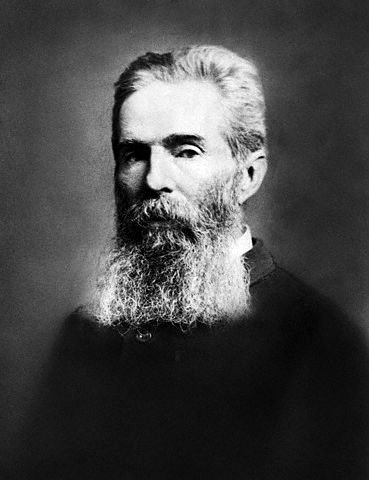
On November 14, 1851, Herman Melville published Moby Dick. The book was a failure, but years later was recognized as an American classic. Melville was born on August 1, 1819 in New York City. A childhood bout of scarlet fever left him with weakened eyes. At age 19, he became a cabin boy on a ship bound for Liverpool and he later sailed to the South Seas on a whaler, the Acushnet, which anchored in Polynesia. He took part in a mutiny, was thrown in jail in Tahiti, escaped, and wandered around the South Sea Islands from 1841 to 1844. In 1846, he published his first novel, Typee, based on his Polynesian adventures. His second book, Omoo (1847), also dealt with the South Seas. The two novels was a success, although his third, Mardi (1849), more experimental in nature, failed to catch on with the public. During this period, Melville bought a farm near Nathaniel Hawthorne's house in Massachusetts, and the two became close friends, although they later drifted apart. Melville wrote for journals and continued to publish novels. Moby Dick was coolly received, but his short stories were highly acclaimed. Putnam's Monthly published "Bartleby the Scrivener" in 1853 and "Benito Cereno" in 1855. In 1866, Melville won appointment as a customs inspector in New York, which brought him a stable income and he continued to write until his death on September 28, 1891. His last novel, Billy Budd, was not published until 1924. Melville was buried at Woodlawn Cemetery, The Bronx, New York.  

Check back every Friday for a new edition of “This week in English literary history.” 

Michael Thomas Barry is the author of six nonfiction books that includes the gold medal winning Literary Legends of the British Isles and the soon to be released America’s Literary Legends. Visit Michael’s website www.michaelthomasbarry.com for more information. His books can be purchased from Amazon through the following links:


Friday, November 7, 2014

Louisa May Alcott Published First Short Story - November 11, 1852


This week (November 7 – November 13) in English literary history – Margaret Mitchell was born (November 8, 1900); Bram Stoker was born (November 8, 1847); Kurt Vonnegut’s Slaughterhouse-Five was burned (November 10, 1973); Louisa May Alcott published her first short story (November 11, 1852); Robert Louis Stevenson was born (November 13, 1850). 

Highlighted Story of the Week -  

On November 11, 1852, the Saturday Evening Gazette published the short story "The Rival Painters: A Story of Rome," by Louisa May Alcott, who will later write the beloved children's book Little Women (1868). Alcott, the second of four daughters, was born on November 29, 1832 in Germantown, Pennsylvania but spent most of her life in Concord, Massachusetts. Her father, Bronson, was close friends with Transcendentalist thinkers Ralph Waldo Emerson and Henry David Thoreau, whose progressive attitudes toward education and social issues left a strong mark on Louisa. Her father started a school based on Transcendentalist teachings, but after six years it failed, and he was unable to support the family and, afterward, Louisa dedicated most of her life to supporting them. After the publication of her first story, she made a living off sentimental and melodramatic stories for more than two decades.

In 1862 she went to work as a nurse for Union troops in the Civil War until typhoid fever broke her health. She turned her experiences into Hospital Sketches (1863), which established her reputation as a serious literary writer. Looking for a bestseller, a publisher asked Alcott to write a book for girls. Although reluctant at first, Alcott finally agreed and poured her best talent into the work. The first volume of the serialized novel Little Women was an immediate success, and she began writing a chapter a day to finish the second. Her subsequent children's fiction, including Little Men (1871), An Old-fashioned Girl (1870), Eight Cousins (1875), and Jo's Boys (1886), while not as popular as Little Women, are still enjoyed today. She also wrote many short stories for adults. She became a strong supporter of women's issues and spent most of her life caring for her family financially, emotionally, and physically. Her father died on March 4, 1888, and she followed him just two days later. 

Check back every Friday for a new installment of “This Week in English Literary History.” 

Michael Thomas Barry is the author of six nonfiction books that includes the gold medal winning Literary Legends of the British Isles (2012) and America’s Literary Legends (2015). Visit Michael’s website www.michaelthomasbarry.com for more information. His books can be purchased from Amazon through the following links:

Friday, October 31, 2014

2014 Watty Award Nominees


October 31, 2014 - Wattpad announces 2014 Watty Award Nominees

My feature story - Irish Novelist James Joyce Died

http://www.wattpad.com/60284234-what-happened-on-this-date-in-english-literary

please share to vote #wattys2014

Stephen Crane was Born - November 1, 1871


This week (October 31- November 6) in English literary history – Sir Arthur Conan Doyle’s The Adventures of Sherlock Holmes was published (October 31, 1892); Stephen Crane was born (November 1, 1871); Penguin Books was acquitted of obscenity charges over D.H. Lawrence’s Lady Chatterley’s Lover (November 2, 1960); William Makepeace Thackeray’s The Luck of Barry Lyndon was published in Fraser’s Magazine (November 3, 1844); T.S. Eliot was awarded the Nobel Prize in literature (November 4, 1948); Willa Cather began writing for the Nebraska State Journal (November 5, 1893); English Playwright Thomas Kyd was baptized (November 6, 1558). 

Highlighted Story of the Week -  

On November 1, 1871, Stephen Crane, author of The Red Badge of Courage, was born Newark, New Jersey. His father died when Crane was 9, and the family later settled in Asbury Park, New Jersey. At Syracuse University, Crane played baseball for a year before dropping out to become a journalist in New York City. He worked briefly for several newspapers and scraped by in near poverty. While struggling to make a living, Crane closely observed the characters around him. In 1893, at age 23, he published Maggie: A Girl of the Streets, about a poor girl's decline into prostitution and suicide. Finding a publisher was difficult given the book's scandalous content, so Crane ultimately published it himself. The book was a critical success but failed to sell well. He turned his attention to more popular topics and wrote The Red Badge of Courage (1895). The book was serialized by a newspaper syndicate, and Crane became an international celebrity at age 24. 

After the novel's success, the newspaper syndicate sent Crane to cover the West and Mexico. In 1897, he went to Cuba to write about the insurrection against Spain. On the way there, he stayed at a dingy hotel where he met Cora Howard Taylor, who became his lifelong companion. In 1897, his boat to Cuba sank, and he barely survived. His short story "The Open Boat" is based on his experiences in a lifeboat with the captain and cook. Crane later covered the war between Greece and Turkey, and settled in England, where he made friends with other literary greats such as Joseph Conrad, H.G. Wells, and Henry James. 

Crane had been in poor health for many years and had contracted tuberculosis in his late 20s. Cora Howard Taylor nursed him while he wrote furiously in an attempt to pay off his debts. He exhausted himself and exacerbated his condition. In late May 1900, he and Cora traveled to a health spa in the Black Forest near Badenweiler, Germany where he died on June 5, at the age of 28. His body was returned to the U.S. for burial at Evergreen Cemetery in Newark, New Jersey.  

Check back every Friday for a new installment of This Week in English Literary History 

Michael Thomas Barry is the author of numerous books that include the gold medal winning Literary Legends of the British Isles: The Lives and Burial Places of 50 Great Writers (2013) and America’s Literary Legends: The Lives and Burial Places of 50 Great Writers (2015). Visit Michael’s website www.michaelthomasbarry.com for more information. These books can be purchased through the following links:

Friday, October 24, 2014

Jane Austen's "Sense and Sensibility" was Published - October 30, 1811


This week (October 24-31) in English literary history – Henry Fielding became justice of the peace (October 25, 1748); Henry James and Edith Wharton begin corresponding (October 26, 1900); Sylvia Plath was born (October 27, 1932); George Bernard Shaw’s “Mrs. Warren’s Profession” was performed on New York (October 28, 1905); Jane Austen’s “Sense and Sensibility” was published (October 30, 1811); Arthur Conan Doyle’s “The Adventures of Sherlock Holmes” was published (October 31, 1892) 

Highlighted Story of the Week -   

On October 30, 1811, Jane Austen's Sense and Sensibility was published anonymously. A small circle of people, including the Price Regent, learned Austen's identity, but most of the British public knew only that the popular book had been written "by a Lady." Austen was born on December 16, 1775 in Steventon, a country village in Hampshire, England. She was very close to her older sister, Cassandra, who remained her faithful editor and critic throughout her life. The girls had five years of formal schooling, then studied with their father. Jane read voraciously and began writing stories as young as age 12, completing an early novella at age 14. 

Austen's quiet, happy world was disrupted when her father retired to Bath in 1801. Jane hated the resort town but amused herself by making close observations of ridiculous society manners. After her father's death in 1805, Jane, her mother, and sister lived with one of her brothers until 1808, when another brother provided them a permanent home at Chawton Cottage, in Hampshire. 

Jane concealed her writing from most of her acquaintances, slipping her writing paper under a blotter when someone entered the room. Though she avoided society, she was charming, intelligent, and funny. She rejected at least one proposal of marriage. She published several more novels before her death, including Pride and Prejudice (1813), Mansfield Park (1814), and Emma (1815). She died on July 18, 1817 in Winchester, England at age 42, of what today is thought to be Addison's disease. 

Check back every Friday for a new installment on the lives of the great writers of English literature 

Michael Thomas Barry is the author of numerous books that includes the gold medal winning Literary Legends of the British Isles: The Lives and Burial Places of 50 Great Writers and the upcoming release of America’s Literary Legends: The Lives and Burial Places of 50 Great Writers (January 2015). These books can be purchased from Amazon through the following links: