Showing posts with label 19th century American novelists. Show all posts

Friday, January 2, 2015

Stephen Crane Survived Shipwreck - January 2, 1897


This week (January 2-8) in English literary history – Stephen Crane survived shipwreck (January 2, 1897); Herman Melville set sail for the South Pacific (January 3, 1841); J.R.R. Tolkien was born (January 3, 1892); T.S. Eliot died (January 4, 1965); John Gardner won the National Critics Circle Award (January 5, 1977); Harriet Beecher married Calvin Ellis Stowe (January 6, 1836); Zora Neale Hurston was born (January 7, 1891); E.L. Doctorow won the National Book Critics Circle Award for Ragtime (January 8, 1976).  

Highlighted Story of the Week – 

On January 2, 1897, Stephen Crane survived the sinking of The Commodore off the coast of Florida. He turned the event into his classic short story "The Open Boat" (1897). The 25-year-old writer had gained international fame with the publication of his novel The Red Badge of Courage in 1896. A Civil War story told from the soldier's point of view, the novel originally appeared as a syndicated newspaper series. 

Crane, the youngest of 14 children, was born in 1871 and grew up in New York and New Jersey. He became a journalist in New York, working short stints for various newspapers and living in near poverty. Immersed in the hand-to-mouth life of poor New York, Crane closely observed the characters around him, and in 1893, at age 23, he self-published Maggie: A Girl of the Streets, about a poor girl's decline into prostitution and suicide. The book was a critical success but failed to sell well. He turned his attention to more popular topics and began writing The Red Badge of Courage. 

After the book's success, the same newspaper syndicate dispatched Crane to write about the West and Mexico, and in 1897 Crane headed to Cuba to cover the insurrection against Spain. On the way there, he met his future lifelong companion, Cora Howard Taylor, the proprietress of a rundown hotel where he was staying. After The Commodore sank, Crane and four of his shipmates spent a day in a 10-foot lifeboat before they reached Daytona Beach. Crane published an account in a New York newspaper five days later, and "The Open Boat" was published in Scribner's magazine the following June. Crane later covered the war between Greece and Turkey, and settled in England, where he befriended Joseph Conrad, H.G. Wells, and Henry James. Crane contracted tuberculosis in his late 20s. Cora Howard Taylor nursed him while he wrote furiously in an attempt to pay off his debts. He exhausted himself and exacerbated his condition. He died on June 5, 1900 at the age of 28, in Germany and was buried at Evergreen Cemetery in Newark, New Jersey. 
 
Check back every Friday for a new installment of "This Week In English Literary History."

Michael Thomas Barry is the author of six nonfiction books that includes Literary Legends of the British Isles and America’s Literary Legends. Visit Michael’s website www.michaelthomasbarry.com for more information. His books can be purchased from Amazon through the following links:

Friday, November 14, 2014

Herman Melville's "Moby Dick" was Published - November 14, 1851


This week (November 14 – 20) in English literary history – Herman Melville’s Moby Dick was published (November 14, 1851); Charles Dickens published the final chapters of A Tale of Two Cities in All the Year Round (November 15, 1859); Annie Proulx’s The Shipping News wins National Book Award (November 17, 1993); Poet Allen Tate was born (November 19, 1899); Henry James published his first novel Roderick Hudson (November 20, 1875). 

Highlighted story of the week - 

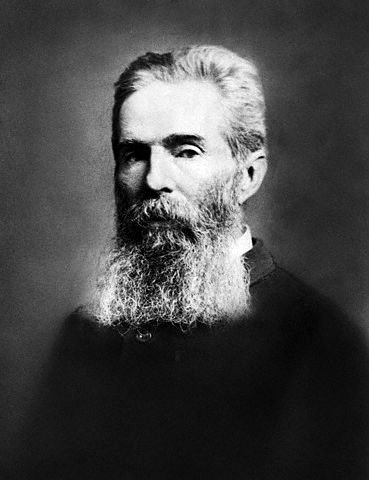
On November 14, 1851, Herman Melville published Moby Dick. The book was a failure, but years later was recognized as an American classic. Melville was born on August 1, 1819 in New York City. A childhood bout of scarlet fever left him with weakened eyes. At age 19, he became a cabin boy on a ship bound for Liverpool and he later sailed to the South Seas on a whaler, the Acushnet, which anchored in Polynesia. He took part in a mutiny, was thrown in jail in Tahiti, escaped, and wandered around the South Sea Islands from 1841 to 1844. In 1846, he published his first novel, Typee, based on his Polynesian adventures. His second book, Omoo (1847), also dealt with the South Seas. The two novels was a success, although his third, Mardi (1849), more experimental in nature, failed to catch on with the public. During this period, Melville bought a farm near Nathaniel Hawthorne's house in Massachusetts, and the two became close friends, although they later drifted apart. Melville wrote for journals and continued to publish novels. Moby Dick was coolly received, but his short stories were highly acclaimed. Putnam's Monthly published "Bartleby the Scrivener" in 1853 and "Benito Cereno" in 1855. In 1866, Melville won appointment as a customs inspector in New York, which brought him a stable income and he continued to write until his death on September 28, 1891. His last novel, Billy Budd, was not published until 1924. Melville was buried at Woodlawn Cemetery, The Bronx, New York.  

Check back every Friday for a new edition of “This week in English literary history.” 

Michael Thomas Barry is the author of six nonfiction books that includes the gold medal winning Literary Legends of the British Isles and the soon to be released America’s Literary Legends. Visit Michael’s website www.michaelthomasbarry.com for more information. His books can be purchased from Amazon through the following links:


Friday, October 31, 2014

Stephen Crane was Born - November 1, 1871


This week (October 31- November 6) in English literary history – Sir Arthur Conan Doyle’s The Adventures of Sherlock Holmes was published (October 31, 1892); Stephen Crane was born (November 1, 1871); Penguin Books was acquitted of obscenity charges over D.H. Lawrence’s Lady Chatterley’s Lover (November 2, 1960); William Makepeace Thackeray’s The Luck of Barry Lyndon was published in Fraser’s Magazine (November 3, 1844); T.S. Eliot was awarded the Nobel Prize in literature (November 4, 1948); Willa Cather began writing for the Nebraska State Journal (November 5, 1893); English Playwright Thomas Kyd was baptized (November 6, 1558). 

Highlighted Story of the Week -  

On November 1, 1871, Stephen Crane, author of The Red Badge of Courage, was born Newark, New Jersey. His father died when Crane was 9, and the family later settled in Asbury Park, New Jersey. At Syracuse University, Crane played baseball for a year before dropping out to become a journalist in New York City. He worked briefly for several newspapers and scraped by in near poverty. While struggling to make a living, Crane closely observed the characters around him. In 1893, at age 23, he published Maggie: A Girl of the Streets, about a poor girl's decline into prostitution and suicide. Finding a publisher was difficult given the book's scandalous content, so Crane ultimately published it himself. The book was a critical success but failed to sell well. He turned his attention to more popular topics and wrote The Red Badge of Courage (1895). The book was serialized by a newspaper syndicate, and Crane became an international celebrity at age 24. 

After the novel's success, the newspaper syndicate sent Crane to cover the West and Mexico. In 1897, he went to Cuba to write about the insurrection against Spain. On the way there, he stayed at a dingy hotel where he met Cora Howard Taylor, who became his lifelong companion. In 1897, his boat to Cuba sank, and he barely survived. His short story "The Open Boat" is based on his experiences in a lifeboat with the captain and cook. Crane later covered the war between Greece and Turkey, and settled in England, where he made friends with other literary greats such as Joseph Conrad, H.G. Wells, and Henry James. 

Crane had been in poor health for many years and had contracted tuberculosis in his late 20s. Cora Howard Taylor nursed him while he wrote furiously in an attempt to pay off his debts. He exhausted himself and exacerbated his condition. In late May 1900, he and Cora traveled to a health spa in the Black Forest near Badenweiler, Germany where he died on June 5, at the age of 28. His body was returned to the U.S. for burial at Evergreen Cemetery in Newark, New Jersey.  

Check back every Friday for a new installment of This Week in English Literary History 

Michael Thomas Barry is the author of numerous books that include the gold medal winning Literary Legends of the British Isles: The Lives and Burial Places of 50 Great Writers (2013) and America’s Literary Legends: The Lives and Burial Places of 50 Great Writers (2015). Visit Michael’s website www.michaelthomasbarry.com for more information. These books can be purchased through the following links: