Showing posts with label Oscar Wilde. Show all posts

Thursday, October 16, 2014

Oscar Wilde was Born (October 16, 1854)


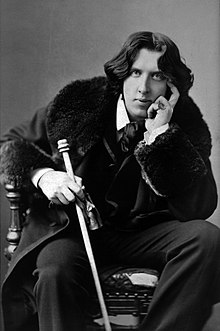
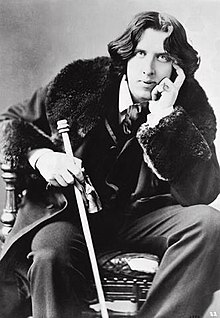
On this date in English literary history – October 16, 1854, Oscar Wilde was born in Dublin, Ireland. A popular society figure known for his wit and flamboyant style, he published his own book of poems in 1881. He spent a year lecturing on poetry in the United States, where his dapper wardrobe and excessive devotion to art drew ridicule from some quarters. After returning to Britain, Wilde married and had two children, for whom he wrote delightful fairy tales, which were published in 1888. Meanwhile, he wrote reviews and edited Women's World. In 1890, his only novel, The Picture of Dorian Gray, was published serially, appearing in book form the following year. He wrote his first play, The Duchess of Padua, in 1891 and wrote five more in the next four years. His plays, including The Importance of Being Earnest (1895), were successful and made him a popular and well-known writer. 

In 1895, the Marquess of Queensberry denounced Wilde as a homosexual, accusing him of having an affair with the marquess's son. Wilde sued for libel, but lost his case when evidence strongly supported the marquess's observations. Unfortunately, homosexuality was classified as a crime in England at the time. Wilde was arrested, found guilty, and sentenced to two years of hard labor. He was released from prison in 1897 and fled to Paris, where his many loyal friends visited him. He started writing again, producing The Ballad of Reading Gaol, based on his experiences in prison. He died of acute meningitis in 1900.


Michael Thomas Barry is the author of numerous award winning books that includes the gold medal winning Literary Legends of the British Isles: The Lives and Burial Places of 50 Great Writers. Visit Michael’s website www.michaelthomasbarry.com for more information. The book can be purchased from Amazon through the following link: 

Monday, May 19, 2014

Irish Playwright Oscar Wilde was Released from Prison - 1897


On this date in English literary history – May 19, 1897, Irish playwright Oscar Wilde was released from jail after serving two years of hard labor. His experiences in prison were the basis for his last work, The Ballad of Reading Gaol (1898). Wilde was born and educated in Ireland. He studied at both Trinity College, Dublin and Oxford University. He remained in London where he became a popular society figure valued at dinner parties for his witty remarks. Embracing the late 19th century aesthetic movement, which embraced art for art's sake, Wilde adopted the flamboyant style of a passionate poet and self-published a volume of verse in 1881. He spent the following year in the United States lecturing on poetry and art. Wilde's dapper wardrobe and excessive devotion to art were parodied in Gilbert and Sullivan's operetta Patience in 1882. After returning to Britain, Wilde married and had two children. In 1888, he published a collection of fairy tales he wrote for his children. Meanwhile, he wrote reviews and became editor of Women's World. In 1891, his only novel, The Picture of Dorian Gray, was published. He wrote his first play, The Duchess of Padua, the same year and wrote five more before his arrest. His most successful comedies, including The Importance of Being Earnest and Lady Windermere's Fan, are still performed today. In 1891, the Marquess of Queensbury denounced Wilde as a homosexual. Wilde, who was involved with the marquess' son, sued the Marquess for libel but lost the case when evidence supported the marquess' allegations. Because homosexuality was still considered a crime in England, Wilde was arrested. Although his first trial resulted in a hung jury, a second jury sentenced him to two years of hard labor. After his release, Wilde fled to Paris and began writing again. He died of acute meningitis just three years after his release.
 
 
Michael Thomas Barry is the author of numerous book that include Literary Legends of the British Isles: The Lives and Burial Places of 50 Great Writers. The book was named a finalist in the 2014 Next Generation Indie Book Awards in the autobiography/ biography category. Visit the author’s website www.michaelthomasbarry.com for more information. The book can be purchased from Amazon through the following link: 

Wednesday, October 16, 2013

Oscar Wilde was born - 1854


Oscar Wilde was born on October 16, 1854 in Dublin, Ireland. He attended Oxford, where he graduated with honors in 1878. A popular society figure known for his wit and flamboyant style, he published his own book of poems in 1881. He spent a year lecturing on poetry in the United States, where his dapper wardrobe and excessive devotion to art drew ridicule from some quarters. After returning to England, Wilde married and had two children, for whom he wrote delightful fairy tales, which were published in 1888. Meanwhile, he wrote reviews and edited Women's World. In 1890, his only novel, The Picture of Dorian Gray, was published serially, appearing in book form the following year. He wrote his first play, The Duchess of Padua, in 1891 and wrote five more in the next four years. His plays, including The Importance of Being Earnest (1895), were successful and made him a popular and well-known writer. In 1895, the Marquess of Queensberry denounced Wilde as a homosexual, accusing him of having an affair with her son. Wilde sued for libel, but lost his case when evidence strongly supported the allegations. Unfortunately, homosexuality was classified as a crime in England at the time. Wilde was arrested, found guilty, and sentenced to two years of hard labor. Wilde was released from prison in 1897 and fled to Paris, where his many loyal friends visited him. He started writing again, producing The Ballad of Reading Gaol, based on his experiences in prison. He died of acute meningitis in 1900.
 
Michael Thomas Barry is the author of Literary Legends of the British Isles. The book can be purchased from Amazon through the following links:
Amazon UK - http://www.amazon.co.uk/Great-Britains-Literary-Legends-Writers/dp/0764344382/ref=la_B0035CPN70_1_5?s=books&ie=UTF8&qid=1381937723&sr=1-5

Wednesday, May 29, 2013

Oscar Wilde married Constance Lloyd - 1884


 On May 29, 1884, Irish playwright and novelist Oscar Wilde married Constance Lloyd at St. James Church, Paddington, London. Wilde was born on October 16, 1854 in Dublin, Ireland. After writing in different forms throughout the 1880s, he became one of London's most popular playwrights in the early 1890s. Today he is best remembered for his only novel The Picture of Dorian Gray, his plays and the circumstances of his imprisonment which was followed by his early death. After graduating from Trinity College, Wilde moved to London into fashionable cultural and social circles. He tried his hand at various literary activities and published a book of poems, then embarked on a lecture tour of the United States and Canada.

Upon His return to London he worked prolifically as a journalist. Known for his biting wit, flamboyant dress and glittering conversation, Wilde became one of the best-known personalities of his day. In 1881 he was introduced to Constance Lloyd, daughter of Horace Lloyd, a wealthy lawyer. She happened to be visiting Dublin in 1884, when Wilde was lecturing at the Gaiety Theatre. He proposed to her, and they married on May 29, 1884 at the Anglican St. James Church in Paddington in London. The couple had two sons.

At the height of his fame and success, while his masterpiece, The Importance of Being Ernest (1895), was still on stage in London, Wilde sued the Marquess of Queensberry for libel. The Marquess was the father of Wilde's lover, Lord Alfred Douglas. The charge carried a penalty of up to two years in prison. The trial unearthed evidence that caused Wilde to drop his charges and led to his own arrest and trial for gross indecency with other men. After two more trials he was convicted and sentenced to two years hard labor. Upon his release he left immediately for France, never to return to Ireland or Britain. There he wrote his last work, The Ballad of Reading Gaol (1898), a long poem commemorating the harsh rhythms of prison life. He died destitute in Paris at the age of forty-six on November 20, 1900 and was buried at Pere Lachaise Cemetery.


Michael Thomas Barry the author of six nonfiction books that includes the award winning Literary Legends of the British Isles. The book can be purchased from Amazon through the following links:


Saturday, May 25, 2013

Oscar Wilde is sentenced to jail - 1895


On May 25, 1895, Oscar Wilde is sentenced to two years hard labor for committing homosexual acts. Wilde was one of the most successful playwrights of the 1880s and 1890s.  Today he is remembered for his only novel The Picture of Dorian Gray, his plays and the circumstances of his imprisonment which was followed by his early death. Born on October 16, 1854 in Dublin, Ireland, his parents were successful Dublin intellectuals. Their son became fluent in French and German early in life. Oscar proved himself to be an outstanding student and studied at Oxford. He became known for his involvement in the rising philosophy of aestheticism. After university, Wilde moved to London into fashionable cultural and social circles. He tried his hand at various literary activities, published a book of poems, and lectured in the United States and Canada on the new "English Renaissance in Art", and then returned to London where he worked prolifically as a journalist. Known for his biting wit, flamboyant dress and glittering conversation, Wilde became one of the best-known personalities of his day.

At the turn of the 1890s, he refined his ideas about the supremacy of art in a series of dialogues and essays, and incorporated themes of decadence, duplicity, and beauty into his only novel, The Picture of Dorian Gray (1890). He also produced comedic plays in the early 1890s, which made him one of the most successful playwrights of late Victorian London. At the height of his fame and success, while his masterpiece, The Importance of Being Earnest (1895), was still on stage in London, Wilde was prosecuted for libel. And the charge carried a penalty of up to two years in prison. The trial unearthed evidence that caused Wilde to be arrested and charged with gross indecency with other men. On May 24, 1895, he was convicted and imprisoned for two years. In 1897, while in prison, he wrote De Profundis (1905), a long letter which discusses his spiritual journey through his trials, forming a dark counterpoint to his earlier philosophy of pleasure. Upon his release from jail he left immediately for France, never to return to Ireland or Britain. There he wrote his last work, The Ballad of Reading Gaol (1898), a long poem commemorating the harsh rhythms of prison life. He died on November 30, 1900 in Paris and was buried at Pere Lachaise Cemetery. 


Michael Thomas Barry is the author of Great Britain’s Literary Legends. The book can be purchased through Amazon at the following links:


Sunday, May 19, 2013

Oscar Wilde is released from prison - 1897


On May 19, 1897, writer Oscar Wilde is released from jail after two years of hard labor. His experiences in prison were the basis for his last work, The Ballad of Reading Gaol (1898). Wilde was born and educated in Ireland. He studied at Oxford, graduated with honors in 1878, and remained in London. He became a popular society figure valued at dinner parties for his witty remarks. Embracing the late 19th century aesthetic movement, which embraced art for art's sake, Wilde adopted the flamboyant style of a passionate poet and self-published a volume of verse in 1881. He spent the following year in the United States lecturing on poetry and art. Wilde's dapper wardrobe and excessive devotion to art were parodied in Gilbert and Sullivan's operetta Patience in 1882.

After returning to Britain, Wilde married and had two children. In 1888, he published a collection of fairy tales he wrote for his children. Meanwhile, he wrote reviews and became editor of Women's World. In 1891, his only novel, The Picture of Dorian Gray, was published. He wrote his first play, The Duchess of Padua, the same year and wrote five more before his arrest. His most successful comedies, including The Importance of Being Earnest and Lady Windermere's Fan, are still performed today. In 1891, the Marquess of Queensbury denounced Wilde as a homosexual. Wilde, who was involved with the Marquess' son, sued the Marquess for libel but lost the case when evidence supported the Marquess' allegations. Because homosexuality was still considered a crime in England, Wilde was arrested. Although his first trial resulted in a hung jury, a second jury sentenced him to two years of hard labor. After his release, Wilde fled to Paris and began writing again. He died of acute meningitis just three years after his release.


Michael Thomas Barry is the author of Great Britain’s Literary Legends. The book can be purchased from Amazon through the following links:


Thursday, February 14, 2013

Oscar Wilde's "The Importance of Being Ernest" opens in London - 1895


On February 14, 1895, Oscar Wilde’s The Importance of Being Ernest opens in London. Wilde was one of the most iconic figures from late Victorian society. Enjoying a meteoric rise to the top of society, his wit, humor and intelligence shine through his plays and writings. For his sexuality he suffered the indignity and shame of imprisonment. For a long time his name was synonymous with scandal and intrigue. However with changing social attitudes he is remembered with great affection for his biting social criticism, wit and linguistic skills. Wilde was born on October 16, 1854 in Dublin, Ireland. After writing in different forms throughout the 1880s, he became one of London's most popular playwrights in the early 1890s. He died on November 30, 1900 in Paris, France.  
Michael Thomas Barry is the author of Great Britain’s Literary Legends. The book can be purchased from Amazon through the following links: