Showing posts with label what happened on this date in English literary history. Show all posts

Tuesday, October 21, 2014

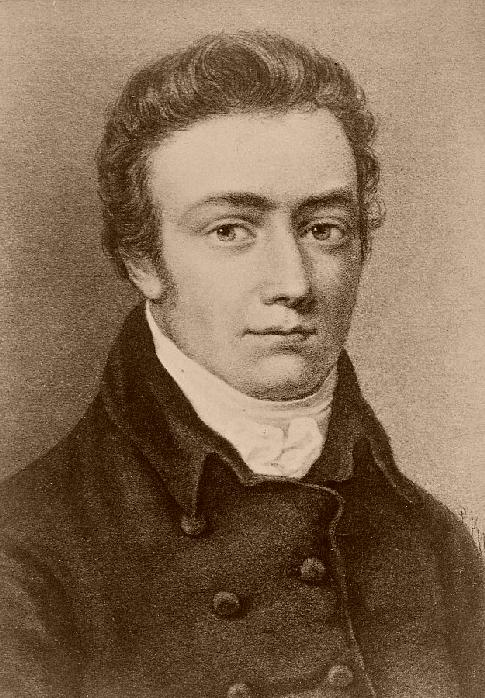
Poet Samuel Taylor Coleridge was Born - October 21, 1772


On this date in English literary history – October 21, 1772, poet Samuel Taylor Coleridge was born in the small town of Ottery St. Mary in Devonshire, England. Coleridge's father died when he was a boy, and young Samuel was sent off to boarding school in London and eventually attended Cambridge. After becoming disillusioned with school he fled his debtors and enlisted in the cavalry, which he later abandoned with help from his brothers. He then returned to Cambridge, where he met poet Robert Southey. The two dreamed of one day establishing a utopian society in Pennsylvania. In 1795, Coleridge met poet William Wordsworth. The two became close friends and collaborators, assisted by Dorothy Wordsworth, the poet's sister. The siblings moved near Coleridge, and in 1798 Wordsworth and Coleridge published Lyrical Ballads, which established the Romantic school of poetry. It included Coleridge's famous poem "The Rime of the Ancient Mariner." 

Coleridge's life began to unravel at the turn of the century. He became estranged from his wife and fell in love with Sara Hutchinson, whose sister married William Wordsworth three years later. Meanwhile, his health began to suffer, and he began taking large doses of opium to control his rheumatism and other problems. He became addicted to the drug, and his creative output waned. In 1810, he broke with Wordsworth, and the two would not reconcile for nearly 20 years. During this period, Coleridge supported himself through a series of successful lectures on literature. Meanwhile, he single-handedly wrote, edited, and distributed his review, The Friend. In 1813 he published, Remorse, which was well received by critics. Thanks to the help of Dr. James Gillman and his wife, Coleridge began to cut back on his opium use. In 1816, he published the fragmentary poem "Kubla Khan," written under the influence of opium, circa 1797. In 1817, he published a significant work of criticism, Biographa Literaria, and in 1828 was reconciled with Wordsworth. Coleridge died at Highgate, London on July 25, 1834 from heart failure.


Michael Thomas Barry is the author of numerous books that includes the gold medal winning Literary Legends of the British Isles: The Lives and Burial Places of 50 Great Writers. Visit Michael’s website www.michaelthomasbarry.com for more information. The book can be purchased from Amazon through the following link: 

Thursday, October 16, 2014

Oscar Wilde was Born (October 16, 1854)


On this date in English literary history – October 16, 1854, Oscar Wilde was born in Dublin, Ireland. A popular society figure known for his wit and flamboyant style, he published his own book of poems in 1881. He spent a year lecturing on poetry in the United States, where his dapper wardrobe and excessive devotion to art drew ridicule from some quarters. After returning to Britain, Wilde married and had two children, for whom he wrote delightful fairy tales, which were published in 1888. Meanwhile, he wrote reviews and edited Women's World. In 1890, his only novel, The Picture of Dorian Gray, was published serially, appearing in book form the following year. He wrote his first play, The Duchess of Padua, in 1891 and wrote five more in the next four years. His plays, including The Importance of Being Earnest (1895), were successful and made him a popular and well-known writer. 

In 1895, the Marquess of Queensberry denounced Wilde as a homosexual, accusing him of having an affair with the marquess's son. Wilde sued for libel, but lost his case when evidence strongly supported the marquess's observations. Unfortunately, homosexuality was classified as a crime in England at the time. Wilde was arrested, found guilty, and sentenced to two years of hard labor. He was released from prison in 1897 and fled to Paris, where his many loyal friends visited him. He started writing again, producing The Ballad of Reading Gaol, based on his experiences in prison. He died of acute meningitis in 1900.


Michael Thomas Barry is the author of numerous award winning books that includes the gold medal winning Literary Legends of the British Isles: The Lives and Burial Places of 50 Great Writers. Visit Michael’s website www.michaelthomasbarry.com for more information. The book can be purchased from Amazon through the following link: 

Saturday, September 13, 2014

Roald Dahl was Born (September 13, 1916)


On this date in English literary history - September 13, 1916, Roald Dahl, author of Charlie and the Chocolate Factory (1964) and James and the Giant Peach (1961) was born in South Wales. Dahl's childhood was filled with tragedy. His father and sister died when he was three, and he was later brutally abused at his boarding school. After high school, he traveled widely, joining an expedition to Newfoundland and later working in Tanzania. In World War II, he joined the Royal Air Force and became a fighter pilot. He flew missions in Libya, Greece, and Syria, and was shot down in the Libya, suffering serious injuries. After he recovered, Dahl was sent to Washington, D.C., as an attaché’. There, the writer C.S. Forester suggested he write about his war experiences, and 10 days later Dahl had his first publication, in the Saturday Evening Post. Dahl wrote his first book, The Gremlins, for Walt Disney, in 1943, and the story was later made into a Disney film. He wrote several popular adult books, including Someone Like You (1953) and Kiss Kiss (1959), and began writing stories for his own four children in 1960. James and the Giant Peach and Charlie and the Chocolate Factory became bestsellers. Dahl did most of his writing on the family farm, writing two hours every morning, two hours every afternoon, and tending to the animals in between. He was divorced from his wife, Oscar-winning actress Patricia Neal, in 1983, and remarried. He died in 1990 at age 74.


Michael Thomas Barry is the author of numerous books that include the gold medal winning Literary Legends of the British Isles: The Lives and Burial Places of 50 Great Writers. Visit Michael’s website www.michaelthomasbarry.com for more information. The book can be purchased from Powell’s Books, Barnes and Noble, Amazon and other fine book sellers. Click on the link below to order. 

Friday, September 12, 2014

Elizabeth Barrett and Robert Browning Eloped (September 12, 1846)


On this date in English literary history – September 12, 1846, Elizabeth Barrett eloped with Robert Browing. Barrett was already a respected poet who had published literary criticism and Greek translations in addition to poetry. Her first volume of poetry, The Seraphim and Other Poems, appeared in 1838, followed by Poems (1844). Born in 1806 near Durham, England, at her father's 20-bedroom mansion, Elizabeth enjoyed wealth and position, but suffered from weak lungs and tended to be reclusive in her youth.
Robert Browning, the son of a bank clerk, had studied at the University of London and continued his education at his parents' home, reading extensively and writing poetry. His early work was harshly criticized. While trying his hand at drama, he discovered the dramatic monologue, which he adapted to his own poetry in Dramatic Lyrics (1842). While most critics rejected the work, Elizabeth Barrett defended it. Browning wrote to thank her for her praise and asked to meet her.
She hesitated at first but finally relented, and the couple quickly fell in love. Barrett's strict father disliked Browning, whom he viewed as an unreliable fortune hunter, so most of the courtship was conducted in secret. On September 12, 1846, while her family was away, Barrett met Browning at St. Marylebone Parish Church, where they were married. She returned home for a week, keeping the marriage a secret, then fled with Browning to Italy and never saw her father again.
The Brownings lived happily in Italy for 15 years. Elizabeth Barrett Browning's weak health improved dramatically, and the couple had a son in 1849. She published her best-known work, Sonnets from the Portuguese, in 1850. The sonnets chronicled the couple's courtship and marriage. In 1857, her blank-verse novel Aurora Leigh became a bestseller, despite being rejected by critics. During her lifetime, Elizabeth Barrett Browning's reputation as a poet overshadowed that of her husband, who was sometimes referred to as "Mrs. Browning's husband," but his work later gained recognition by critics. Elizabeth died in her husband's arms in 1861. He returned to England with their son, where he became an avid socialite. In 1868, he published The Ring and the Book, a 12-volume poem about a real 17th-century murder trial in Rome. Browning died in 1889.
 
Michael Thomas Barry is the author of numerous books that includes the gold medal winning Literary Legends of the British Isles: The Lives and Burial Places of 50 Great Writers. For more information visit Michael’s website www.michaelthomasbarry.com. The book can be purchased from Powell’s Books, Barnes and Noble, Amazon and other fine book sellers. Click on the link below to purchase.
Powell’s Books - http://www.powells.com/biblio/61-9780764344381-0

Thursday, August 7, 2014

Novelist Henry Fielding Travels to Portugal for Health Issues (August 7, 1754)


On this date in English literary history – August 7, 1754, English novelist Henry Fielding leaves London for Lisbon seeking a healthier climate. Fielding had suffered from ill health for some time, but his trip to Lisbon fails to ease his condition. He dies there two months later. Fielding dropped out of Eton at age 17 and started supporting himself as a successful playwright. He wrote more than two dozen plays, but his drama career ended when his satire Historical Register of the Year 1736 enraged the prime minister. In search of a new livelihood, Jones studied law and edited a newspaper for several years. Meanwhile, in 1740, Samuel Richardson's epistolary novel Pamela was published and became enormously popular. A spoof on the book, called Shamela (1741), was generally credited to Fielding, though he never admitted authorship. He did admit to writing Joseph Andrews, another satire, in 1742. In 1748, Fielding was appointed justice of the peace for Westminster and Middlesex. He played an important role in breaking up criminal gangs. He published one more novel, Amelia (1751), before his death in Lisbon, Portugal, in 1754. Fielding's most famous novel, Tom Jones, was printed in 1749. The novel told the humorous story of the attempts of the illegitimate but charming Tom Jones to win his neighbor's daughter. The novel boasted a vast cast of characters and provided a sweeping comic portrait of 18th-century England.


Michael Thomas Barry is the author of numerous award winning books that includes Literary Legends of the British Isles: The Lives and Burial Places of 50 Great Writers. The book was a finalist in the 2014 Next Generation Indie Book Awards and Readers Favorite International Book Awards. For more information about the author visit his website www.michaelthomasbarry.com. His book can be purchased from Amazon through the following link:

Wednesday, July 30, 2014

Emily Bronte was Born (July 30, 1818)


On this date in English literary history - July 30, 1818, novelist Emily Bronte was born. The Bronte family lived in the remote village of Haworth on the bleak Yorkshire moors and were largely left to their own devices after the death of their mother when Emily was an infant. A shy, reclusive child, Emily suffered intensely from homesickness whenever she left the parsonage. She joined her three older sisters at a school for clergymen's children when she was six, but the two oldest died, partly because of the school's harsh and unhealthy conditions. She and Charlotte returned home. The girls, along with their sister Anne and brother Branwell, read voraciously and created their own elaborate stories about mythical lands. Many of Emily's poems were written about these imaginary realms. 

Bronte worked several short, unhappy stints as a governess and schoolteacher. In 1842, Emily and Charlotte traveled to Brussels to study school administration, hoping to open their own school in Haworth one day, which they never accomplished. In 1845, Charlotte came across some poems Emily and Anne had written and revealed that she too had secretly been writing verse. They published the work, Poems by Currer, Ellis and Acton Bell, in 1846. Although the book sold poorly, the sisters continued writing. Emily published Wuthering Heights in 1847. She died of tuberculosis a year later, on December 19, 1848. A second edition of Wuthering Heights, published in 1850, included a preface by Charlotte, explaining that the book was superior to her own Jane Eyre. Wuthering Heights is now considered a classic.
 
 
Michael Thomas Barry is the author of numerous books that includes Literary Legends of the British Isles: The Lives and Burial Places of 50 Great Writers. The book was a finalist in the 2014 Next Generation Indie Book Awards and Readers Favorite International Book Awards. For more information visit the author’s website www.michaelthomasbarry.com. The Book can be purchase from Amazon through the following link:

Monday, July 28, 2014

Percy Shelley and Mary Wollencraft Godwin Eloped (July 28, 1814)


On this date in English literary history - July 28, 1814, poet Percy Bysshe Shelley eloped with 17-year-old Mary Wollstonecraft Godwin, despite the fact that he was already married. Shelley, the heir to his wealthy grandfather's estate, was expelled from Oxford when he refused to acknowledge authorship of a controversial essay. He eloped with his first wife, Harriet Westbrook in 1811. However, just a few years later, he fell in love with the young Mary Wollstonecraft Godwin, daughter of a prominent reformer and early feminist writer. Shelley and Godwin fled to Europe, marrying after Shelley's wife committed suicide in 1816. His small inheritance was not enough to pay all their bills and the couple spent much of their married life abroad, fleeing creditors. While living in Geneva, their good friend Lord Byron challenged them to each write a compelling ghost story. Only Mary Shelley finished hers, which became the classic Frankenstein. The Shelley’s would have five children together but only one would live to adulthood. After Percy Shelley drowned in a sailing accident on July 8, 1822, Mary edited two volumes of his works. She lived on a small stipend from her father-in-law, Lord Shelley, until her surviving son inherited the entire fortune and title in 1844. She died on February 1, 1851, at the age of 53 and although she was a respected writer for many years, only Frankenstein and her journals are still widely read.


Michael Thomas Barry is the author of numerous books that includes Literary Legends of the British Isles: The Lives and Burial Places of 50 Great Writers. The book was a “Finalist” in the 2014 Next Generation Indie Book Awards. Visit the author’s website www.michaelthomasbarry.com for more information. The book can be purchased from Amazon through the following link: 
Saturday, July 5, 2014

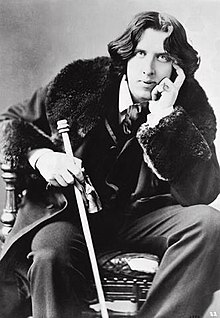
George Bernard Shaw Quits his Job to Write Fulltime (July 5, 1880)


On this date in English literary history – July 5, 1880, George Bernard Shaw quit his job at the Edison Telephone Company to write. Shaw was born in Dublin, Ireland in 1856, and left school at the age of 14 to work in a land agent's office. In 1876, he quit and moved to London, where his mother, a music teacher, had settled. He worked various jobs while trying to write plays. He began publishing book reviews and art and music criticism in 1885. Meanwhile, he became a committed reformer and an active force in the newly established Fabian Society, a group of middle-class socialists.
His first play, Widowers' House, was produced in 1892. His second play, Mrs. Warren's Profession, was banned in Britain because of its controversial content. In 1905, when the play was performed in the United States, police shut it down after one performance and jailed the actors and producers. Although some private productions were held, the show wasn't legally performed in Britain until 1926. In 1895, Shaw became the theater critic for the Saturday Review, and his reviews during the next several years helped shape the development of drama. In 1898, he published Plays Pleasant and Unpleasant, which contained Arms and the Man, The Man of Destiny, and other dramas. In 1904, Man and Superman was produced. In his work, Shaw supported socialism and decried the abuses of capitalism, the degradation of women, and the evil effects of poverty, violence, and war. His writing was filled with humor, wit, and sparkle, as well as reformist messages, and his play Pygmalion, produced in 1912, later became the hit musical and movie My Fair Lady. In 1925, Shaw won the Nobel Prize for literature and used the substantial prize money to start an Anglo-Swedish literary society. He lived simply and continued writing into his 90s. He produced more than 40 plays before his death in 1950.


Michael Thomas Barry is the author of numerous book that include Literary Legends of the British Isles: The Lives and Burial Places of 50 Great Writers. The book was a FINALIST in the 2014 Next Generation Indie Book Awards for autobiography/ biography. For more information about the author visit his website www.michaelthomasbarry.com.

Friday, June 6, 2014

George Orwell's "1984" was Published - 1949


On this date in English literary history – June 6, 1949, George Orwell's novel, Nineteen Eighty-four, was published. The novel's all-seeing leader, known as "Big Brother," becomes a universal symbol for intrusive government and oppressive bureaucracy. Born Eric Blair on June 25, 1903 in India, the son of a British civil servant, Orwell attended school in London and won a scholarship to the elite prep school Eton. After graduation Orwell joined the Indian Imperial Police and went to work in Burma in 1922. Five years later he returned to England. He then choose to immerse himself in the experiences of the urban poor, went to Paris, where he worked menial jobs, and later spent time in England as a tramp. He wrote Down and Out in Paris and London in 1933, based on his observation of the poorer classes, and in 1937 his Road to Wigan Pier documented the life of the unemployed in northern England. Meanwhile, he had published his first novel, Burmese Days, in 1934. Orwell became increasingly left wing in his views, although he never committed himself to any specific political party. He went to Spain during the Spanish Civil War to fight with the Republicans, but later fled as communism gained an upper hand in the struggle on the left. His barnyard fable, Animal Farm (1945), shows how the noble ideals of egalitarian economies can easily be distorted. The book brought him his first taste of critical and financial success. Orwell's last novel, Nineteen Eighty-four, brought him lasting fame with its grim vision of a future where all citizens are watched constantly and language is twisted to aid in oppression. Orwell died of tuberculosis on January 21, 1950.
 
 
Michael Thomas Barry is the author of numerous books that include Literary Legends of the British Isles: The Lives and Burial Places of 50 Great Writers. Visit Michael’s website for more information – www.michaelthomasbarry.com. His book can be purchased from many fine book retailers but the preference would be Powell’s Bookstore see link below:

Thursday, May 22, 2014

Sir Arthur Conan Doyle was Born - 1859


What happened on this date in English literary history – May 22, 1859, Sir Arthur Conan Doyle, the creator of master sleuth Sherlock Holmes was born in Scotland. Doyle studied medicine at the University of Edinburgh, where he met Dr. Joseph Bell, a teacher with extraordinary deductive reasoning power. Bell partly inspired Doyle's character Sherlock Holmes years later. After medical school, Doyle moved to London, where his slow medical practice left him ample free time to write. His first Sherlock Holmes story, A Study in Scarlet, was published in Beeton's Christmas Annual in 1887. Starting in 1891, a series of Holmes stories appeared in The Strand magazine. Holmes enabled Doyle to leave his medical practice in 1891 and devote himself to writing, but the author soon grew weary of his creation. In The Final Problem, he killed off both Holmes and his nemesis, Dr. Moriarty, only to resuscitate Holmes later due to popular demand. In 1902, Doyle was knighted for his work with a field hospital in South Africa. In addition to dozens of Sherlock Holmes stories and several novels, Doyle wrote history, pursued whaling, and engaged in many adventures and athletic endeavors. After his son died in World War I, Doyle became a dedicated spiritualist. He died in 1930.
 
 
Michael Thomas Barry is the author of numerous books that include Literary Legends of the British Isles: The Lives and Burial Places of 50 Great Writers. The book was named a finalist in the 2014 Next Generation Indie Book Awards. Visit the author’s website www.michaelthomasbarry.com for more information. The book can be purchased from Amazon through the following link:

Monday, May 19, 2014

Irish Playwright Oscar Wilde was Released from Prison - 1897


On this date in English literary history – May 19, 1897, Irish playwright Oscar Wilde was released from jail after serving two years of hard labor. His experiences in prison were the basis for his last work, The Ballad of Reading Gaol (1898). Wilde was born and educated in Ireland. He studied at both Trinity College, Dublin and Oxford University. He remained in London where he became a popular society figure valued at dinner parties for his witty remarks. Embracing the late 19th century aesthetic movement, which embraced art for art's sake, Wilde adopted the flamboyant style of a passionate poet and self-published a volume of verse in 1881. He spent the following year in the United States lecturing on poetry and art. Wilde's dapper wardrobe and excessive devotion to art were parodied in Gilbert and Sullivan's operetta Patience in 1882. After returning to Britain, Wilde married and had two children. In 1888, he published a collection of fairy tales he wrote for his children. Meanwhile, he wrote reviews and became editor of Women's World. In 1891, his only novel, The Picture of Dorian Gray, was published. He wrote his first play, The Duchess of Padua, the same year and wrote five more before his arrest. His most successful comedies, including The Importance of Being Earnest and Lady Windermere's Fan, are still performed today. In 1891, the Marquess of Queensbury denounced Wilde as a homosexual. Wilde, who was involved with the marquess' son, sued the Marquess for libel but lost the case when evidence supported the marquess' allegations. Because homosexuality was still considered a crime in England, Wilde was arrested. Although his first trial resulted in a hung jury, a second jury sentenced him to two years of hard labor. After his release, Wilde fled to Paris and began writing again. He died of acute meningitis just three years after his release.
 
 
Michael Thomas Barry is the author of numerous book that include Literary Legends of the British Isles: The Lives and Burial Places of 50 Great Writers. The book was named a finalist in the 2014 Next Generation Indie Book Awards in the autobiography/ biography category. Visit the author’s website www.michaelthomasbarry.com for more information. The book can be purchased from Amazon through the following link: 

Wednesday, May 14, 2014

Alfred Lord Tennyson Published "Poems" - 1842


On this date in English literary history – May 14, 1842, Alfred Lord Tennyson, published Poems. While the 32-year-old poet had already published several other books of verse, Poems, which included works like "Ulysses" and "Morte D'Arthur," was considered his best work to date. The book confirmed his growing stature as a poet after more than a decade of writing. Tennyson was born into a chaotic and disrupted home on August 6, 1809 in Somersby, England. His father, the eldest son of a wealthy landowner, was disinherited in favor of his younger brother. Forced to enter the Church to support himself, the Rev. Dr. George Tennyson became a bitter alcoholic. However, he educated his sons in the classics, and Alfred Tennyson, the fourth of 12 children, went to Trinity College at Cambridge in 1827. The same year, he and his brother Charles published Poems by Two Brothers. At Cambridge, Tennyson befriended a circle of intellectual undergraduates who strongly encouraged his poetry. Chief among them was Arthur Hallam, who became Tennyson's closest friend and who later proposed to Tennyson's sister. 

In 1830, Tennyson published Poems, Chiefly Lyrical. The following year, his father died, and he was forced to leave Cambridge for financial reasons. Besieged by critical attacks and struggling with poverty, Tennyson remained dedicated to his work and published several more volumes. The sudden death of Tennyson's dear friend Arthur Hallam in 1833 inspired several important works throughout Tennyson's later life, including the masterful In Memoriam of 1842. The publication of Poems in 1842 boosted Tennyson's reputation, and in 1850 Queen Victoria named him poet laureate. At long last, Tennyson achieved financial stability and finally married his fiancée Emily Sellwood, whom he had loved since 1836. Tennyson's massive frame and booming voice, together with his taste for solitude, made him an imposing character. He craved solitude and bought an isolated home where he could write in peace. In 1859, he published the first four books of his epic Idylls of the King. Eight more volumes would follow. He continued writing and publishing poems until his death on October 6, 1892 in Sussex, England.

 
Michael Thomas Barry is the author of numerous books that includes Literary Legends of the British Isles: The Lives and Burial Places of 50 Great Writers. The book was honored as a finalist in the 2014 Next Generation Indie Book Awards for autobiography/ biography. Visit the author’s website www.michaelthomasbarry.com for more information. His book can be purchased from Amazon through the following link:
Friday, April 25, 2014

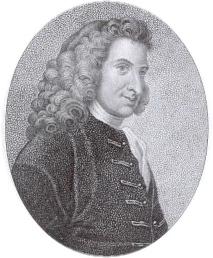
Daniel Defoe's "Robinson Crusoe" was Published - 1719


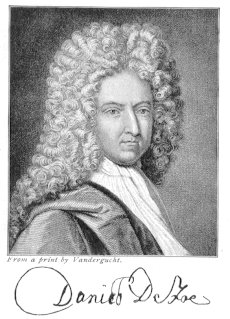
On this date in English literary history – April 25, 1719, Daniel Defoe's fictional work The Life and Strange Adventures of Robinson Crusoe was published. The book, about a shipwrecked sailor who spends 28 years on a deserted island, is based on the experiences of shipwreck victims and of Alexander Selkirk, a Scottish sailor who spent four years on a small island off the coast of South America in the early 1700s. Like his hero Crusoe, Daniel Defoe was an ordinary, middle-class Englishman, not an educated member of the nobility like most writers at the time. Defoe established himself as a small merchant but went bankrupt in 1692 and turned to political pamphleteering to support himself. A pamphlet he published in 1702 satirizing members of the High Church led to his arrest and trial for seditious libel in 1703. He appealed to powerful politician Robert Harley, 1st Earl of Oxford, who had him freed from Newgate prison and who hired him as a political writer and spy to support his own views. To this end, Defoe set up the Review, which he edited and wrote from 1704 to 1713. It wasn't until he was nearly 60 that he began writing fiction. His other works include Moll Flanders (1722) and Roxana (1724). He died in London in 1731, one day before the 12th anniversary of Robinson Crusoe's publication.
 
 
Michael Thomas Barry is the author of numerous books that include Literary Legends of the British Isles: The Lives and Burial Places of 50 Great Writers. For more information about the author and his books visit his website – www.michaelthomasbarry.com

His book can be purchased at Amazon through the following link:

Wednesday, April 23, 2014

William Shakespeare was Born - 1564


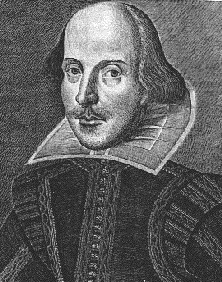
On this date in English literary history – April 23, 1564, and according to legend, the great English dramatist and poet William Shakespeare was born in Stratford-on-Avon. It is impossible to be certain the exact day on which he was born, but church records show that he was baptized on April 26, and three days was a customary amount of time to wait before baptizing a newborn. Shakespeare's date of death is conclusively known, however: it was April 23, 1616. He was 52 years old and had retired to Stratford three years before.

Although few plays have been performed or analyzed as extensively as the 38 plays ascribed to William Shakespeare, there are few surviving details about the playwright's life. This lack of biographical information is due primarily to his station in life; he was not a noble, but the son of John Shakespeare, a leather trader and the town bailiff. The events of William Shakespeare's early life can only be assembled from official records, such as baptism and marriage records. He probably attended the grammar school in Stratford, where he would have studied Latin and read classical literature. He did not go to university but at age 18 married Anne Hathaway, who was eight years his senior and pregnant at the time of the marriage. Their first daughter, Susanna, was born six months later, and in 1585 William and Anne had twins, Hamnet and Judith. Hamnet, Shakespeare's only son, died 11 years later, and Anne Shakespeare outlived her husband, dying in 1623. Nothing is known of the period between the birth of the twins and Shakespeare's emergence as a playwright in London in the early 1590s, but unfounded stories have him stealing deer, joining a group of traveling players, becoming a schoolteacher, or serving as a soldier in the Low Countries.

The first reference to Shakespeare as a London playwright came in 1592, when a fellow dramatist, Robert Greene, wrote derogatorily of him on his deathbed. It is believed that Shakespeare had written the three parts of Henry VI by that point. In 1593, Venus and Adonis was Shakespeare's first published poem, and he dedicated it to the young Henry Wriothesley, the 3rd Earl of Southampton. In 1594, having probably composed, among other plays, Richard III, The Comedy of Errors, and The Taming of the Shrew, he became an actor and playwright for the Lord Chamberlain's Men, which became the King's Men after James I's ascension to the throne in 1603. The company grew into England's finest, in no small part because of Shakespeare, who was its principal dramatist. It also had the finest actor of the day, Richard Burbage, and the best theater, the Globe, which was located on the Thames' south bank. Shakespeare stayed with the King's Men until his retirement and often acted in small parts.

By 1596, the company had performed the classic Shakespeare plays Romeo and Juliet, Richard II, and A Midsummer Night's Dream. That year, John Shakespeare was granted a coat of arms, a testament to his son's growing wealth and fame. In 1597, William Shakespeare bought a large house in Stratford. In 1599, after producing his great historical series, the first and second part of Henry IV and Henry V, he became a partner in the ownership of the Globe Theatre. The beginning of the 17th century saw the performance of the first of his great tragedies, Hamlet. During the next decade, Shakespeare produced such masterpieces as Othello, King Lear, Macbeth, and The Tempest. In 1609, his sonnets, probably written during the 1590s, were published. The 154 sonnets are marked by the recurring themes of the mutability of beauty and the transcendent power of love and art. Shakespeare died in Stratford-on-Avon on April 23, 1616.
 
 
Michael Thomas Barry is the author of numerous books that include Literary Legends of the British Isles : The Lives and Burial Places of 50 Great Writers. Visit the author's website for more information - www.michaelthomasbarry.com
 
His book can be purchased at Amazon through the following link:
 

Monday, April 21, 2014

Charlotte Bronte was Born - 1816


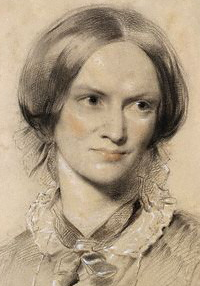
On this date in English literary history – April 21, 1816, Charlotte Bronte was born. She was one of six siblings who grew up in a gloomy parsonage in the remote English village of Hawthorne, surrounded by the marshy moors of Yorkshire. Her mother died when she was five, and Charlotte, her two older sisters, and her younger sister Emily, were sent to Clergy Daughter's School at Cowan Bridge in Lancashire. The cheap school featured unpalatable food, cold halls, and harsh discipline. Charlotte's two older sisters died of illness while at school, and the grim institution found its way into her masterpiece Jane Eyre (1847).

After their sisters’ deaths, Charlotte and Emily were brought home, where they and their remaining siblings, Anne and Branwell, amused themselves by making up elaborate stories about fantastical worlds. When the girls grew older, they all took governess positions in private homes, and from 1835 to 1838 Charlotte taught in a girls' school. Meanwhile, she and Emily formed a plan to open their own school, and in 1842 the sisters went to Brussels to study languages and school administration. In Brussels, Charlotte fell in love with the married headmaster, an experience she used as the basis for her last novel, Villette (1853). Returning to the parsonage at Hawthorne, the sisters attempted to set up their own school but could not attract pupils. Meanwhile, their adored brother Branwell had become a heavy drinker and opium user. When Emily got him a job teaching with her at a wealthy manor, he lost both their positions after a tryst with the mother of the house. 

In 1846, Charlotte accidentally found some poems written by Emily, it turned out all three sisters had secretly been writing verse. They published their own book, Poems by Currer, Ellis and Acton Bell, adopting a pseudonym because they believed women writers were judged too softly. Only two copies sold, but publishers became interested in the sisters' work. Charlotte's Jane Eyre was published in 1847 under the name Currer Bell. Emily's Wuthering Heights and Anne's Agnes Grey were published later that year. Sadly, all three of Charlotte's siblings died within the next two years. Left alone, Charlotte cared for her ill father and married Arthur Bell Nicholls in 1854. Charlotte died during childbirth shortly after the marriage.


Michael Thomas Barry is the author of numerous books that include Literary Legends of the British Isles: The Lives & Burial Places of 50 Great Writers. For more information about the author visit his website www.michaelthomasbarry.com

The book can be purchased from Amazon through the following link:
Amazon - http://www.amazon.com/Literary-Legends-British-Isles-Writers/dp/0764344382/ref=sr_1_1?ie=UTF8&qid=1398092633&sr=8-1&keywords=michael+thomas+barry

Monday, April 7, 2014

Poet William Wordsworth was Born - 1770


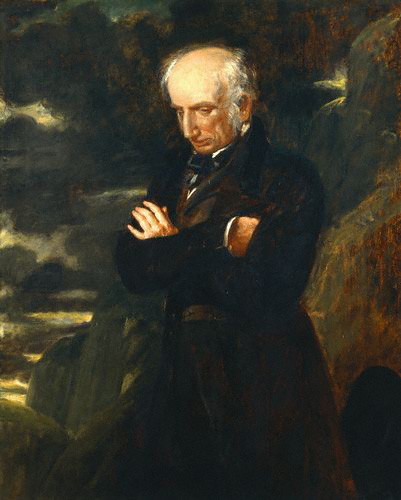
On this date in English literary history – April 7, 1770, poet William Wordsworth was born at Wordsworth House in Cockermouth, England. Wordsworth lost his mother when he was eight and his father five years later. He attended Cambridge, and then traveled in Europe, taking long walking tours with friends through the mountains. While studying in France in 1791, Wordsworth fell in love and had a daughter. Intending to marry the mother, he returned to England to straighten out problematic financial matters, but a series of events prevented their reunion. During his 20s, Wordsworth lived with his sister Dorothy and developed a close working partnership with Samuel Taylor Coleridge. Together they published Lyrical Ballads, with a Few Other Poems in 1798, launching the Romantic Movement. The book, which included Coleridge's “Rime of the Ancient Mariner” and Wordsworth's “Tintern Abbey,” sold out within two years. The book's second edition included a preface by the authors, which became an important manifesto of Romantic poetry. In 1802, after years of living on a modest income, Wordsworth came into a long-delayed inheritance from his father and was able to live comfortably with his sister. He married their longtime neighbor Mary Hutchinson and had five children. The poet's stature grew steadily, though most of his major work was written by 1807. In 1843, he was named poet laureate of England, and he died in 1850, at the age of 80.

 
Michael Thomas Barry is the author of numerous books that include Literary Legends of the British Isles: The Lives and Burial Places of 50 Great Writers. Visit the author’s website for more information www.michaelthomasbarry.com 

His book can be purchased through the following links:


Tuesday, April 1, 2014

Jane Austen Pens Letter to Future King - 1816


On this date in English literary history – April 1, 1816, Jane Austen responds to a letter from the Prince Regent (the future King George IV), who suggested she write a historic romance, her response, "I could not sit down to write a serious romance under any other motive than to save my life." Austen's correspondence with the Prince Regent, as well as literary figures of the day, was prompted by the success of her novels Sense and Sensibility, (1811) Pride and Prejudice, (1813) Mansfield Park, (1814) and Emma (1815). Two additional novels were published after her death. Her identity as the author was known to only a small circle; the general reading public only knew that "a lady" had written the books. Although enjoying the appreciation of such leading contemporary authors as Sir Walter Scott, Austen led a quiet, retiring life in the English country until she died at age 42. Austen was born in 1775, the seventh of eight children born to a clergyman in Steventon, a country village in Hampshire, England. She was very close to her older sister, Cassandra, who remained her faithful editor and critic throughout her life. The girls had five years of formal schooling, then studied with their father. Jane read voraciously and began writing her own sketches as young as age 12, completing an early novella at age 14. Austen's quiet, happy world was disrupted when her father retired to Bath in1801. Jane hated the resort town but amused herself by making close observations of ridiculous society manners. After her father's death in 1805, Jane, her mother, and sister lived with one of her brothers until 1808, when another brother provided them a permanent home at Chawton Cottage, in Hampshire. Jane wrote on small pieces of paper that she could easily slip under a blotter when someone came into the room. Though she avoided society, she was charming, intelligent, and funny at home. She rejected at least one proposal of marriage. She died in 1817 of what today is thought to be Addison's disease.

 
Michael Thomas Barry is the author of numerous books that include Literary Legends of the British Isles: The Lives & Burial Places of 50 Great Writers. For information about the author and his books visit his website www.michaelthomasbarry.com

His book can be purchased from Amazon through the following links:


Saturday, March 29, 2014

Mary Shelley's Parents were married - 1797


William Godwin
Mary Wollenstonecraft


On this date in English literary history - March 29, 1797, Mary Wollstonecraft, one of the earliest and most eloquent proponents of women's rights, married William Godwin, the most famous radical reformer of his time. Wollstonecraft, who had been raised by a tyrannical, abusive, and alcoholic father, was philosophically opposed to marriage, as was Godwin. However, the two decided to marry after Wollstonecraft became pregnant with his child. The baby girl was Mary Wollstonecraft Shelley, author of Frankenstein and wife of poet Pierce Bysshe Shelley. Wollstonecraft supported herself from age 19 as a companion, governess, and teacher. When her sister fled an unhappy marriage, Wollstonecraft took her in and hid her for months from her abusive husband, who had the legal right to force his spouse to return to him. The two, along with another sister, started a school. Initially a success, the school eventually went bankrupt and left Wollstonecraft burdened with debt. At age 27, Wollstonecraft published a semi-autobiographical novel and a children's book, the latter of which became a smashing success. She began publishing book reviews in a journal of political reform and writing social criticism. In 1790, she wrote A Vindication of the Rights of Man, about the French Revolution. Two years later, she produced A Vindication of the Rights of Women, a coolly reasoned, well-balanced argument for women's rights, published at a time when women had no rights or property of their own. A supporter of the ideals behind the revolution, she moved to France in 1793, where she fell in love with an American man. After she gave birth to his child, he abandoned her. Depressed, she tried unsuccessfully to kill herself. She returned to London and became part of an influential group of radical intellectuals. In 1796, she fell in love with William Godwin, a well-known writer who associated with the same circles. The couple married when they discovered she was pregnant and lived happily for six months-until Wollstonecraft died on September 10, 1797, several days after giving birth to their daughter.
 
 
Michael Thomas Barry is the author of numerous books that include Literary Legends of the British Isles: The Lives & Burial Places of 50 Great Writers (2013, Schiffer). The book can be purchased from Amazon through the following links:


Tuesday, March 11, 2014

Mary Shelley's "Frankenstein" was First Published - 1818


On March 11, 1818, Frankenstein; or, The Modern Prometheus was first published. The book, by Mary Wollstonecraft Shelley, is frequently called the world's first science fiction novel. In Shelley's tale, a scientist animates a creature constructed from dismembered corpses. The gentle, intellectually gifted creature is enormous and physically hideous. Cruelly rejected by its creator, it wanders, seeking companionship and becoming increasingly brutal as it fails to find a mate. Mary Shelley created the story on a rainy afternoon in 1816 in Geneva, where she was staying with her husband, Percy Bysshe Shelley, and their friend Lord Byron. Byron proposed they each write a gothic ghost story, but only Mary Shelley completed hers. Although serving as the basis for the Western horror story and the inspiration for numerous movies in the 20th century, the book Frankenstein is much more than pop fiction. The story explores philosophical themes and challenges Romantic ideals about the beauty and goodness of nature. Mary Shelley led a life nearly as tumultuous as the monster she created. The daughter of free-thinking philosopher William Godwin and feminist Mary Wollstonecraft, she lost her mother days after her birth. She clashed with her stepmother and was sent to Scotland to live with foster parents during her early teens, then eloped with the married poet Shelley when she was 17. After Shelley's wife committed suicide in 1817, the couple married but spent much of their time abroad, fleeing Shelley's creditors. Mary Shelley gave birth to five children, but only one lived to adulthood. Mary was only 24 years old when Percy Shelley drowned in a sailing accident; she went on to edit two volumes of his works. She lived on a small stipend from her father-in-law, Lord Shelley, until her surviving son inherited his fortune and title in 1844. She died on February 1, 1851 at the age of 53.
 
 
Michael Thomas Barry is the author of numerous book that include Literary Legends of the British Isles: The Lives and Burial Places of 50 Great Writers. The book can be purchased from Amazon through the following links:


Monday, February 10, 2014

Welsh Novelist Howard Spring was Born - 1889


Welsh novelist, journalist and literary critic Howard Spring was born on February 10, 1889 in Cardiff, Wales. His family were extremely poor and the nine children and their parents lived in a small, two bedroomed house. The situation was made even worse when Howard's father died when he was still at school and his mother was forced to take in washing to earn some money. When he was twelve years old he left school and found work as an errand boy at a butcher's shop that involved carrying heavy joints to customers' houses. Later he obtained a post as an office-boy at an accountants in Cardiff Docks. Spring then found work as a messenger boy at the South Wales Daily News. He taught himself shorthand and attended night school to improve his education. Spring eventually joined the reporting staff of the newspaper. In 1911 began work for the Yorkshire Observer. Spring moved to the Manchester Guardian in 1915 and stayed for over fifteen years. He reported on World War I and during the conflict worked for the British Intelligence Department in France. In 1930 Spring joined the Evening Standard and became the newspaper's chief book reviewer. He also wrote several best-selling novels that included Shabby Tiger (1934), My Son, My Son (1938), The Houses in Between (1951), and I Met a Lady (1961). He also wrote two volumes of autobiography. He died from a stroke on May 3, 1965.
 
 
Michael Thomas Barry is the author of numerous books that include Literary Legends of the British Isles: The Lives and Burial Places of 50 Great Writers. The book can be purchased from Amazon through the following links: