Showing posts with label California serial killers. Show all posts

Friday, August 21, 2020

Review of The Devil's Harvest by Jessica Garrison

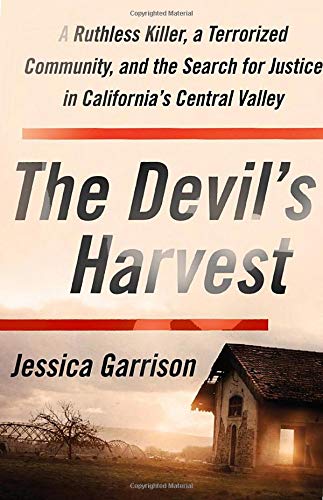
Image of The Devil's Harvest: A Ruthless Killer, a Terrorized Community, and the Search for Justice in California's Central Valley

Author: Jessica Garrison

Release date: August 4, 2020

Publisher: Hachette

Buy from Amazon: https://www.amazon.com/Devils-Harvest-Terrorized-Community-Californias/dp/0316455687/ref=sr_1_2?dchild=1&keywords=the+devil%27s+harvest&qid=1598050204&sr=8-2

Jose Manuel Martínez was born and raised in California and blended in easily among the farm laborers of California’s San Joaquin Valley where he lived a modest and unassuming life. But in stark contrast to the adoring and dedicated family man he appeared to be, there was an evil flipside that allowed him to pursue a frightening line of work as a hitman and enforcer for a Mexican drug cartel—a wicked profession that he carried out with such precision and technique that he went undetected for decades and claimed the lives of dozens of victims.

Martinez tracked one victim to one of the wealthiest corners of America, a horse ranch in Santa Barbara, and shot him dead, setting off a decades-long manhunt. He shot another man, a farmer right in front of his young wife as they drove to work in the fields. The widow would wait decades for justice. Those were murders for hire. Others he killed for vengeance.

The Devil’s Harvest by Jessica Garrison is a captivating true crime story of unbelievable terror that shockingly spanned nearly four decades in California’s central coast and valley. Garrison is an investigative editor for Buzzfeed News and spent more than a decade as a reporter at the Los Angeles Times. This is her debut nonfiction work.

Garrison asked Martinez why he had murdered so many people and how he had gotten away with it for so long? How he could “kill without remorse” and sometimes “even relish” it, while at the same time be so kind and generous with his own family. Martinez “paused for a moment, and then he laughed ruefully. It’s a long story.”

In June 2013, Martinez was arrested for the murder of Jose Ruiz and eventually confessed to killing three dozen people in a murderous crime spree that crisscrossed numerous states between 1980 and 2011. In California, he pleaded guilty to nine counts of murder and was sentenced to life in prison and received similar sentences in other states. Most of his crimes were related for Mexican drug cartels, but he also killed out of revenge and pure anger. He claimed that all of his victims deserved to die because many of them had abused women or children.

So how did Jose Martinez manage to evade law enforcement for so long? According to Garrison, he was a sly, savvy character who knew how to circumvent a systemically prejudiced and often narrow-minded criminal justice system: If you killed the right people, people who were poor, non-white, and who didn’t have anyone to speak up for them, you could literally get away with murder. Well, almost get away with murder.

The Devil’s Harvest is a must-read for any true-crime aficionado and is a story that desperately needed to be told. It is well-researched and detailed—a riveting in-depth narrative that explores the complexities and failures of the criminal justice system. Jose Martinez murdered without consequence for decades. He left a trail of death and devastation within the migrant farm communities of California’s central valley, a community that was left reeling and pleading for justice that went unanswered for way too long.

“Year after year, Martinez operated with impunity. In Tulare County, where he lived for decades, officials suspected him of murder after murder and yet never charged him. Next door Kern County, where he also lived for a time and committed several murders, has one of the highest murder rates in California and one of the lowest murder-solve rates in the nation.”

Garrison’s years of investigative reporting adds credibility to the narrative and thoroughly details how law enforcement was able to track down and eventually capture Martinez, but she also controversially scrutinizes the failures that allowed the Mexican drug cartels and a psychopathic madman to roam free for decades: shockingly killing without most people ever hearing about it.

This review first appeared at the New York Journal of Books on August 21, 2020 - https://www.nyjournalofbooks.com/book-review/devils-harvest-ruthless-killer

Monday, November 7, 2016

Bodies were Unearthed at Sacramento Board and Care Home (November 11, 1988)

This week (November 7-13) in crime history – David Hendricks murdered his family in Bloomington, Illinois (November 7, 1983); Carol DaRonch escaped abduction by Ted Bundy (November 8, 1974); John List murdered his family then disappeared for 18 years (November 9, 1971); Louise Woodward’s murder conviction was reduced to second degree (November 10, 1997); Bodies are unearthed at Sacramento board and care home (November 11, 1988); Scott Peterson was convicted of murdering his wife and unborn son (November 12, 2004); FBI agents find bomb making equipment at the home of John Graham (November 13, 1955)

Highlighted Crime Story of the Week -


On November 11, 1988, authorities unearth a corpse buried in the yard of 59-year-old Dorothea Puente’s home in Sacramento, California. Puente operated a residential board and care home for elderly people, and an investigation led to the discovery of six more bodies buried on her property.

Puente was a diagnosed schizophrenic who had already been in trouble with the law. She had previously served prison time for check forgery, as well as drugging and robbing people she met in bars. After her release, she opened a boarding house for elderly people. Beginning in 1986, social worker Peggy Nickerson sent nineteen clients to Puente’s home. When some of the residents mysteriously disappeared, Nickerson grew suspicious. Puente’s neighbors, who reported the smell of rotting flesh emanating from her vicinity, validated Nickerson’s concern.

Although all the buried bodies were found to contain traces of the sedative Dalmane, the coroner was never able to identify an exact cause of death. Still, during a trial that lasted five months and included thousands of exhibits, prosecutors were able to prove beyond a reasonable doubt that Puente had murdered her boarders, most likely to collect their Social Security checks. Though she was formally charged with nine counts of murder and convicted on three, authorities suspected that Puente might have been responsible for as many as two dozen deaths. She received a life sentence without the possibility of parole and died in 2011 of natural causes at the Chowchilla Central Women’s Prison facility.

Check back every Monday for a new installment of “This Week in Crime History.”

Michael Thomas Barry is a columnist for www.crimemagazine.com and is the award winning author of seven nonfiction books that includes In the Company of Evil Thirty Years of California Crime, 1950-1980. Visit his website www.michaelthomasbarry.com for more information. His books can be purchased from Amazon through the following link:


Monday, March 14, 2016

The Yosemite Murders (March 18, 1999)

This week (March 14-20) in crime history – The FBI debuted the 10 most wanted list (march 14, 1950); Jack Ruby was sentenced to death (March 14, 1964); The Birmingham Six were released (March 14, 1991); Julius Caesar was assassinated (March 15, 44BC); Lastania Abarta shots her lover on the streets of Los Angeles (march 16, 1881); Judge Rot Bean died (March 16, 1903); American journalist Terry Anderson was kidnapped in Lebanon (March 6, 1985); Raymond Clark III pleaded guilty to killing Yale Grad student (March 17, 2011); The Yosemite Killings (March 18, 1999); The Tokyo subway s were attacked with sarin gas (March 20, 1995)

Highlighted Crime Story of the Week -


On March 18, 1999, the bodies of Carole Sund and Silvina Pelosso are found in a charred rental car in a remote wooded area of Long Barn, California. The women, along with Sund’s daughter Juli, had been missing since February when they were last seen alive at the Cedar Lodge near Yosemite National Park. Juli Sund’s body was found thirty miles away a week after the car was found.

The mysterious disappearance of the three women had drawn national attention and landed them on the cover of People magazine. Compounding the mystery, Carole Sund’s wallet had been found on a street in downtown Modesto, California, three days after they had disappeared.

Police and the FBI initially focused their investigation on a group of methamphetamine users in Northern California. This changed in July when Joie Ruth Armstrong, a twenty-six-year-old Yosemite Park worker, was brutally killed and decapitated near her cabin in the park.

The discovery of her body led investigators to Cary Stayner, a thirty-seven-year-old man who worked at the Cedar Lodge motel, where the Sund’s were last seen. Stayner was tracked down and caught at a nudist colony in Northern California. Stayner confessed to the murder of Armstrong and then surprised the detectives by admitting that he was also responsible for the murders of the Sund’s and Pelosso.

Stayner had been on the other end of another high-profile crime years earlier. His younger brother, Steven, was abducted in Merced when Cary was eleven years old. Steven Stayner was held for more than seven years by a sexual abuser, Kenneth Parnell. Following his escape, a television movie, I Know My First Name is Steven, dramatized the incident. Steven Stayner died in a tragic motorcycle accident when he was twenty-four. The family saw further tragedy when Jesse Stayner, Cary and Steven’s uncle, was shot to death in 1990 during a bungled robbery attempt. Stayner pleaded guilty to the Armstrong murder in 2001. He was convicted of the other three counts of murder in 2002 and sentenced to death.

Check back every Monday for a new installment of “This Week in Crime History.”

Michael Thomas Barry is the author of seven nonfiction books that includes In the Company of Evil Thirty Years of California Crime 1950-1980 and Murder and Mayhem 52 Crimes that Shocked Early California 1849-1949. Visit Michael’s website www.michaelthomasbarry.com for more information. His books can be purchased from Amazon through the following links:


Monday, August 10, 2015

Carol Bundy Confessed Role in Sunset Slayer Case (August 11, 1980)

This week (August 10-16) in crime history – The severed head of Adam Walsh, son of TV personality John Walsh was discovered (August 10, 1981); Carol Bundy confessed her role in the Sunset Slayer case (August 11, 1980); Alcatraz Federal Prison opened (August 11, 1934); Jonesboro School massacre shooter plead guilty (August 11, 1998); Yosemite Killer, Cary Stayner was born (August 13, 1961); Terrorist Carlos the Jackal was captured (August 14, 1994); Mary Winkle, who fatally shot her pastor husband was released from prison (August 15, 2006); Auto Executive John DeLorean was cleared of drug charges (August 16, 1984)

Highlighted Crime Story of the Week -


On August 11, 1980, Carol Bundy confessed her role in the Sunset Slayer case. The killer had been murdering and mutilating young women in Hollywood, California, all summer, to co-workers. Bundy, a nurse, told friends “I can’t take it anymore. I’m supposed to save lives, not take them.” Her confession was relayed to police, who immediately arrested Douglas Clark, Bundy’s boyfriend.

Bundy and Clark met in a North Hollywood bar in January, 1980. Clark was a self-described “king of the one-night stands.” But when he met Bundy, he soon discovered that she was willing to assist and indulge in his sick fantasies. Bundy began listening to his desire to kill. In June, Clark abducted two teenagers, sexually assaulted them, and then shot them in the head. He dumped their bodies off the freeway and then went home to brag about it to Bundy. Two weeks later, Clark struck again, killing two young women in separate incidents. In the second attack, Clark cut the head off the woman and took it home, insisting that Bundy apply cosmetics to it. Because most of his victims had been abducted from the Sunset Strip in Los Angeles, the press dubbed the killer, the Sunset Slayer.

Clark proved to be more of an influence than Bundy expected. When she blabbed about Clark’s activities to a former boyfriend, she felt compelled to kill the man to make sure that she wasn’t implicated. On August 5, Bundy stabbed John Murray to death and then cut off his head. Within a week, she was tearfully confessing to her fellow nurses. During the trial in 1981, Clark tried to pin all of the murders on Bundy, but the jurors found his story hard to believe and sentenced him to death. Bundy attempted an insanity defense, but she eventually pleaded guilty and received a sentence of 52 years-to-life.

Check back every Monday for a new installment of “This Week in Crime History.”

Michael Thomas Barry is a columnist for www.crimemagazine.com and is the author of six nonfiction books that includes the award winning Murder and Mayhem 52 Crimes that Shocked Early California 1849-1949. Visit Michael’s website www.michaelthomasbarry.com for more information. His book can be purchased from Amazon through the following link:


Monday, March 16, 2015

The Yosemite Murders - March 18, 1999


This week (March 16-23) in crime history – Lastania Abarta shot and killed her former lover in Los Angeles (March 16, 1881); Robert Blake was acquitted of murder (March 16, 2005); Judge Roy Bean died (March 16, 1903); Raymond Clark II pleaded guilty to the murder of a Yale University grad student (March 17, 2011); Yosemite Murders (March 18, 1999); Nazi General Friedrich Fromm was executed for helping plot failed assassination of Adolph Hitler (March 19, 1945); Tokyo subway was attacked with nerve gas by terrorists ( March 20, 1995); Alcatraz prison closed (March 21, 1963); Seven teachers were indicted for child abuse at the McMartin preschool (March 22, 1984)
Highlighted crime story of the week -
On March 18, 1999, the bodies of Carole Sund and Silvina Pelosso are found in a charred rental car in a remote wooded area of Long Barn, Califonia. The women, along with Sund’s daughter Juli, had been missing since February when they were last seen alive at the Cedar Lodge near Yosemite National Park. Juli Sund’s body was found thirty miles away a week after the car was found. Compounding the mystery, Carole Sund’s wallet had been found on a street in downtown Modesto, California, three days after they had disappeared.
Police initially focused their investigation on a group of methamphetamine users in Northern California, but this changed in July when Joie Ruth Armstrong, a 26-year-old Yosemite Park worker, was brutally killed near her cabin in the park. The discovery of her body led detectives to Cary Stayner, 37, who worked at the Cedar Lodge motel, where the Sunds were last seen. Stayner was tracked down and caught at a nudist colony in Northern California. He confessed to the murder of Armstrong and then surprised the detectives by admitting that he was also responsible for the murders of the Sunds and Pelosso.
Years earlier, Stayner had been on the other end of another high-profile crime. His younger brother, Steven, was abducted in Merced when Cary was eleven years old. Steven Stayner was held for more than seven years by a sexual abuser, Kenneth Parnell. Following his escape, a television movie, I Know My First Name is Steven, dramatized the incident. Steven Stayner died in a tragic motorcycle accident when he was twenty-four. Cary Stayner pleaded guilty to the Armstrong murder in 2001 and was convicted of the other three murders in 2002 and was sentenced to death. He is currently incarcerated at San Quentin Prison awaiting appeals of his conviction.
Check back every Monday for a new installment of “This Week in Crime History.”
Michael Thomas Barry is a columnist for www.crimemagazine.com and is the author of six nonfiction books that includes Murder and Mayhem 52 Crimes that Shocked Early California, 1849-1949. Visit Michael’s website www.michaelthomasbarry.com for more information. His book can be purchased from Amazon through the following link:
 

Monday, January 26, 2015

Vampire of Sacramento Claimed Final Victims - January 27, 1978


This week (January 26-February 1) in crime history – The Mad Butcher of Cleveland claimed third victim (January 26, 1936); The Vampire of Sacramento claimed final victims (January 27, 1978): Charles Starkweather and his teenage girlfriend kill three during their murderous crime spree (January 28, 1958); Brenda Spencer kills two and injures none in San Diego school shooting (January 29, 1979); Indian Prime Minister Mohandas Gandhi was assassinated (January 30, 1948); Guy Fawkes jumped to his death just prior to his execution (January 31, 1606); Ted Bundy murdered Lynda Ann Healy (February 1, 1974); King Carlos I of Portugal was assassinated (February 1, 1908).

Highlighted crime story of the week -

On January 27, 1978, Richard Chase, who becomes known as the "Vampire of Sacramento," murdered Evelyn Miroth , Daniel Meredith, as well as Miroth's 6-year-old son and 22-month-old nephew, in Sacramento, California. Chase sexually assaulted Miroth with a knife before killing her and mutilating her body. He removed some of her organs and cannibalized them. The previous year, the 28-year-old Chase had been found in the desert, naked and covered in cow's blood. His behavior did not come as a complete surprise to those who knew him. As a child, he had been known to kill animals, drinking the blood of a bird on one occasion. He had been in and out of psychiatric hospitals for most of his life.

Chase’s first known victim, Ambrose Griffin, 51, was killed in a drive-by shooting in December 1977 in the drive way of his home. He committed his second known homicide on January 23, 1979, when entered the East Sacramento home of 22-year-old Teresa Wallin, who was shot to death and then mutilated and partially cannibalized. After several tips from the public, Chase was apprehended on February 1, at his apartment. Police found his home covered in blood and filth. On May 8, 1979, a jury found him guilty of six counts of first-degree murder and sentenced him to death. Chase committed suicide in his cell at San Quentin prison on December 26, 1980 by taking an over dose of anti-depressant medication.

Check back every Monday for a new installment of “This Week in Crime History.”

Michael Thomas Barry is a columnist for www.crimemagazine.com and is the author of six nonfiction books that includes the award winning Murder and Mayhem 52 Crimes that Shocked Early California, 1849-1949. Visit Michael’s website www.michaelthomasbarry.com for more information. His book can be purchased from Amazon through the following link: